Cinematographer on ‘Bad Lieutenant,’ Dies at 76
He shot the Harvey Keitel starrer and many other films for Abel Ferrara, among them The Funeral, and Stanley Tucci’s Big Night.

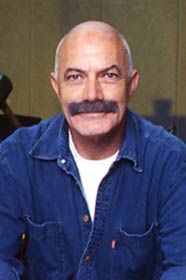
Kelsch died Monday at Hackettstown Medical Center in New Jersey after a battle with COVID and pneumonia, his son Chris Kelsch said.
“If you knew him, you probably have a story about him,” Chris wrote on Facebook. “He really was a great man, loved by many. A war hero who filled every room with his presence. An artist who never stopped being himself. A caring father who would do anything for his kids and grandkids. Shared his experience, wisdom and love with all. Our family will deeply miss him and always love him, as I’m sure many of you will as well.”
Kelsch was fresh out of NYU film school when he collaborated with Ferrara for the first time on the low-budget slasher film The Driller Killer (1979). The two, however, would have a fallout and not work together again until they found spectacular success with the NC-17-rated Bad Lieutenant (1992), starring Harvey Keitel as depraved, drug-addicted New York cop.
“It was almost all handheld, it was a rickety old 35mm BL [camera], but the concept was that we were going to make a documentary,” Kelsch said in 2019 interview with Evan Louison for Filmmaker magazine.
“The camera was not going to be judgmental. We would hold him [Keitel] in a medium close-up, and he would do whatever the fuck he wanted to do. Dennis Livesey, my assistant at the time, aged 10 years just from all the focus-pulling. We were shooting wide open most of the time. The stuff in the Mayflower Hotel, I built bay lights, and that gave us total freedom to go wherever we needed to. I had no idea when I showed up for work in the morning what was going to happen.”

Kelsch and Ferrara would then partner on Dangerous Game (1993), starring Keitel and shot at American Zoetrope in L.A.; The Addiction (1995); the Christopher Walken-starring The Funeral (1996), for which Kelsch would receive an Independent Spirit Award nomination; The Blackout (1997); New Rose Hotel (1998); ‘R Xmas (2001); Chelsea on the Rocks (2008); the Willem Dafie-starring 4:44 Last Day on Earth (2011); Welcome to New York (2014), starring Gérard Depardieu.
His final credit was the docu The Projectionist (2019).
Born in Brooklyn on July 8, 1947, and raised in East Newark, New Jersey, Kenneth Arthur Kelsch was the son of a German-born father, who served the U.S. during World War II, and a Scottish mother.
After a year at Rutgers, he enlisted in the U.S. Army and was a Team Leader with Special Forces in Vietnam and Laos. He did two tours and participated in what he called SLAM operations, short for Search, Locate, Annihilate and Monitor.
Kelsch served as a gaffer on Wes Craven’s The Last House on the Left (1972); went to Montclair State University and did his first film; became an expert in kick boxing and taekwondo; worked for a year at Johnson & Johnson making gaffer tape; and earned his master’s degree in film studies from NYU Tisch School of the Arts in 1977.
“Abel called down to NYU and said, ‘Look, we’re doing this film, Driller Killer. Who’s the best D.P. there?’ They said Ken Kelsch,” he told Ray Longo . “I met him, we smoked a joint at 5, we talked and I was hired. The next day I began shooting.” Kelsch’s then-wife, the late Dale Denning, was a focus puller on the movie.
That silence ended when Kelsch got a call from Ferrara at 4 a.m. one morning, and they would get back together for the $2.5 million-budgeted Bad Lieutenant.
In addition to their films, they worked on segments of the 1997 HBO anthology Subway Stories: Tales From the Underground (1997). He noted that Ferrara never shot-listed on any of their projects together.
Kelsch’s résumé included the James Woods-starring Killer: A Journal of Murder (1995), Montana (1998), A Brooklyn State of Mind (1998), It Had to Be You (2000), Missing in America (2005) and The Brooklyn Banker (2016).
He also taught filmmaker at Montclair State and Five Towns College in New York.
In addition to his son, survivors include his daughters, Joy and Nina, and his grandchildren, Gavin and Quinn.
“Filmmaking is like combat,” he said. “It’s 90 percent boredom, 5 percent panic and 5 percent terror. Especially on an Abel Ferrara project.”