Turner disclosed in 2018 that he was suffering from Lewy body dementia, a brain disorder that affects memory and other cognitive functions.
Turner, Time Magazine’s Man of the Year in 1991, transformed the world of TV, inventing 24-hour news with CNN and pioneering national basic cable.
To feed his “superstation,” he made deals that rewrote the rules of sports broadcasting. He was also a sports figure himself, winning the America’s Cup and owning the Atlanta Braves when they won the World Series. Tuner helped change the idea of philanthropy by being one of the first individuals to give away huge sums while still alive, rather than bequeathing them in a will; he donated a record $1 billion to create the United Nations Foundation. “Everybody could be doing more! Nobody’s doing enough. I could be doing more!” he told Variety in a 2012 interview about his passion to make the world a safer and healthier place.
No fiction writer could dream up a character with so many high-stakes gambles that usually paid off, whose life took so many turns and who was present at so many key late-20th-century moments in various fields. In his 2008 autobiography “Call Me Ted,” Turner, who was the grandson of sharecroppers, said his father advised him, “Be sure to set your goals so high that you can’t possibly accomplish them in one lifetime. That way you’ll always have something ahead of you.” He clearly followed that advice. His first step in media was inheriting his father’s billboard business. He then shifted to television, taking a money-losing UHF television station in Atlanta and transforming it into WTRS, then Turner Broadcasting System. It entered the homes of 2 million cable subscribers as “superstation” TBS via satellite delivery, which led to the blossoming of satellite and cable TV in the mid-’70s. He decided that his channels needed new shows, so he invented TNT and helped pioneer the concept of original programming on basic cable. He also owned MGM for a time, selling the studio and name but retaining the massive library.
He started CNN, as well as other cablers like the Cartoon Network, and invented “Captain Planet and the Planeteers,” a TV toon with an environmental message. Overpopulation and nuclear disarmament were other passionate causes for which he worked and donated tirelessly. He often joked that his formula for success was “Early to bed, early to rise, work like hell and advertise.” When he sold the Turner system to Time Warner, he added $1 billion to his income within nine months. In 1997, after receiving an award from the United Nations, he decided to donate the billion — one-third of his wealth — to the org. He gave the U.N. the money just in time. When Time Warner merged with AOL in 2000, the stock plummeted, and he lost 80% of his wealth within two years. He said later he had voted to approve the merger against his better judgment and he soon lost even more when he was unceremoniously ousted from the company. He continued with philanthropy and activism, fighting nuclear weapons, climate change, fossil fuels and overpopulation. In 2002, he started a chain of eco-friendly restaurants, Ted’s Montana Grill, whose flagship dish is the bison burger from meat raised on the land he owned spread across six states.
By 2010, he owned 2 million acres. He was the largest single landowner in the U.S. for years until he was surpassed by Liberty Media founder and chief John Malone. He spent a good portion of his final years after leaving Time Warner on his 113,000-acre ranch near Bozeman, Mont. Then there were his sports achievements: He won the America’s Cup and Fastnet, becoming the first person to be named yachtsman of the year four times, and bought the Atlanta Braves, who won the World Series in 1995.
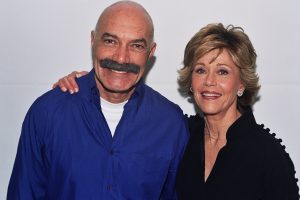
He bought the baseball team in a calculated move to boost the ratings of his local station. He was also married three times, including a 10-year marriage to Jane Fonda, and had five children. In person he could be gregarious and aw-shucks friendly but was also outspoken and confrontational, which earned him the nickname the Mouth of the South. His feud with Rupert Murdoch, which began over a yachting accident, led Turner to challenge him to fistfights; in 2003, he asserted that Murdoch had helped start the Iraq War through advocacy of the military campaign on Fox News and other outlets, and in 2011, he declared that Murdoch ought to resign from News Corp. in the wake of the phone hacking scandal. Though Turner suffered the occasional gambler’s setback, his was a life marked mainly by triumphs and staggering successes. “It was,” fellow media mogul John Malone once said, “as if God were on his side.” He was a complex person who fought at all times to protect his vulnerable self. As an aide warned an interviewer once, “If he doesn’t want to answer a question, you’ll know it. He’ll just give one or two-word answers and you can’t go back to that topic.”
He described himself as having bipolar depression, but he avoided psychiatry and too much self-analysis. In Turner’s 2008 memoir “Call Me Ted,” Jane Fonda described Turner’s childhood, with beatings and psychological manipulations, as “complete toxicity.” She said Turner couldn’t understand why she cried when he described his youth and said, “There’s a fear of abandonment that is deeper than with anyone I’ve ever known. As a result, he needs constant companionship, and keeping up with him can be exhausting.” She said he couldn’t sit still and his nervous energy “almost crackles in the air.” In the same book, Dick Parsons, president of Time Warner in 1995, when it bought Turner’s company, recalled his first meeting with the exec. Turner was talking about overcoming adversity and told Parsons, “You were born black — bad break! But you know, you worked hard and you overcame it.” Parsons said he nearly fell out of his chair but concluded that Turner didn’t possess the self-censorship mechanism that prevents most people from blurting out inappropriate ideas. “But because he’s such a fundamentally guileless and genuine guy, he gets away with it.” Robert Edward Turner III was born in Cincinnati. His family moved to Atlanta when Turner was 9 and his father, Ed, struggled in vain to succeed with his small billboard company. When his father committed suicide in 1963, Ted inherited the business and was determined to make it a success. Under his direction, the company earned enough money to allow Turner in 1970 to buy Atlanta-based UHF station Channel 17, which was losing upward of $500,000 annually. He started counterprogramming network fare by showing movies, old series like “The Andy Griffith Show” and Atlanta Braves games. By 1972, the station was breaking even. Looking to expand, he embraced CATV (community antenna TV, as cable television was called). By December 1976, WTCG had a satellite transmission and was renamed the WTBS “superstation.” In the early days, it reached 2 million cable subscribers’ homes.
By 1986, 34 million additional viewers had been added, and the network’s annual profits had soared to more than $70 million. In the intervening years, Turner had dabbled in other interests. Making use of the yachting expertise he had acquired while attending Brown U., Turner gained worldwide recognition for winning the 1977 America’s Cup on his yacht Courageous. He was, he later admitted, “a little tipsy” as he accepted the trophy, and in press coverage he earned the nickname “Captain Outrageous.”
He also won the Fastnet race and was named yachtsman of the year in 1970, ’73, ’77 and ’79. He also began snapping up Atlanta’s sports teams, purchasing the baseball Braves and the basketball Hawks in 1976 and ’77, respectively. Turner even managed the Braves personally for one game during a particularly bad season early in his ownership. Turner’s biggest gamble of all, perhaps, came in 1980, when he launched the first 24-hour all-news cable channel, CNN.