Constance Campbell Bennett (October 22, 1904 – July 24, 1965), American stage, film, radio, and TV actressm was a major Hollywood star during the 1920s and 1930s.
In the early 1930s, she was the highest-paid actress in Hollywood.
Bennett frequently played society women in melodramas in the early 1930s, and then more comedic roles in the late 1930s and 1940s.
She is best remembered for her leading roles in Cukor’s What Price Hollywood? (1932), Bed of Roses (1933), Topper (1937), Topper Takes a Trip (1938).
My Biography of George Cukor
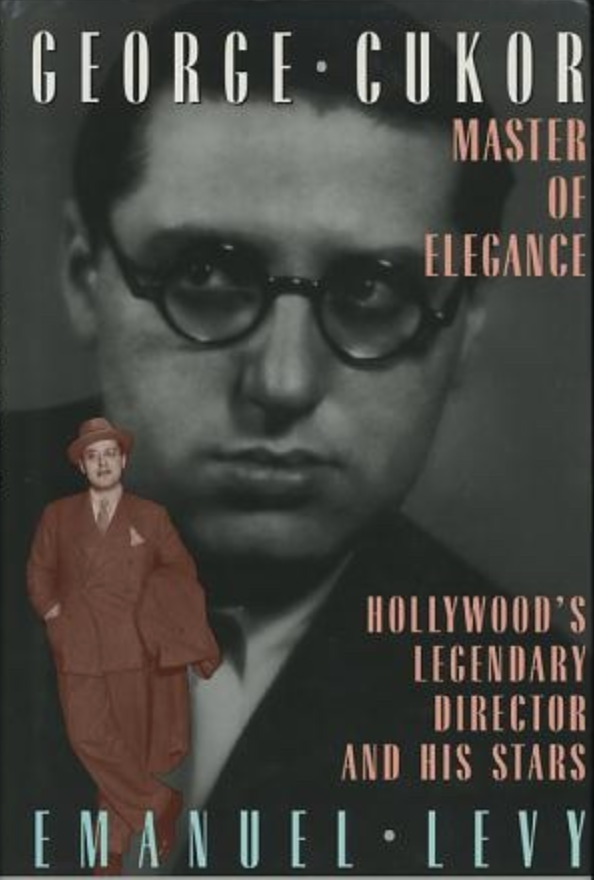
Bennett had a prominent supporting role in Garbo’s last film, Cukor’s Two-Faced Woman (1941).
She was the daughter of stage and silent film star Richard Bennett, and the elder sister of actress Joan Bennett.
Bennett was born in NYC, the eldest of 3 daughters of actress Adrienne Morrison and actor Richard Bennett. Her younger sisters were actresses Joan Bennett and Barbara Bennett. All 3 girls attended the Chapin School in NY.
After some time in convent, Bennett entered acting. Independent, cultured, ironic, and outspoken, Constance, the first Bennett sister to enter pictures, appeared in New York–produced silent movies before a meeting with Samuel Goldwyn led to her Hollywood debut in Cytherea (1924).
She abandoned burgeoning career in silent films for marriage to Philip Plant in 1925 but resumed her career after their divorce in 1929.
With the advent of talking pictures and her beauty and glamor, she quickly revived her career.
In the early 1930s, Bennett was among the top actresses named in popularity and box-office polls.
In 1931, a short-lived contract with MGM earned her $300,000 for two movies, which included The Easiest Way and made her one of the highest-paid stars in Hollywood.
Warner paid her the all-time high salary of $30,000 a week for Bought! in 1931. Richard Bennett, her father, was also cast in this film.
The next year she moved to RKO, where she acted in What Price Hollywood? (1932), directed by George Cukor, an ironic and at the same time tragic behind-the-scenes looks at the Hollywood studio system, in which she portrayed waitress Mary Evans, who becomes a movie star. Lowell Sherman co-starred as the film director who discovers her, and Neil Hamilton as the wealthy playboy she marries who later divorces her.
The film Morning Glory had been written with Bennett for the lead role, but producer Pandro S. Berman gave the role to Katharine Hepburn, who would win an Oscar for her performance.
RKO
During her time at RKO, Bennett briefly became the highest-paid actress in Hollywood. RKO controlled the careers of actresses Ann Harding and Helen Twelvetrees in similar manner, hoping to duplicate Bennett’s success.
Bennett showed versatility in Our Betters (1933), writer-director Gregory La Cava’s Bed of Roses (1933) with Pert Kelton, After Tonight (1933, co-starring with future husband Gilbert Roland), The Affairs of Cellini (1934), After Office Hours (1935) with Clark Gable, Topper (1937, as Marian Kerby opposite Cary Grant, role she repeated in the 1939 sequel, Topper Takes a Trip), the madcap family comedy Merrily We Live (1938) and Two-Faced Woman (1941, supporting Greta Garbo).
By the 1940s, Bennett was working less frequently in film but was in demand in radio and theatre.
She had her own program, “Constance Bennett Calls on You,” on ABC radio in 1945–1946.
Shrewd investments had made her wealthy, and she founded a cosmetics and clothing company.
In 1945–1946, she hosted “The Constance Bennett Show” on ABC Radio.
She had supporting role in The Unsuspected (1947), in which she played Jane Moynihan, the program director who helps prove that radio host Victor Grandison (Claude Rains) is guilty of murder.
In the 1950s, in As Young as You Feel (1951), she played opposite Marilyn Monroe.
Bennett played herself in a cameo in Cukor’s It Should Happen to You (1954).
In 1957–1958, she toured the US in the title role of Auntie Mame.
Bennett made her final screen appearance in the 1965 film Madame X (released posthumously in 1966), as the blackmailing mother-in-law.
Bennett was married five times and had three children.
On June 15, 1921, Bennett eloped with Chester Hirst Moorehead of Chicago, a student at the University of Virginia, son of oral surgeon Frederick Moorehead. They were married by justice of the peace in Greenwich, CT. Bennett was 16 at the time.
NY Times article reporting the elopement observed: “The parents of Miss Bennett were opposed to their marriage at this time solely on account of their youth.” The marriage was annulled in 1923.
Bennett’s next serious relationship was with millionaire socialite Philip Morgan Plant. Her parents planned a cruise to Europe, taking Constance with them, to separate the couple. As the ship was preparing to leave port, however, the Bennetts saw Plant and his parents boarding, too.
In November 1925, the two eloped and were married in Greenwich, Connecticut, by the same justice of the peace who officiated at Bennett’s wedding to Moorehead. They divorced in a French court in 1929.
In 1932, Bennett returned from Europe with a three-year-old child, whom she claimed to have adopted and named Peter Bennett Plant (born 1929). In 1942, however, during a battle over a large trust fund established to benefit any descendants of her former husband, Bennett announced that her adopted son actually was her natural child by Plant, born after the divorce and kept hidden to ensure that the child’s biological father did not get custody.
During the court hearings, the actress told her former mother-in-law and her husband’s widow that “if she got to the witness stand she would give a complete account of her life with Plant.” The matter was settled out of court.
In 1931, Bennett married one of Gloria Swanson’s former husbands, Henri le Bailly, the Marquis de La Coudraye de La Falaise, a French nobleman and film director.
She and de la Falaise founded Bennett Pictures Corp. and co-produced two films which were the Hollywood films shot in the two-strip Technicolor process, Legong: Dance of the Virgins (1935) filmed on location in Bali, and Kilou the Killer Tiger (1936), filmed in Indochina. The couple divorced in Reno, Nevada in 1940.
Bennett’s fourth marriage was to actor Gilbert Roland.
They were married in 1941 and had two daughters, Lorinda “Lynda” and Christina “Gyl”. They divorced in 1946, with Bennett winning custody of their children.
Later that year, Bennett married for the fifth and final time to U.S. Air Force Colonel John Theron Coulter. After her marriage, she concentrated her efforts on providing relief entertainment to US troops still stationed in Europe, winning military honors for her services. Bennett and Coulter remained married for the rest of her life. Bennett supported Barry Goldwater in the 1964 United States presidential election.
On July 24, 1965, shortly after Madame X was completed, Bennett collapsed and died from cerebral hemorrhage at the age of 60.
In recognition of her military contributions, and as wife of John Theron Coulter, brigadier general, she was buried in Arlington National Cemetery. Coulter died in 1995 and was buried with her.
Bennett has a motion pictures star on the Hollywood Walk of Fame for her contributions to the film industry. Her star is located at 6250 Hollywood Boulevard, short distance from the star of her sister, Joan.
Filmography
Silent films
Year Title Role Notes
1916 The Valley of Decision Unborn soul, Lost film
1922 Reckless Youth Chorus Girl
Evidence Edith Lost film
What’s Wrong with the Women? Elise Bascom Lost film
1924 Cytherea Annette Sherman Lost film
Into the Net Madge Clayton, his sister Lost film
1925 The Goose Hangs High Lois Ingals Lost film
Code of the West Georgie May Lost film
My Son Betty Smith Lost film
My Wife and I Aileen Alton Lost film
The Goose Woman Hazel Woods
Wandering Fires Guerda Anthony
Sally, Irene and Mary Sally
The Pinch Hitter Abby Nettleton
1926 Married ? Marcia Livingston
Sound films
1929
Rich People Connie Hayden
This Thing Called Love Ann Marvin, Lost film
1930
Son of the Gods Allana
Three Faces East Frances Hawtree / Z-1
Common Clay Ellen Neal
Sin Takes a Holiday Sylvia Brenner
1931
The Easiest Way Laura Murdock
Born to Love Doris Kendall
The Common Law Valerie West
Bought! Stephanie Dale
1932
Screen Snapshots Herself Short Subject
Lady with a Past Venice Muir
What Price Hollywood? Mary Evans
Two Against the World Miss Adele ‘Dell’ Hamilton
Rockabye, Judy Carroll
1933
Our Betters, Lady Pearl Grayston
Bed of Roses Lorry Evans
After Tonight Carla Vanirska, aka K-14 and Karen Schöntag
1934
Moulin Rouge Helen Hall / Raquel
The Affairs of Cellini Duchess of Florence
Outcast Lady Iris
1935
After Office Hours Sharon Norwood
Legong Producer only
Starlit Days at the Lido, Herself Short subject
1936
Everything Is Thunder Anna von Stucknadel
Ladies in Love Yoli Haydn
1937
Daily Beauty Rituals Herself Short subject
Topper Marion Kerby
1938
Merrily We Live Jerry Kilbourne
Service de Luxe Helen Murphy
Topper Takes a Trip Marion Kerby
1939
Tail Spin Gerry Lester
1940
Escape to Glory Christine Blaine
1941
Law of the Tropics Joan Madison
Picture People No. 2: Hollywood Sports Herself Short subject
Two-Faced Woman, directed by Cukor, Griselda Vaughn (Garbo last film)
1942
Wild Bill Hickok Rides, Belle Andrews
Hedda Hopper’s Hollywood No. 5 Herself Short subject
Sin Town, Kye Allen
Madame Spy, Joan Bannister
1945
Paris Underground, Kitty de Mornay. Also produced
1946
Centennial Summer, Zenia Lascalles
1947
The Unsuspected, Jane Moynihan
1948
Smart Woman, Paula Rogers
Angel on the Amazon, Dr. Karen Lawrence
1951 As Young as You Feel Lucille McKinley
1954
It Should Happen to You, directed by Cukor, Guest Panelist
1966 Madame X, Estelle, Released posthumously
Books:
Kellow, Brian (2004). The Bennetts: An Acting Family. Lexington, Kentucky: University Press of Kentucky.