Oscar-Winning Scribe of ‘Annie Hall,’ Dies at 85

Brickman died Friday, Nov 29, in Manhattan, his daughter Sophie Brickman confirmed.
Brickman wrote and directed Simon (1980), a quirky comedy about a psychology professor (Alan Arkin) brainwashed into believing he’s from outer space; Lovesick (1983), featuring Alec Guinness as the ghost of Sigmund Freud who offers advice to psychiatrist (Dudley Moore); and The Manhattan Project (1986), about a high school student (Christopher Collet) who builds a nuclear weapon for a science fair project.
Brickman also teamed with Rick Elice to pen the Tony-nominated book for the Broadway musical Jersey Boys, and they wrote the screenplay for the 2014 film. They joined forces again for the 2010 stage musical The Addams Family.
In the early 1960s, as Allen was making his mark as a stand-up comedian, Brickman was playing banjo for The Tarriers, a folk group that had scored a hit with “Day-O (The Banana Boat Song)” back when Arkin was a member.
“We would work on jokes. After a couple of hours, his housekeeper would bring tuna sandwiches and we’d take a break. I don’t even know what we talked about during the break. Together we wrote his early stand-up act, which he then recorded. When he got specials on television, he did one for Monsanto, one for Libby’s, these one-off variety shows, we wrote those together. And then we started to write movies.”
Brickman left the music world behind to build a solid career in television, with stint as head writer for The Tonight Show Starring Johnny Carson, when he agreed to work with Allen on a futuristic comedy that became Sleeper (1973). The job was totally on spec. As luck would have it, an album Brickman recorded years earlier with college roommate Eric Weissberg was chosen as soundtrack for the 1972 film Deliverance. It included the song “Dueling Banjos.”

Sleeper was originally conceived as an homage to silent comedy, and Allen didn’t want any dialogue. But as they developed its concept of a jazz musician frozen without his consent and thawed 200 years in the future, it only made sense to play to the strengths of the neurotic character Allen had spent years developing. Dialogue was the only way to make that happen.
“We didn’t write scenes together. I think that’s the death for any collaboration,” Brickman said in 2011 interview. “I don’t think there’s any such thing really as equal collaboration. In any collaboration, one person, one personality, one point of view has to dominate.
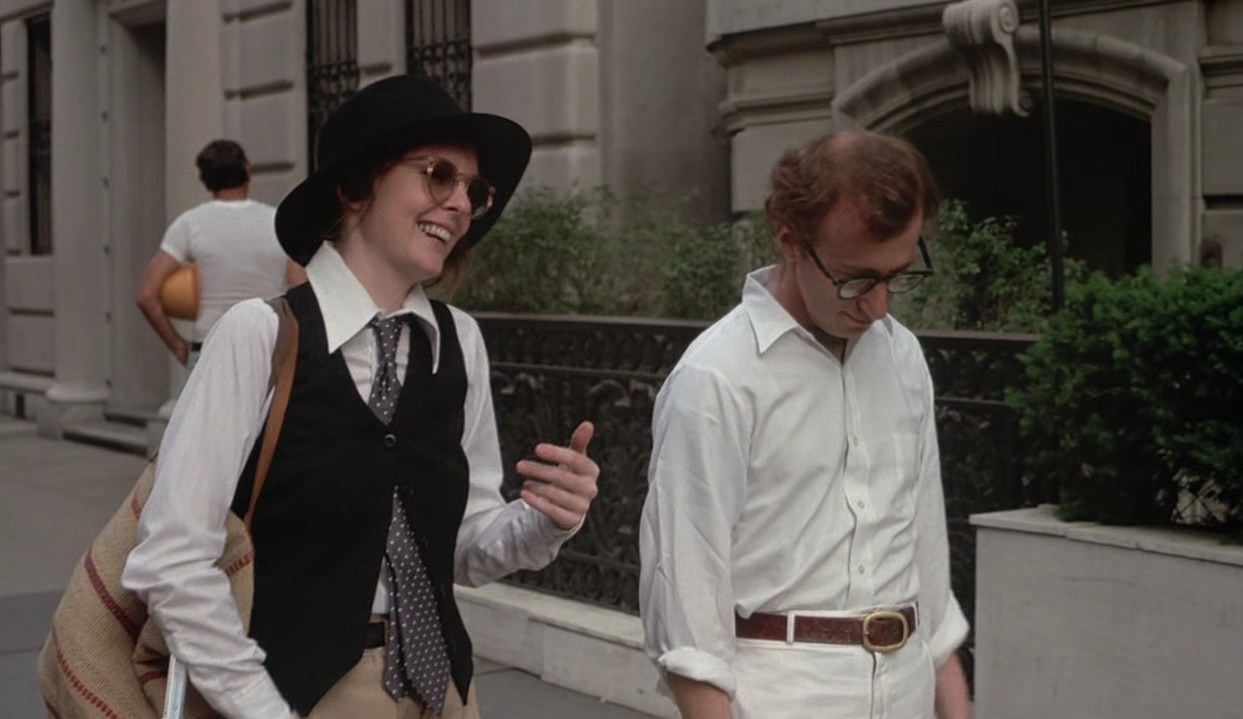
Brickman and Allen wanted their next script to be a loosely structured narrative with a literary feel.
Annie Hall (1977) began as a story of a man turning 40 trying to get a handle on his life. The first draft didn’t even have Annie in it. Brickman takes credit for suggesting to create someone who’s the opposite of Allen. Writing specifically with Keaton in mind, they came up with one of the most endearing characters in film.
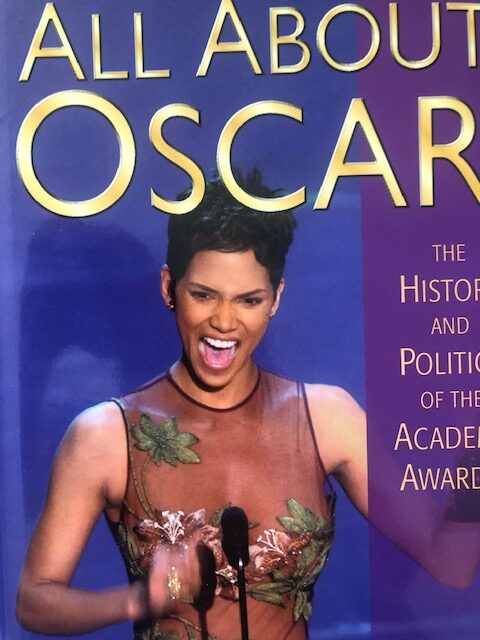
“Half of this little piece of tin, if not much more, belongs to Woody, who is the greatest collaborator anyone could ever wish for,” Brickman said in his acceptance speech. “He does a lot of brilliant work. He takes our script and makes it into what you saw. He picks up my lunch check for about five months, and today he refuses to come out of his apartment.”
Brickman then partnered with Allen on the scripts for Manhattan(1979) and Manhattan Murder Mystery (1993).
His parents emphasized music. On Sundays, the Brickmans would attend folk festivals in Washington Square Park, and he learned to play banjo, guitar and mandolin.
Also factoring into Brickman’s decision was his friendship with college roommate. The Tarriers wanted Weissberg to replace Arkin, who was leaving to pursue improv comedy and acting, and Weissberg convinced Brickman to come along.
“I was asked to join was because they needed somebody to front the group and talk while everybody was tuning up,” Brickman said. “I started to develop little jokes and routines.”
Brickman heard that it was easy to get hired on CBS’ Candid Camera because the show’s creator-producer, Allen Funt, was a taskmaster. He was right; Brickman landed the gig in 1960 and shared an office with Fannie Flagg and Joan Rivers.
Through Rollins, Brickman became friendly with Dick Cavett, another up-and-coming joke writer. Cavett got Brickman in the door at The Tonight Show. When head writer Walter Kempley quit, Brickman replaced him.
Brickman left The Tonight Show in 1971 to become a producer on The Dick Cavett Show. In 1975, he penned the ABC special The Muppets Show: Sex and Violence, a satire on the declining quality of television. He later shared screenwriting credit on the features For the Boys (1991) and Intersection (1994), both directed by Mark Rydell.
“In a sense, I went to school with Woody. He was like a couple of beats ahead of me,” Brickman said. “I would watch him navigate not only the work, but also dealing with the studios and how to try and preserve what it is that’s special.”