‘Tell Me Everything’ Dropped From Swiss Queer Film Fest after Palestinian Groups’ Boycott Threats

Everybody’s Perfect, a festival of queer cinema in Geneva, had initially unveiled Moshe Rosenthal’s Tell Me Everything as part of its lineup.
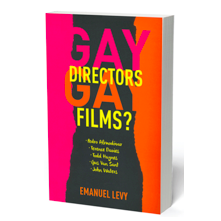
Gay Directors, Gay Films? By Emanuel Levy (Columbia University Press)
The film, which was selected as Israel’s submission for the Oscar’s international feature category, follows a young boy who discovers a “devastating secret” about his father in the 1980s at the height of HIV crisis.
The film premiered at Sundance in January and last month set a record for most nominations at Israel’s film academy awards.
“They started writing messages like ‘We’re going to boycott your festival’” said Charlotte Sector, the festival’s lead. “When people mention boycotting a festival that is a very big threat.”
Everybody’s Perfect, which opens Friday, Oct. 9 with the Swiss premiere of Strange Journey: The Story of Rocky Horror, is partly funded by Geneva, as is Palestine, Filmer C’est Exister.
Other groups involved in pressuring the queer festival to drop “Tell Me Everything” were Student Coordination for Palestine at the University of Geneva, BDS Geneva, CRAQ and Marad.
Despite receiving the statement, which according to Sector the festival shared with media organizations, the festival decided to de-program the film.
In a statement to the Swiss newspaper, the festival’s artistic director, Sylvie Cachin, said: “The cancelation isn’t related to the film itself, but to the desire to avoid controversy just days before the festival’s opening.”
Sector said: “Six days out from the festival they made the decision they wanted to not get into this kind of heated argument. It was a way of saying we’re all coming together, we need to come together.”
The cancelation comes following a number of pledges to boycott Israeli film institutions signed by actors including Javier Bardem and Emma Stone.
Israel’s filmmaking community, which is left-wing, has rejected such calls, pointing to films coming out of the country that are openly critical of the government, such as Naza, which debuted at Venice, and last year’s Israeli Oscar entry The Sea, about a Palestinian boy who goes to Tel Aviv.
The producers for Tell Me Everything said: “A film does not represent a government, and filmmakers should not be held responsible for its policies. Many of us in Israel oppose the war and are deeply critical of our government. ‘Tell Me Everything’ is a human story about love, family, identity and healing. We made it to create connection and conversation, not to represent a government. Would Iranian or American filmmakers be asked to make similar declarations about their governments before their films could be shown?”