Growing Up in a Religious Cult Almost Stopped her From Starring in ‘Breaking the Waves’:

But growing up in a religious cult almost ended her illustrious career before it even began.
The Oscar-nominated actor is at the Sarajevo Film Fest as the president of the jury and recipient of honorary Heart of Sarajevo Award
Speaking at the Sarajevo Film Fest, where she is presiding over the jury as well as receiving an honorary Heart of Sarajevo Award, the “Chernobyl” star spoke about the experience of growing up as part of the School of Philosophy and Economic Science.
The London-based organization advocates for conservative values, with strictly traditional gender roles and sexual ethics, and has often been described by former members as a sect, new religious movement, and a cult, with Watson describing it as the latter.
I was born into a very lovely family, but I grew up in a kind of religious cult that was very strict. I was a very devotional person. I felt very strongly about it. It took me a while to find my way because of that.”
Watson credits acting with “saving her life.”
While she began her performing career on stage as part of the Royal Shakespeare Company, it was Lars von Trier’s “Breaking the Waves” that sent the actor into international prominence. The 1996 drama saw Watson play Bess McNeill, a young woman living in a repressed, deeply religious community in the north of Scotland. There, she falls in love with a Danish oil worker played by Stellan Skarsgård. When he suffers a life-altering accident, Watson embarks on a sexual journey that contradicts the strict moral guidelines of her community.
“I did know that I had affinity with this character,” she said of Bess. “There is interesting part to this story that, when I told the people at the School of Economic Science that I was going to do a film and they inquired as to the nature of it, I was summoned and told in no uncertain terms that I was not to do this. I was told to go on my undignified way.”
“That moment was a rupture. This is where I’d grown up, where my friends were, and I walked away. I was desperately upset, but I also had a sense that my heart was taking flight. An incredible freedom. I knew in that moment that I should trust that feeling, because my true inner self sent me on the right path. But that sense of rupture, when there’s a sort of a nuclear explosion and an exposure to light and energy… All of that is in the movie. That’s part of why it works, because I was like a piece of wire being unplugged.”

Despite this cataclysmic synergy between art and real life, Watson did not tell Skarsgård about her upbringing until 2016, when they shared the screen again in the hit show Chernobyl.
“He literally did a spit take,” she recalled. “It felt so private at the time [of shooting the film]. I didn’t understand what was happening to me.”
Watson has become more open about talking about her past in the last decade, which she credits to a wide “societal understanding” of how it is “healthy to explore the damage that happens in your childhood.” “In the early 1990s, that wasn’t a thing in the way that it is now. It has taken me a lifetime to unpick it all. I wouldn’t have been able to articulate any of this [in 1996]. I was very defensive.”
That defensiveness was also very visible during Cannes with “Breaking the Waves.” Recalling the overwhelming experience of doing press conference at the French fete, Watson now realizes how “reserved” she came across as. The high-pressure environment had the young performer closing up, with Watson recalling how all she could think about was wanting to “come off as the most normal, boring person in the world, because to let anybody in, to let anybody know anything about me, isn’t safe.”
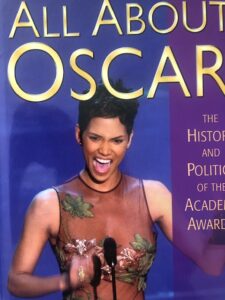
Being on the Oscar trail for both Breaking the Waves and Anand Tucker’s Hilary and Jackie was equally overwhelming.
But Watson recognizes that awards campaigns have become “much more extreme” in the years since. “The commercial nature of it is sad because it is not a true meritocracy. It’s about money, which makes a festival like this so beautiful. It’s very pure and lovely swimming in the river of storytelling here.”
Elsewhere in the conversation, Watson spoke about wanting to work with more female directors, despite not having done so often throughout her career. “That’s not me, that’s the industry,” she emphasized. “There are obviously a lot of brilliant female [directors]. But the fight to get to that level is a lot easier for men.” She noted how “incredible” the experience was of working with Chloe Zhao on “Hamnet.” “She takes you on a spiritual journey and makes the movie about it.”
Asked by a Palestinian audience member about the difficulties that marginalized actors have in entering a highly competitive industry, particularly those who work in war-torn countries, Watson said it is an “imaginative leap” for her to imagine how hard that must be. “What I do say to everybody is that Shakespeare belongs to Palestine as much as everywhere else.”
The actor recalled watching Michael Winterbottom’s “Welcome to Sarajevo” the night prior and realizing how “storytelling advocating for a place or people is so powerful.” “We are all in that river of creativity. I totally understand that resources are very sparse. I think a camera is a camera is a camera, and if you are open, it can see you.”
Watson is set to appear on the second season of HBO Max’s Dune: Prophecy, as well as star in Mira Nair’s historical drama “AMRI.”
She also will appear in Mackenzie Crook’s directorial debut, “Mars Express,” alongside Toby Jones. The film tells the real-life story of Colin and Judith Pillinger and their mission to find life on Mars in the late 1990s.