For director George Cukor, the very act of thinking was a photogenic quality–it had to register on camera. “Cukor understood that words are a result of thoughts, and thoughts are a result of emotions,” Shelley Winters, who was cast in the small, but important, role of Pat, the waitress, said about his method. “Don’t close your eyes,” he instructed Winters, “The eyes are the mirror to your soul. You must think every moment.” “Cukor knew how delicate the actor’s psyche is,” she said, “and that you can actually hear actors think if you concentrate.”
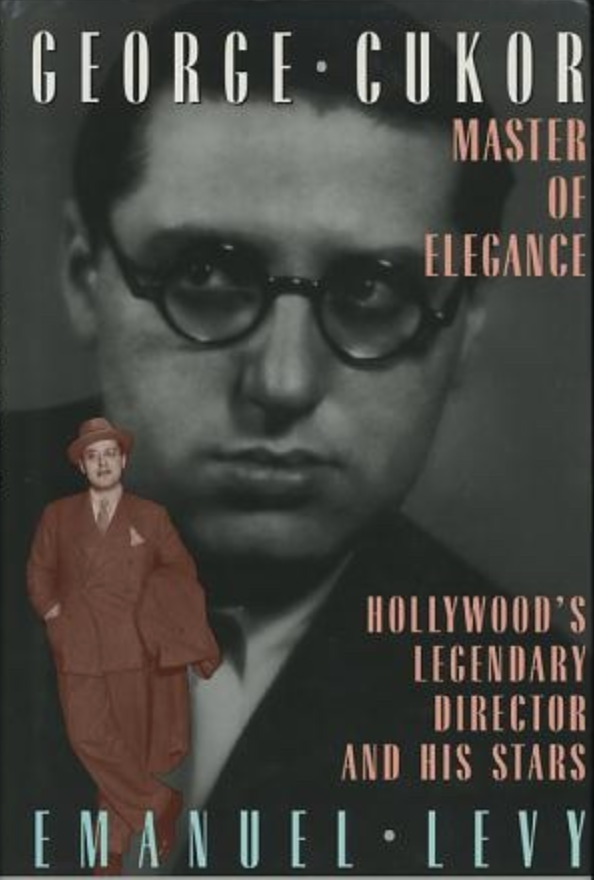
My Cukor Biography
This was one of many things Winters learned from Cukor. Winters had read for the role of Scarlett, but to this day she is not sure whether Cukor recognized her when she came to audition for A Double Life. Of the Scarlett test, Winter said, “I was only 13 or 14, and I wore for the audition wobbly high heels, looking pretty funny. I am probably the only girl who played Scarlett with a terrible Brooklyn accent.” Cukor just laughed. Trying not to offend her, he sent for two bottles of Coca Cola and chased everybody out of the office. “Are you serious about acting” Cukor asked. “Of course,” said the young Winters. He then told her to go to college and work on her speech. Cukor also instructed Winters to visit as many museums as possible in order to see how people walked and talked.
At the audition for A Double Life, Cukor told Winters, “The first thing you have to do is go to the bathroom and take off your false eye lashes and make-up. It’s not a movie star part; you are playing a waitress.” “I looked around the office,” Winters recalled, “and when I saw that there was no casting couch, I determined to take a risk and follow his instructions. Only later, I found he was gay”
Cukor had to go, but he gave her the script of A Double Life to read. Winters bought a tuna sandwich and swallowed the entire script in one reading at a public park. Her first reaction to the script was “God meant for me to play this part,” which she later repeated to the director, using the same words. Afterwards, Cukor questioned her in detail about each of the characters. “Don’t you want to hear me read” asked Winters. “No,” said Cukor. He then asked Winters to rehearse with a coach before taking the test.
They were testing seven girls for the part, including Kim Stanley and Lana Turner. Winters tested for another role at MGM, the same day she tested at Universal. Mervyn LeRoy shot her scene at MGM, and from there she hitchhiked to Universal. They rehearsed two or three times, but then, just when Winters thought they were going to shoot her scene, Cukor said, “You already did it.” “He knew,” Winters recalled, “that words like `roll ’em and action,’ made actors nervous, so he shot my last rehearsal.”
Not having heard the verdict about A Double Life, Winters persistently called Cukor at his house. Then one day, Cukor called to tell her she got the part. “Mr Cukor,” she said in tears, “I can’t do it, I just signed a contract for the stage musical Oklahoma. It was a marvelous scene. I was crying, and here was Cukor laughing hysterically.” “You better get a lawyer and agent soon,” Cukor said.
To express her gratitude, Winters brought Cukor flowers and a bottle of champagne. “Shirley,” he said, “You are not allowed to have champagne.” It was only when she put a pink flower in her hair that she began to suspect Cukor might have recognized her as the girl who auditioned for Scarlett. “Wait a minute,” he said, “there is something familiar about you.” The ice between them vanished and both broke out laughing.
Working on this film was not easy for Winters. One day, she thought Cukor was going to fire her. “I became comatose,” she recalled, “We had many takes of the same scene, but I inadvertently poured water on Colman’s hand and couldn’t function. Cukor must have thought he hired the village idiot.” Cukor asked Colman to take her to lunch at the Commissary and put her mind at ease.
Winters could be exasperating, and Cukor hit her soon after shooting began. “Mr. Cukor,” Winters said one day, “I don’t like this line, I think it would be better to say something else.” “You nincompoop” Cukor raged, “How dare you! Ruth and Garson have written this wonderful part, and you, you nothing, want to rewrite the dialogue.” Later on, however, Cukor came to an odd phrasing that did need changing. He read it to Winters and shouted, “And don’t say it this way.” He then reached out and slapped her across the face. After that, Winters did not dare open her mouth at all.
Cukor thought that Winters was both funny and sleazy in the movie. Her first important part, the starting point of her career, Winters made the waitress’s sexiness disgusting. Cukor was proud of the scene where Colman goes to her apartment and she makes all kinds of passes at him, which he ignores. She sits on the arm of his chair, and he runs his hand over her arm. You know it’s not a question of whether he’s going to lay her or not, but that he’ll decide when he wants to. This erotic cool was ahead of its time, and the kind of tease Cukor admired.
In another scene with Colman and Winters, Cukor turned off the light. He then told Winters to put perfume between her breasts and keep one foot on the floor. “He had excellent intuition about women,” she said, “He knew that women are very intuitive.”
“Many of the things I tell my students,” Winters said, “Cukor told me. “For example, in film acting, the audience is looking through a key hole—you don’t have to project.” “As soon as the director says `action,'” Cukor told her, “you have to come to life and have fun. When the camera turns, it must be absolutely real.” There was also the issue of punctuation–Cukor didn’t like to emphasize one line in a speech. There was always some suspense, because she didn’t know what Colman would do in the next take.
At the end of the shoot, Cukor gave Winters a bust statue of Colman, which she still treasures. For her part, realizing that the film showed off her talent, Winters thanked Cukor for “opening the door” and gave him a box of pills for stomach pain and heartburn.
Released on February 20, 1948, A Double Life scored a huge success and enjoyed some nice reviews. The film was nominated for four Oscar Awards, this time including Best Director.
Winning his first–and only–Oscar Award, Colman thanked Cukor for his patience and kindness. “Without these grand qualities of yours,” Colman said, “and your valuable direction and help, I couldn’t have done half the job. Remember me the next time you are casting.”
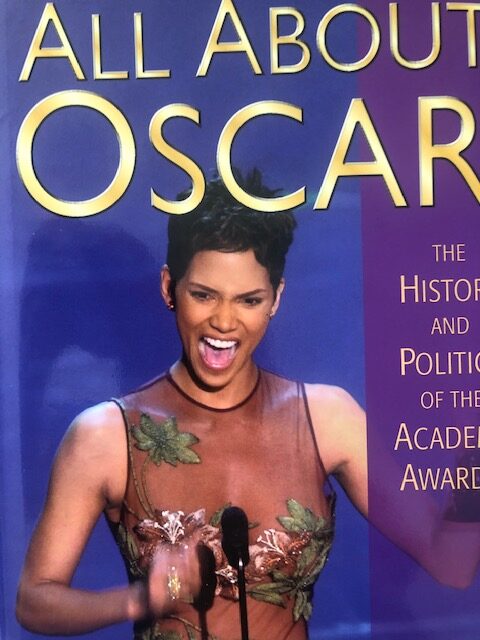
My Oscar Book:
Cukor failed to win a directorial Oscar; the winner that year was Elia Kazan, for the drama Gentleman’s Agreement.
Nonetheless, Cukor was pleasantly surprised to find himself on Variety’s list of top directors, one that included John Huston, George Stevens, and David Lean–he could not have aspired to belong t a better or more prestigious clique.