John Boorman Career Summary:
My Oscar Book:

October 7, 2020
Occupational Inheritance: No
Social Class:
Nationality: UK (then Hollywood)
Education: Korean War
Training: dry cleaner and journalist in the 50s; Docu Unit
First Film: Catch Us If You Can (1965); aged 32
Breakthrough: Point Blank, 1967; aged 34:
Success: Deliverance, 1972, Boorman’s first true success, aged 39
First Oscar Nomination:
Gap between First Film and First Nom: 7 years
Other Nominations: 5 Oscar nominations; no awards
Other Awards: Best Director Award, Cannes, 1970; aged 37; The General, 1998, Best Director Cannes Film Fest; aged 55; Hope and Glory, 1987, NSFC; aged 54
Genre (specialties): Variety of genres: crime-noir, exotic tales, biopictures
Collaborators: scribe
Last Film:
Contract:
Major Disasters: Exorcist II: The Heretic, 1977, aged 44
Major Successes: Hope and Glory, 1988; aged 56
Career Shape: ups and downs;
Career Output: 22
Career Span: 1965-present
Marriage:
Politics:
Retirement:
Death: NA
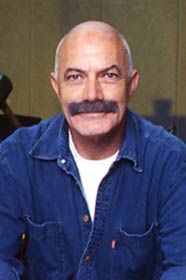
John Boorman (born January 18, 1933) is an English filmmaker best known for his features Point Blank, Hell in the Pacific, Deliverance, Zardoz, Exorcist II: The Heretic, Excalibur, The Emerald Forest, Hope and Glory, The General, The Tailor of Panama, and Queen and Country.
In a career spanning five decades, he had directed 22 films and received five Oscar nominations, twice as Best Director (for Deliverance, and Hope and Glory).
He is also credited with creating the first Academy Award screeners to promote his 1985 film, The Emerald Forest.
In 2004 Boorman received the BAFTA Fellowship for lifetime achievement from the British Academy of Film and Television Arts.
Boorman was born in Shepperton, Middlesex, England, the son of Ivy (née Chapman) and George Boorman. He was educated at the Salesian School in Chertsey, Surrey.
Boorman was conscripted for compulsory military service during the Korean War when he became a clerical instructor. He once faced court-martial for “seducing a soldier from the course of his duty” by criticizing the war to his trainees; this was abandoned when Boorman showed The Times was the source of all his comments. After army service he worked as a drycleaner and journalist in the late 1950s. He ran the newsrooms at Southern Television in Southampton and Dover before moving into TV documentary filmmaking, eventually becoming the head of the BBC’s Bristol-based Documentary Unit in 1962.
Capturing the interest of producer David Deutsch, he was offered the chance to direct a film aimed at repeating the success of A Hard Day’s Night (directed by Richard Lester in 1964). Catch Us If You Can (1965) was a tale about a competing pop group named Dave Clark Five. While not as successful commercially as Lester’s film, it drew good reviews from critics and helped Boorman’s way into the film industry.
Boorman was drawn to Hollywood for the opportunity to make Point Blank (1967), based on a Richard Stark novel. That film noir brought a stranger’s vision to the decaying fortress of Alcatraz and the proto-hippy world of West Coast America. Lee Marvin gave the then-unknown director his full support, telling MGM that he would defer all his approvals on the project to Boorman.
After Point Blank, Boorman re-teamed with Lee Marvin and Toshiro Mifune for Hell in the Pacific (1968), which tells sort of a fable story about two soldiers–American and Japanese– who are stranded together on an island.
Returning to the UK, he made Leo the Last (US/UK, 1970), which showed the influence of Fellini and even starred Fellini’s regular actor, Marcello Mastroianni, for which he won the Best Director Award at the Cannes Fest.
Boorman achieved greater resonance with Deliverance (US, 1972, adapted from a novel by James Dickey), about the nightmarish ordeal of four urban men, played by Jon Voight, Burt Reynolds, Ronny Cox and Ned Beatty.
The quartet encounters one danger after another, from an unexpected quarter while whitewater- rafting through the Appalachian backwoods. The film became Boorman’s first big box-office success, and also earning several award nominations.
At the beginning of the 1970s, Boorman was planning to film The Lord of the Rings and corresponded about his plans with the author, J. R. R. Tolkien. Ultimately the production proved too costly, though some elements and themes can be seen in Excalibur.
A wide variety of films followed. Zardoz (1974), starring Sean Connery, was a post-apocalyptic sci-fi set in the 23rd century. The “Zardoz world” was on a collision course with an “effete” eternal society, which it accomplished, and in the story must reconcile with a more natural human nature.
Boorman was selected as director for Exorcist II: The Heretic (1977), a move that surprised the industry given his dislike of the original film. Boorman declared: “Not only did I not want to do the original film, I told the head of Warner Brothers John Calley I’d be happy if he didn’t produce the film too.”
The original script by Broadway playwright William Goodhart was intellectual and ambitious, based around the metaphysical nature of the battle between good and evil, and specifically the writings of Catholic theologian Pierre Teilhard De Chardin, “I found It extremely compelling. It was based on Chardin’s intoxicating Idea that biological evolution was the first step In God’s plan, starting with inert rock, and culminating In humankind.”
Despite Boorman’s continued rewriting throughout shooting, the film was deemed incomprehensible. Released in June 1977, it was a critical and box office disaster. Boorman was denounced by author William Peter Blatty, the author of the original novel The Exorcist, and William Friedkin, director of the first Exorcist film. Boorman later admitted that his approach to the film was “all wrong.”
The Heretic is often considered not just the worst film of The Exorcist series, but one of the worst films of all time.
Excalibur (UK, 1981), a dream project of Boorman’s, was a retelling of the Arthurian legend, based on Le Morte D’Arthur. Boorman cast actors Nicol Williamson and Helen Mirren against their protests, as the two disliked each other intensely, but Boorman felt their mutual antagonism would enhance their characterizations of the characters they were playing. The production was based in the Republic of Ireland, where Boorman had relocated. For the film he employed all of his children as actors and crew and several of Boorman’s later films have been ‘family business’ productions. The film, one of the first to be produced by Orion Films, was a moderate success.
The Emerald Forest (1985) saw Boorman cast his actor son Charley Boorman as an eco-warrior, in a rainforest adventure that included commercially required elements – action and near-nudity – with authentic[citation needed] anthropological detail. Rospo Pallenberg’s original screenplay was adapted into a book of the same name by award-winning author Robert Holdstock. Because the film’s distributor faced business troubles that year, the film did not receive a traditional “For Your Consideration” advertising campaign for the 1985 Oscars, despite positive critical reviews. Boorman took the initiative to promote the film himself by making VHS copies available for no charge to Academy members at several Los Angeles-area video rental stores. Boorman’s idea later became ubiquitous during Hollywood’s award season. However, Emerald Forest itself received no nominations from Boorman’s strategy.
Hope and Glory (1987, UK) was Boorman’s most autobiographical movie to date, a semi-fictionalized retelling of his childhood in London during The Blitz. Produced by Goldcrest Films, with Hollywood financing, it proved to be a box office hit in the US, receiving several Oscar and BAFTA nominations.
However, his next film, the 1990 US-produced comedy about a dysfunctional family, Where the Heart Is, was a major flop.
When his friend David Lean died in 1991, Boorman was set to take over direction of Lean’s long-planned adaptation of Nostromo, though the production ultimately collapsed.
Beyond Rangoon (US, 1995) and The Tailor of Panama (US/Ireland, 2000) were both fims that aimed to explore unique worlds, populated with alien characters stranded and desperate.
Boorman won the Best Director Award at the 1998 Cannes Film Fest for The General, his biopic of Martin Cahill. The film is about a glamorous, yet mysterious, criminal in Dublin who was killed, apparently by the Provisional Irish Republican Army. Boorman himself was one of Cahill’s burglary victims, having the gold record awarded for the score of Deliverance stolen from his home.
He was appointed CBE in the 1994 Birthday Honors for services to the film industry.
In 2004, Boorman was also made a Fellow of BAFTA.
Released in 2006, The Tiger’s Tail was a thriller set against the tableau of early 21st century capitalism in Ireland. At the same time, Boorman began work on a long-time pet project of his, a fictional account of the life of Roman Emperor Hadrian (entitled Memoirs of Hadrian), written in the form of a letter from a dying Hadrian to his successor. In the meantime, a re-make/re-interpretation of the classic The Wonderful Wizard Of Oz with Boorman at the helm was announced in August 2009.
In 2007 and 2009 he took part in a series of events and discussions as part of the Arts in Marrakech Fest along with his daughter Katrine Boorman, including an event with Kim Cattrall called “Being Directed.”
In November 2012, he was selected as a president of the competition jury of the 2012 Film Festival of Marrakech.
In Autumn 2013, Boorman began shooting Queen and Country, the sequel to his 1987 Oscar-nominated Hope and Glory, using locations in Shepperton and Romania. The film was screened as part of the Directors’ Fortnight section of the 2014 Cannes Film Fest.
Boorman’s debut novel, “Crime of Passion,” was published in 2016 (by Liberties Press, Dublin), with a French-language edition published by Marest in 2017.
Boorman has been a longtime resident of the Republic of Ireland and lives in Annamoe, County Wicklow, close to the Glendalough twin lakes.
He has 7 children. His son Charley Boorman has a career as an actor but reached wider attention when he and actor Ewan McGregor made a televised motorbike trip across Europe, Central Asia, Siberia, Alaska, Canada, and the Midwest US during 2004. His daughter Katrine Boorman (Igrayne in Excalibur) works as an actress in France. John Boorman’s daughter Telsche Boorman wrote the screenplay for Where the Heart Is. She died of ovarian cancer in 1996 at the age of 36. She was married to the journalist Lionel Rot-cage, the son of French singer Régine. John Boorman also has a daughter, Daisy Boorman, who is the twin sister of Charley, and three other children: Lola, Lee and Lily Mae.
According to 2012 interview, he was recently divorced.
Oscar Awards
My Oscar Book:
Best Picture (1973) (Deliverance) – Nominated
Best Director (1973) (Deliverance) – Nominated
Best Picture (1988) (Hope and Glory) – Nominated
Best Director (1988) (Hope and Glory) – Nominated
Best Original Screenplay (1988) (Hope and Glory) – Nominated
British Academy Film Awards (BAFTA)
Best Film (1988) (Hope and Glory) – Nominated
Best Original Screenplay (1988) (Hope and Glory) – Nominated
BAFTA Fellowship (2004) – Won
Cinema for Peace
Cinema for Peace Award for 2004’s Most Valuable Film, In My Country