Occupational Inheritance: No
Social Class:
Race/Ethnicity/Religion: Hungarian-Jewish
Family:
Education: City College of NY, pre-med
Training: Theodora Irvine’s Studio of the Theatre
Teacher/Inspirational Figure:
Radio Debut:
TV Debut:
Stage Debut:
Broadway Debut: 1935; age 23
Film Debut:
Breakthrough Role: High Sierra, 1941; age 29
Oscar Role: A Song to Remember, 1945; aged 33
Other Noms:
Other Awards:
Frequent Collaborator:
Screen Image: character actor
Last Film:
Career Output:
Film Career Span:
Marriage: 2 actresses
Politics: Democrat
Death: 77
Cornel Wilde (born Kornél Lajos Weisz; October 13, 1912 – October 16, 1989) was Hungarian-American actor and director.
Wilde’s acting career began in 1935, when he made his debut on Broadway.
In 1936 he began making small, uncredited appearances in films.
By the 1940s he had signed a contract with 20th Century Fox, and by the mid-1940s he was a major leading man.
He was nominated for the Best Actor for his performance in 1945’s A Song to Remember.
In the 1950s, he moved to writing, producing and directing films, and still continued his career as an actor.
Wilde was born in 1912 in Privigye, Kingdom of Hungary (now Prievidza, Slovakia), although his year and place of birth are inaccurately given as 1915 in New York City.
His Hungarian Jewish parents were Vojtech Béla Weisz (Anglicized to Louis Bela Wilde) and Renée Mary Vid (Rayna Miryam). He was named for his paternal grandfather, and upon arrival in the US at age 7 in 1920, his name was Anglicized to Cornelius Louis Wilde.
A talented linguist and astute mimic, he had ear for languages, which became apparent in his acting career.
Wilde attended the City College of New York as pre-med student, completing the four-year course in 3 years and winning a scholarship to the Physicians and Surgeons College at Columbia University.
He qualified for the US fencing team for the 1936 Summer Olympic Games, but quit before the games to take role in the theater. In preparation for acting career, he and new wife Marjory Heinzen (known as Patricia Knight) shaved years off their ages, 3 for him and 5 for her. Most publicity records and subsequent sources wrongly indicate 1915 birth for Wilde.
After studying at Theodora Irvine’s Studio of the Theatre, Wilde began appearing in stock and in New York. He made his Broadway debut in 1935 in Moon Over Mulberry Street. He also appeared in Love Is Not So Simple, Daughters of Etreus, and Having Wonderful Time.
He did the illustrations for Fencing, a 1936 textbook on fencing and wrote a fencing play, Touché, under pseudonym of Clark Wales in 1937.
He toured with Tallulah Bankhead in production of Antony and Cleopatra; during the run he married co-star Patricia Knight.
Acting jobs were sporadic over the next few years. Wilde supplemented his income with fencing matches; his wife did modeling work. Wilde wrote plays, some performed by the New York Drama Guild.
Wilde was hired as fencing teacher by Olivier for his 1940 Broadway production of Romeo and Juliet and was given the role of Tybalt in the production.
Contract at Warner
Although the show had short run, his performance netted him Hollywood film contract with Warner.
Wilde had uncredited bit part in Lady with Red Hair (1940), then got a small part in High Sierra (1941), which included a scene with Bogart. He had small roles in Knockout (1941) and Kisses for Breakfast (1941).
Wilde was then signed by 20th Century Fox, which gave him good role in the B picture The Perfect Snob (1941). It was followed by a war movie, Manila Calling (1942).
He was the romantic lead in Life Begins at Eight-Thirty (1942), supporting Monty Woolley, and he supported Sonja Henie in Wintertime (1943).
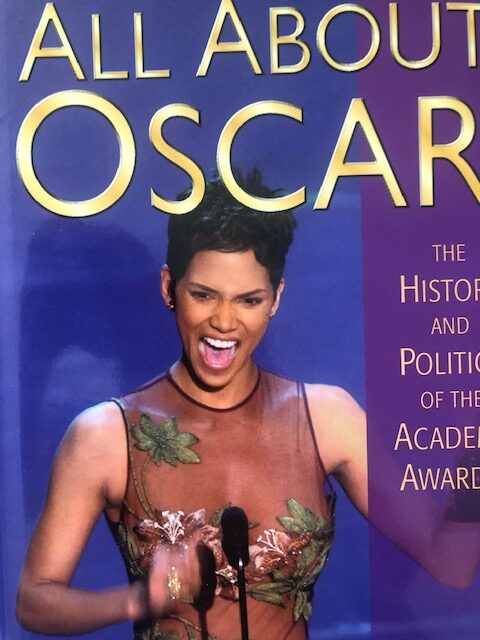
Best Actor Nomination
In 1945, Columbia began a search for actor to play the role of Frédéric Chopin in A Song to Remember. They tested Wilde, and agreed to cast him after negotiation with Fox, which agreed to lend him to Columbia and one film a year for several years. Part of the deal involved Fox borrowing Alexander Knox from Columbia to appear in Wilson (1944). A Song to Remember was a big hit, made Wilde a star and earned him a nomination for Best Actor.
Columbia used him in two swashbucklers: as Aladdin in A Thousand and One Nights with Evelyn Keyes, and as the son of Robin Hood in The Bandit of Sherwood Forest (made 1945, released 1946).
Back at Fox, he played the lead in Leave Her to Heaven (1945), with Gene Tierney and Jeanne Crain, an enormous hit at the box office. So too was The Bandit.
In 1946, Wilde was voted the 18th-most popular star in the US, and in 1947 the 25th.
Fox announced him for Enchanted Voyage. It ended up not being made; instead he was reunited with Crain in Fox’s musical Centennial Summer (1946).
In January 1946, Wilde was suspended by Fox for refusing the lead in Margie (1946). But This suspension was lifted so Wilde could play the lead in the studio’s big budget version of Forever Amber (1947). Filming started, then was halted when the studio decided to replace Peggy Cummins. In October 1946, Wilde refused to return to work unless he was paid more; his salary was $3,000 a week, with 6 years to run–he wanted $150,000 per film for two films per year. The parties agreed and filming resumed. Wilde also appeared with Maureen O’Hara in The Homestretch (1947).
He was in a comedy at Columbia with Ginger Rogers, It Had to Be You (1947). At Fox he turned down a role in That Lady in Ermine (1948). Not wanting to go on suspension, he agreed to make The Walls of Jericho (1948), from the same director as Leave Her to Heaven but less popular.
Road House (1948), for Fox, was highly regarded noir and decent hit. He then left Fox, which he later regarded as mistake.
At Columbia, Wilde was in Shockproof (1949), another noir, with his then-wife Patricia Knight. They appeared together in Western Wind, a play at the Cape Playhouse.
Wilde made Swiss Tour, aka Four Days Leave (1949), an independent film in Switzerland. He returned to Fox for Two Flags West (1950), then went to RKO for At Sword’s Point (filmed in 1949, but not released until 1952), a swashbuckler with Maureen O’Hara.
He played a trapeze artist in The Greatest Show on Earth (1952) for Cecil B. DeMille, an enormous hit, though Wilde was one of several stars.
At Columbia, he was in California Conquest (1952), Western for producer Sam Katzman.
He went over to Warner for Operation Secret (1952), then was back at Fox for Treasure of the Golden Condor (1952).
He focused on adventure stories: Saadia (1953) for MGM, Star of India (1954) for UA. He had part in the all-star executive drama Woman’s World (1954) for Fox, then went back to action with Passion (1954) for RKO.
In the 1950s Wilde and his second wife, Jean Wallace, formed their film production company, Theodora, named after Theodora Irvine. Their first movie was the film noir The Big Combo (1955), a co-production with Security Pictures that was released through Allied Artists. Wilde and Wallace played the leads. That year he also directed an episode of General Electric Theatre.
That same year, he appeared in episode of I Love Lucy as himself, and starred in The Scarlet Coat (1956) for MGM.
Wilde produced and starred in another for Theodora with Wallace, Storm Fear (1956) from a script by Horton Foote. This time Wilde also directed “to save money.”
Theodora announced Wilde would play Lord Byron, but the film was never made.[24] Other announced projects included Curly and Second Act Curtin.
Wilde was meant to appear as Joshua in de Mille’s The Ten Commandments but was not in the final film – he turned down the role, saying it was too small and the pay was too little (John Derek played it). Wilde said it was his worst mistake because having even a small role in big blockbuster would have given him career momentum.
As actor only, he appeared in Hot Blood (1956) with Jane Russell for director Nicholas Ray, and Beyond Mombasa (1956), shot in Kenya; both were released by Columbia.
In 1957, he guest-starred in an episode of Father Knows Best as himself. Also in 1957, he played the role of the 13th century Persian poet Omar Khayyám in the Omar Khayyam.
He produced, directed and starred in two films for Theodora, released through Paramount: The Devil’s Hairpin (1957), car-racing drama, and Maracaibo (1958). Wilde called them “an acceptable A-B, meaning a picture with B budget but A pretensions.”
He had the lead in Edge of Eternity (1959) for director Don Siegel.
Wilde went to Italy to star in Constantine and the Cross (1962).
In Britain, he wrote, produced, directed and starred in Lancelot and Guinevere (1963).
Wilde produced, directed, and starred in The Naked Prey (1965), playing man stripped naked and chased by hunters from an African tribe affronted by the behavior of other members of his safari party. The original script was based on true historical incident about a trapper named John Colter being pursued by Blackfeet Indians in Wyoming. Lower shooting costs, tax breaks, and material and logistical assistance offered by Rhodesia persuaded Wilde to shoot the film on location in Rhodesia (now Zimbabwe). It is probably his most highly regarded film as director.
Wilde followed with a war movie, Beach Red (1967).
He announced Namugongo, another movie in Africa, about the White Fathers missionaries in the Kingdom of Buganda, but it was never made.
He had a supporting role in The Comic (1969), directed by Carl Reiner.
He wrote, produced, and directed the science fiction film No Blade of Grass (1970).
During the early 1970s, Wilde took a break from pictures and theater to turn toward TV. He appeared as an unethical surgeon in the 1971 Night Gallery episode “Deliveries in the Rear” and portrayed an anthropologist in the 1972 TV movie Gargoyles.
He returned to film and wrote, directed, and starred in the exploitation film Sharks’ Treasure, a 1975 film intended to capitalize on the Shark Fever popular in the mid-1970s in the wake of the success of Peter Benchley’s Jaws.
He acted in The Norseman (1978) and The Fifth Musketeer (1979).
In 1937, he married the actress Patricia Knight, who starred alongside him in Shockproof (1949). Their daughter, Wendy, was born on February 22, 1943. They divorced in 1951.
Five days after his divorce, he married actress Jean Wallace. Wilde became stepfather to Wallace’s two sons, Pascal and Thomas, from her marriage to Franchot Tone. Their son, Cornel Wallace Wilde, was born on December 19, 1967. Wilde senior and Wallace starred together in several films including The Big Combo (1955), Lancelot and Guinevere (1963), and Beach Red (1967). They divorced in 1981.
A Democrat, Wilde supported Adlai Stevenson during the 1952 presidential election.
Wilde died of leukemia on October 16, 1989, 3 days after 77th birthday.
For his contribution to the motion pictures, Cornel Wilde has a star on the Hollywood Walk of Fame at 1635 Vine Street.
Partial filmography
As director
Storm Fear (1955)
The Devil’s Hairpin (1957)
Maracaibo (1958)
Lancelot and Guinevere (1963)
The Naked Prey (1965)
Beach Red (1967)
No Blade of Grass (1970)
Sharks’ Treasure (1975)
As actor
Exclusive (1937) as Reporter (uncredited)
Lady with Red Hair (1940) as Mr. Williams (uncredited)
1940s
High Sierra (1941) as Louis Mendoza
Knockout (1941) as Tom Rossi
Kisses for Breakfast (1941) as Chet Oakley
The Perfect Snob (1941) as Mike Lord
Manila Calling (1942) as Jeff Bailey
Life Begins at Eight-Thirty (1942) as Robert Carter
Wintertime (1943) as Freddy Austin
The Bandit of Sherwood Forest (1945) as Robert of Nottingham
A Song to Remember (1945) as Frédéric Chopin
A Thousand and One Nights (1945) as Aladdin
Leave Her to Heaven (1945) as Richard Harland
Centennial Summer (1946) as Philippe Lascalles
The Homestretch (1947) as Jock Wallace
Forever Amber (1947) as Bruce Carlton
It Had to Be You (1947) as George McKesson / Johnny Blaine
Stairway for a Star (1947) as Jimmy Banks (utilised scenes from an unfinished 1940 film)
The Walls of Jericho (1948) as Dave Connors
Road House (1948) as Pete Morgan
Shockproof (1949) as Griff Marat
1950s
Swiss Tour (1950) as Stanley Robin
Two Flags West (1950) as Capt. Mark Bradford
The Greatest Show on Earth (1952) as The Great Sebastian
At Sword’s Point (1952) as D’Artagnan Jr.
California Conquest (1952) as Don Arturo Bordega
Operation Secret (1952) as Peter Forrester
Treasure of the Golden Condor (1953) as Jean-Paul
Main Street to Broadway (1953) as Cornel Wilde
Saadia (1953) as Si Lahssen
Star of India (1954) as Pierre
Woman’s World (1954) as Bill Baxter
Passion (1954) as Juan Obreón
The Big Combo (1955) as Police Lt. Leonard Diamond
The Scarlet Coat (1955) as Maj. John Boulton
Storm Fear (1955) as Charlie Blake
Hot Blood (1956) as Stephano Torino
Beyond Mombasa (1956) as Matt Campbell
Father Knows Best – ‘An Evening to Remember’ Series 3, Episode 25 (1957) as himself (Cornel Wilde)
Omar Khayyam (1957) as Omar Khayyam
The Devil’s Hairpin (1957) as Nick Jargin
Maracaibo (1958) as Vic Scott
Edge of Eternity (1959) as Les Martin
1960s
Constantine and the Cross (1961) as Constantine
Lancelot and Guinevere (1963) as Sir Lancelot
The Naked Prey (1965) as Man
Beach Red (1967) as Capt. MacDonald / Narrator
The Comic (1969) as Frank Powers
1970s
No Blade of Grass (1970) as Radio voice (voice)
Gargoyles (1972) as Dr. Mercer Boley
Sharks’ Treasure (1975) as Jim Carnahan
The Norseman (1978) as Ragnar
The Fifth Musketeer (1979) as D’Artagnan
Flesh and Bullets (1985)
As writer
The Devil’s Hairpin (1957)
Lancelot and Guinevere (1963) (as Jefferson Pascal)
Beach Red (1967) (as Jefferson Pascal)
No Blade of Grass (1970) (as Jefferson Pascal)
Sharks’ Treasure (1975)