More than 100 academics at Britain’s top-flight universities have joined forces to “fight cancel culture” in a new council for academic freedom.
The scholars have formed the London Universities’ Council for Academic Freedom that spans all the capital’s campuses, University College London (UCL), King’s College London, Imperial College London, London School of Economics (LSE).
Inspired by the Harvard Council on Academic Freedom in the US, which was launched earlier this year, the group has already amassed more than 100 academics – 70 of them professors – mainly from the ‘big four’ London universities, members of the prestigious Russell Group.
They will aim to prevent free speech scandals happening in the first place by “demonstrating the strength and breadth of support for academic freedom” to university bosses and drawing up resources to challenge “institutional policies and practices” that erode free speech.
Concern: academic freedom
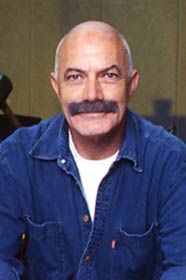
One of the co-founders, John Armstrong, a lecturer in financial mathematics at King’s College London, stated: “We all need to fight cancel culture. It has been painted as Left-Right issue, but academics across the political spectrum need to know that they can explore controversial ideas without fearing for their careers.”
“Over the last few years, there have been growing concerns about academic freedom and we think it’s timely given the legislation on academic freedom, that may give us entry point to actually get university leaders to engage with these issues with academics who care deeply about it.
“The transgender issue has alerted people to how serious the problems are, but of course it’s not just that – whether it be the current discussion about Israel-Hamas Terrorist, Islam, race, all sorts of issues.”
Non-partisan group
The non-partisan group stressed that “academic freedom safeguards the pursuit of knowledge and truth, which is central to the mission of higher education” and underpins the knowledge universities can produce in a democracy.
“Universities should not adopt institutional positions on contested issues,” their launch statement said.
“We encourage open, honest, courageous and reasoned discussion of controversial ideas, in and outside of the classroom, in a spirit of having respect for people even while one does not necessarily respect their beliefs.
“We oppose harassment and discrimination against university staff and students, including on the basis of their beliefs and lawful expression of their views. We support the right to protest and criticize but oppose attempts to obstruct the freedom of others to express their lawful views.”
Akua Reindorf KC, the leading barrister who has helped challenge the influence of the controversial charity Stonewall in higher education, will speak at a launch event for the council at LSE on Nov 20.
Some of the recent free speech rows to hit London’s universities include some Left-wing King’s College London academics refusing to condemn Hamas, the proscribed terror group, over the Israel attack, the same university excluding white staff from tai chi classes, and Dr Armstrong helping fight plans from sector-wide regulators to “decolonize” mathematics.
Imperial College London urged students to “take action” and “have hard conversations” with friends and family who deny “white privilege” in diversity training.
At LSE, Lent and Easter terms were “cancelled” earlier this year and replaced with non-Christian names.
In 2021, the Israeli ambassador Tzipi Hotovely was forced to flee the campus after being hounded by pro-Palestinian students who refused to let her speak.
Last year, academics demanded an apology from LSE bosses over a “hostile environment” for staff with gender-critical views because of an “ideological cabal” running its gender studies department.