Rafei Returns to Hometown in ‘Tripoli/A Tale of Three Cities’ Trailer
Raed Rafei interviewed people about their new ideas for his documentary, “a poetic reflection on the … dramatic moments that Lebanon has experienced … in anticipation of the current devastating war.”

Tripoli/A Tale of Three Cities, a documentary by Lebanese director Raed Rafei, will celebrate its world premiere in the IDFA, which runs Nov. 14-24.
“Queer director Raed Rafei returns to Tripoli, Lebanon to confront a hometown that once rejected him,” a synopsis for the doc explains. “He interviews the city’s inhabitants about their cultural and social beliefs and their embrace of new ideas. This contemplative urban symphony paints a picture of a city trapped in a self-spun web, paralyzed by a deep economic crisis, a faltering revolution and a looming doomsday.”
With a microphone in hand, ad open eart and mind, Rafei walks around coffee shops, public squares and parks to ask the city’s inhabitants about their socio- beliefs. In the process, he meets up a group of marginalized individuals whose eccentric life choices contradict the general lifestyle in an otherwise religiously and socially conservative city.
Through intimate conversations with a communist activist, a queer music producer and other characters, Tripoli explores the complicated relations for,med by an individual and group in crisis with a hometown, which is itself in crisis, or rather multiple crises (economic, cultiral and military).
“Tripoli is my hometown. It’s where I was raised and where my roots are,” said Rafei. “As a queer child, I have always felt alienated by the city’s heteronormative dominant culture. But since I started residing elsewhere, every time I return to visit, I feel an unexplainable magnetic pull towards it.”
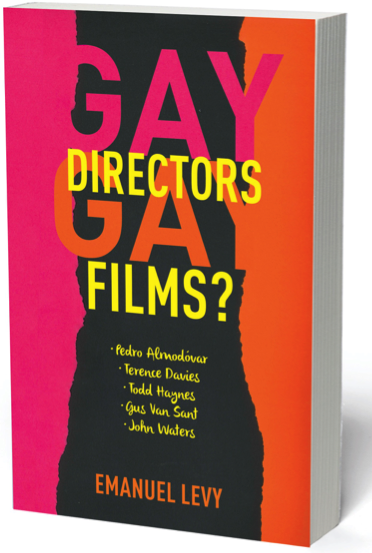
Gay Directors, Gay Films? Emanuel Levy (Columbia University Press).
“Through cinema, I found ways to reorient myself in the city,” explained Rafei. “The film deconstructs the origins of the homophobic discourse but also explores the depth and complexity of belonging to one’s hometown. My positionality as both a native of Tripoli and an outsider to it allowed me to explore the city’s multiple facets, as both a real space and an imagined, fantasized entity.”
Credits:
Produced, directed by Raed Rafei
Running time: 88 minutes
Arabic and English with English subtitles
Companion feature:
If you are interested in issues of gay identity and existence in non-Western counries, you shuld also check out Miguel’s War.