100 Most Significant Political Films (Survey by J. Hoberman)
100. One Sings, the Other Doesn’t (1977), France, Agnes Varda
99. Fail Safe (1964), U.S., Franklin Schaffner
98. The Man Who Shot Liberty Valance (1962), U.S. John Ford
97. Germany Year Zero, 1947, Italy, Roberto Rossellini
96. A Grin Without a Cat (1977), France, Chris Marker
95. I Am a Fugitive from a Chain Gang (1932), U.S. Mervin LeRoy
94. Weekend (1967), France, Godard
93. The World (2000), China
92. Tin Drum (1979), Germany
91. Syriana (2005), U.S. Stephen Gaghan
90. Investigation of a Citizen Above Suspicion (1970), Italy, Elio Petri
Oliver Stone made “Salvador,” his first major film outside the studio system, and benefited from the process in every possible way.
Grade: B+
| Salvador | |
|---|---|
_POSTER.jpg)
Theatrical release poster
|
|
This jittery, restless saga centers on an obsessive American photojournalist (played by James Woods, brilliant), who drives into the politically troubled El Salvador and, while there, confronting the ugly side of American imperialism and other evils.
It’s an ideologically critical, energetically dynamic movie that Marlon Brando, at its most political, would have approved of, and perhaps even play, if it were made in the 1950s or 1960s.
The pulpy screenplay, by Stone and Richard Boyle, based on the latter’s real-life story, was nominated for an Oscar.
The plot begins in 1980, as Boyle, then a vet but unemployed journo, decides to go to El Salvador with his buddy, Dr. Rock (James Belushi, in one of his better turns), an unemployed disc jockey.
Unaware of the intricacies of the political situation there, Boyle promises a thrilling time with drugs, booze, and sex (with prostitutes).
At first, the idea is just to make a quick buck in a country torn by what he defines as “little guerrilla war,” a stab at biases of American mass media, misled by Reagan, in reporting the situation down there.
Things change, however, as soon as the duo cross the border, which throws them into turmoil, and life-threatening situation, as a result of the devastating civil war.
From that point on, the film assumes the shape of a surreal nightmare that chronicles the chaos in El Salvador in 1980-1981.
The film draws a classic contrast between jaded leftists Americans and decent, honest Salvadorian people, forced to endure senseless horror, confusion, and despair.
As would become clear in future Stone films (“Platoon,” “Born on the Fourth of July,” “The Doors,” “JFK”), Salvador wears its politics on its sleeves. It is replete with preachy speeches and messages. There is also a romantic interlude that is not particularly compelling; it’s more of a disruption, and the need to have a female role?
Yet the film displays raw political and emotional power, and the nervous, edgy tone feels suitable for depicting Boyle’s unstable persona as well as El Salvador’s instability as a country.
Salvador, no doubt, is a sensationalistic, pulp fiction work, but in its good moments, plentiful, it surpasses the quality of the Oscar winning Platoon, made by Stone the same year on a bigger budget.
Woods, who previously had worked in TV and theater, plays the cool anti-hero to the hilt, a turn that deservedly eared him his first Best Actor nomination (see below).
Despite positive reviews, the movie was a commercial disappointment, failing even to recoup its budget.
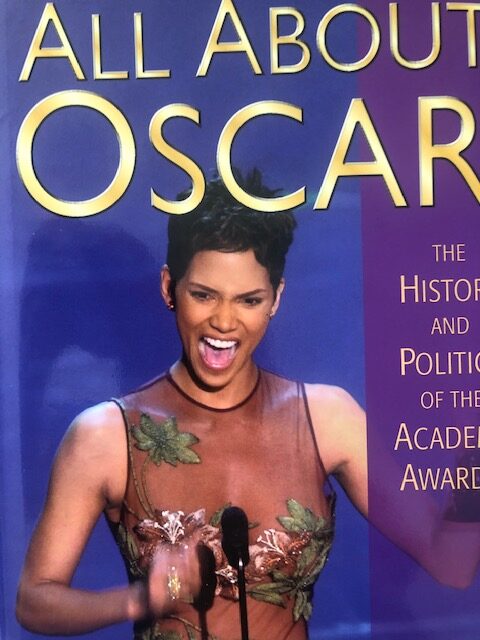
My Oscar Book:
Oscar Alert
Oscar Nominations: 2
Screenplay (Original): Oliver Stone and Richard Boyle
Actor: James Woods
Oscar Awards: None
Oscar Context
In 1986, the Best Actor winner was Paul Newman for “The Color of Money.” The Original Screenplay Oscar went to Woody Allen for “Hannah and Her Sisters.”
Credits:
Directed by Oliver Stone
Written by Stone and Richard Boyle
Produced by Stone, Gerald Green
Cinematography Robert Richardson
Edited by Claire Simpson
Music by Georges Delerue
Distributed by Hemdale Film Corporation
Release date: March 5, 1986
Running time: 123 minutes
Budget $4.5 million
Box office $1.5 million