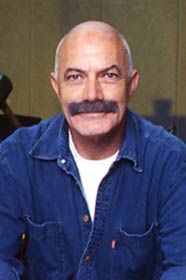
Cinematographer Hoyte Van Hoytema, Oscar frontrunner for Oppenheimer, is one of the most brilliant artists working today.
Van Hoytema went to director Chris Nolan’s office and read the script, which tells the story of J. Robert Oppenheimer (Cillian Murphy) and his road to building the atomic bomb.
His approach was the same, “I try to focus as little as possible on the difficulty of it, or the technical details of it,” Van Hoytema says.
Van Hoytema explains that it’s not until after reading the script that he starts solving things.
Epic Tale in Black/White and Color
In the case of Oppenheimer, Nolan had two main narratives; a storyline from Oppenheimer’s point of view, which would be told in color, and that of the confirmation hearings led by Lewis Strauss (Robert Downey Jr.).
Those would be in black and white. “It was a way to really separate those two narratives,” Van Hoytema explains.
But the first challenge came when it needed to be shot on 65mm black and white film. “Black and white film doesn’t exist for 65 millimeters, so our first challenge was starting to talk to Kodak about if they could provide us with the necessary film stock that we needed for this film.”
Van Hoytema explains. “We needed to re-engineer the cameras as well because those cameras have pressure plates behind the film gates that are made out of metal and the backing is much thinner than color stock. The light would bleed back into the films creating all these artifacts.”
Fotokem Labs, which processed the film stock, had a functional workflow for color. “They have one pipeline, one workflow which has never been for black and white. The question from us was, ‘Can you change that whole workflow into black and white? And if you can do it, how quickly can you do it?’”
It took some time, but Kodak delivered the film stock, and Fotokem reconfigured its workflow to make sure it could deliver what Nolan and Van Hoytema needed.
What the BAFTA award-winning cinematographer considers to be his most technically challenging scenes?
It’s not the atomic bomb explosion, but rather what he describes as “mundane scenes when people are in rooms and talking.”
After Strauss had driven to the Atomic Commission meeting after learning Russia has started to test a nuclear device, Van Hoytema’s goal was to engage the audience in visceral way rather than intellectually. He says, “With Imax, the most important thing is in the center, and then composition becomes for me very much about depth.”
Van Hoytema used little to no Steadicam on set.
“We tried to roll the dolly on the floor as much as possible. I loved sitting on the dolly. I love looking through the viewfinder. That’s one of the reasons why we wouldn’t go necessarily on Steadicam,” he says.
Dan Sasaki, Vice President of Optical Engineering at Panavision, helped Van Hoytema with lenses. “He re-tweaked some and made this lens that we started utilizing a lot for the ‘paranoia close up,’ so he’s very intimidating, and in your face,” Sasaki says.