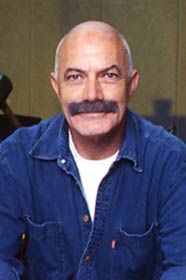
Prestigious Italian filmmaker Matteo Garrone, who’s 54, is a two-time jury prizewinner at the Cannes Film Festival, with the violent crime epos, Gomorrah, in 2008, and Reality, about a TV series a la Big Brother, in 2012.
This year he was in competition at the Venice Film Festival with his immigration-themed drama Io Capitano (Me Captain), which won two major awards: Silver Lion for Best Director and Marcello Mastroianni Award for Best Young Actor to Seydou Sar, one of the film’s two protagonists.
| Io capitano | |
|---|---|

Theatrical release poster
|
|
Shot in Senegal, Italy and Morocco with a cast of non-professional actors, Io Capitano narrates the journey of two young African men, Seydou and Moussa, who decide to leave Dakar to reach Europe.
Garrone produced via his own company, Archimede, with RAI Cinema chief Paolo Del Brocco and Belgium’s Tarantula Film on board as a co-producer. The drama is backed by Pathé, which is handling world sales through Pathé International.
Garrone spoke about what drew him to make a film depicting what he calls “the only real epic voyage we have today.” The voyage of immigrants from Africa “who cross through the desert, get put in prison camps, and then have to submit to smugglers to reach their destination by sea.”
What drives the protagonists?
They see Europe through social media like TikTok and what they get is a glossy version of it. It’s very human and understandable that there is a percentage of young Africans who are willing to risk their lives to go there. They don’t understand why their French or Italian peers can travel freely to Africa for holiday while the only way for them to get to Europe is to risk their lives. There is a deep injustice in this.
Motivation to tackle this topic?
It took me a while to tackle this film after I heard a story that inspired me. I kept putting it off. I’m Italian, I’m white. This is not my world. There was a risk of getting it wrong, or of seeming like I was exploiting it. I had a lot of thoughts of this type going through my head. And then at a certain point it’s as though it was the film that chose me. I am afraid of travelling, I don’t like to fly, I get seasick. And I wound up doing things I never thought I would do. But I did them because at a certain point I realized that I got like a calling. I had the feeling that there was a part of this voyage that was unknown in the Western imagination. There are people who know – or at least should know – that there is a voyage through the desert, and detention camps in Libia, and a whole system behind the smugglers. But it’s a whole world that had not been told visually. That’s what drove me to place the camera from their angle. To learn more about it, to live the experience with them.
Main challenges?
I always believed it was important to keep the story simple and real. Not an imitation of reality, but truth that goes beyond realism, meaning that you believe in what you see. Above all, we had to be invisible. I did not want the viewer to perceive the behind-the-scenes work. I didn’t want virtuoso camera work or self-indulgent stylistic flourishes. That can happen with landscape like this, and faces like this. Instead, we tried to work in such a way that the spectator can get into the story and forget about all the rest. The key thing is that this movie has to be the immigrants point of view. It’s a reverse shot, I wanted to change the angle.
Research for this movie?
We did a lot of research. There are videos of tortures, of dead people in the desert, there is plenty of material. The screenplay was written with several young people who lived that experience. It was like making a collage. I took the parts of several journeys that I found most interesting and I blended them together. It’s a mix of stories, all based on real life experiences that we turned into a single long voyage.
That process also continued on set?
On set I constantly verified the screenplay with a young man who had gone through the experience of crossing the desert and been in the prison camps. He was always next to me. He also helped me to direct the extras, most of whom have actually lived what they call “the adventure.”
It’s a bit like when I was shooting Gomorrah in places where I was in contact with an existing criminal world. I often had people belonging to that world who became part of the film, or in any case helped me. There were similar dynamics at play here. I was always following my personal vision of this reality, but people who had lived the adventure were always behind the monitor and I checked their reactions closely to make sure that our story was in synch with them. My greatest fear from the start was to enter a culture that wasn’t my own and become trapped in a series of cliches, like the ones we see when foreign directors come to Italy.
Working with great cinematographer Paolo Carnera?
Paolo was a pillar of this film, both artistically and from a human standpoint. This has been a complex film in terms of the production, I am also a producer on it. There were moments of great stress during the shoot where we had to take great risks. It’s also an action-adventure movie, as well as a road movie and a coming-of-age movie. Artistically, our main concern was for the photography to be beautiful but invisible. Very curated lighting that at the same time had to seem real. We paid great attention to not fall into the trap of narcissism and indulgence.
Directed by Matteo Garrone
Written by Garrone, Massimo Gaudioso, Massimo Ceccherini, Andrea Tagliaferri
Produced by Garrone, Paolo Del Brocco
Cinematography Paolo Carnera
Edited by Marco Spoletini
Music by Andrea Farri
Distributed by 01 Distribution
Release dates: Sept 6, 2023 (Venice); Sept 7, 2023 (Italy)
Running time: 121 minutes
Countries: Italy; Belgium; France
Languages: Wolof; French
Budget €11 million