Blast from the Past
Writers John Requa and Glenn Ficarra made a bold directing debut with the indie I Love You Phillip Morris, a strange black comedy, rather a tragedy peppered with unexpected funny moments.
Grade: B- (*** out of *****)
| I Love You Phillip Morris | |
|---|---|

Theatrical release poster
|
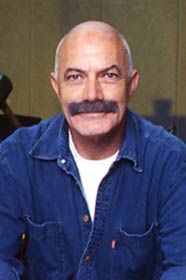
(The real Phillip Morris appears in a cameo as Steven’s lawyer in one of the final scenes.)
The tale is based on a 1980s and 1990s real-life story of con artist, impostor and multiple prison escapee Steven Jay Russell, played by Jim Carrey in one of his strongest performances.
The film was adapted from Steve McVicker’s 2003 book “I Love You Phillip Morris: A True Story of Life, Love, and Prison Breaks.’
While incarcerated, Russell falls in love with his fellow inmate, Phillip Morris (Ewan McGregor).
After Morris is released from prison, Russell escapes from prison four times to be reunited with Morris.
The tale begins with Russell is on his deathbed, recalling the events of his life that led him to this point.
We learn that he spent his early adult years in Virginia Beach as a police officer. He plays the organ at church, has unenthusiastic sex with his wife Debbie, and spends his off-hours searching for his biological mother, who had placed him for adoption as a child.
Steven locates his biological mother, but she rejects him. He then quits the police force and moves to Texas and works for Sysco, the family business.
Spoiler Alert:
At the end, the movie explains that the real-life Phillip was released from prison in 2006.
But Steven was given life sentence and is in 23-hour lockup, only having one free hour a day to shower and exercise. The film implies that an official involved in the sentencing had a brother-in-law who was conned by Russell.
The last scene shows Steven laughing joyfully while running across the prison yard, guards in pursuit, in another attempt to be with Phillip.
Steven’s events and adventures are so bizarre that many viewers were confused about how they were supposed to react. Indeed, the film’s major challenge is its shifting tone, which tries to blend outrageous antics expected of Carrey the comedian with more genuinely touching moments, shown by the actor in his more complex roles.
After difficulty finding a U.S. distributor, due to its explicit gay sexual contents (there’s a graphic sex scene of anal intercourse), the film was re-edited. In May 2009, Consolidated Pictures Group had acquired distribution rights.
Intertextuality:
Inevitable comparisons were made with Spielberg’s 2002 Catch Me If You Can, a superior movie starring DiCaprio, as real-life Frank Abagnale Jr., a man who claimed that prior to his nineteenth birthday, he had successfully performed cons worth millions of dollars by posing as pilot, Georgia doctor, and even parish prosecutor.
Critical Status:
Requa and Ficarra received a nomination for the Writers Guild of America Award for Best Adapted Screenplay.
A moderate success, the movie grossed $20 million worldwide and received generally positive reviews from critics after its world premiere at the 2009 Sundance Film Fest.
The tale is so rich and shifty in events (there are at least four arrests and attempts to escape from prison) that it may lends itself more effectively to a TV series rather than a 93-minute picture.
Credits:
Cinematography Xavier Pérez Grobet
Edited by Thomas J. Nordberg
Music by Nick Urata
Release dates: January 18, 2009 (Sundance)
Running time 93 minutes
Budget $13 million
Box office $20.7 million