A Dirty Shame

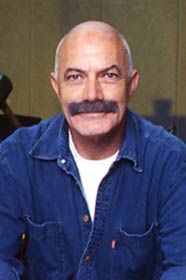
John Waters’ 2004 box office bomb A Dirty Shame remains the director’s last–and possibly worst–feature directorial effort.
Grade: C (* out of *****)
The film, starring Tracey Ullman and Johnny Knoxville, is a foul-mouthed sex satire that takes place in a small town where a group of puritanical residents wage social warfare against the perverted sex addicts who also populate the town.
As revealed on the film’s DVD commentary, supporting actor Suzanne Shepherd began crying when reading the script for the first time because it was so dirty (perhaps the concept of “felching” was too much for her, as it surely was for the MPA).
Waters said in the MPA documentary “This Film Is Not Yet Rated” that the film ratings board “stopped taking notes” on the film when it realized there was no amount of cuts that could reduce it down to an R-rating.
John Waters is the subject of my latest book:
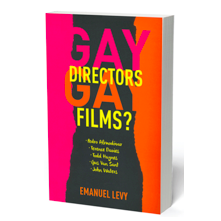
Gay Directors, Gay Films? By Emanuel Levy (Columbia University Press, August 2015)
The Dreamers (2004)

Bernardo Bertolucci’s “The Dreamers” stars Michael Pitt as an American exchange student in Paris who befriends two siblings (Eva Green and Louis Garrel) and becomes entangled in an erotic love triangle. The film earned an NC-17 ratings because of graphic sex scenes that prominently feature full-frontal nudity. All three lead cast members were required to sign off on nude scenes when agreeing to star in the movie. Jake Gyllenhaal screen tested for the movie, for instance, but then he declined a role because he wasn’t comfortable with full-frontal. An R-rated version was made by cutting out three minutes of sex scenes, but Fox Searchlight still opened the NC-17 cut in theaters. The sex scenes were made to be so explicit in the editing room that even Green was “so shocked” when she saw the finished version.
Nymphomaniac (Released Unrated)

Both parts in Lars von Trier’s erotic epic “Nymphomaniac” were given NC-17 ratings, only for the film to go unrated in theaters. The film focuses on a self-diagnosed nymphomaniac who recounts her many sexual experiences, which include everything from threesomes to bondage and more. Von Trier’s graphic sex scenes had many viewers wondering if his actors were performing them for real, which only further led to the film’s NC-17 ratings by the MPA. Full-frontal nude scenes and close-ups of genitals also ensured “Nymphomaniac” wasn’t simply going to be rated R.
Y Tu Mamá También (Released Unrated)

Alfonso Cuarón’s breakthrough directorial effort “Y Tu Mamá También” tracks a sexually charged road trip between two teenage boys (Gael García Bernal and Diego Luna) and a young woman in her late twenties (Maribel Verdú). IFC Films released the movie unrated in the U.S. because it did not want an NC-17 rating to ruin the movie’s marketability. That the movie’s frank depiction of sex and sexuality tipped it into NC-17 territory led to outrage from the film community, most notably from film critic Roger Ebert. “The [MPA] has made it impossible for a movie like this to be produced in America,” he wrote in his review. “It is a perfect illustration of the need for a workable adult rating: too mature, thoughtful and frank for the R, but not in any sense pornographic. Why do serious film people not rise up in rage and tear down the rating system that infantilizes their work?”
Last Tango in Paris

Bernardo Bertolucci’s “Last Tango in Paris” is perhaps the most notorious NC-17 movie ever made. The film opened in 1972 with an X rating, but it was later reclassified by the MPA and awarded an NC-17 in the 1990s after the rating was created. Marlon Brando stars as a widowed American in Paris who begins an anonymous sexual relationship with a young woman (Maria Schneider). The film’s graphic nudity and sex scenes earned it an NC-17 rating (most notably a rape scene involving butter as lubricant), while allegations about how Bertolucci directed such explicit scenes have continued to make “Last Tango in Paris” one of the more controversial movies ever made.
Bad Education (2004)

Pedro Almodóvar’s movies often provoke, but 2004’s “Bad Education” actually earned the director an NC-17 rating for one scene in which Gael García Bernal’s head is seen bobbing up and down during a depiction of gay oral sex. The scene lasts only two seconds, but it was enough to earn an NC-17 rating from the MPA. Almodóvar never once considered removing the two seconds of oral sex simulation, the film’s publicist, Jessica Uzzan, said before the film opened in theaters. “It’s a film for adults,” she added.
Tie Me Up! Tie Me Down! (Released Unrated)

Leave it to Pedro Almodóvar’s provocative depictions of sex and sexuality to push the MPA to its limits. The filmmaker’s 1989 dark comedy “Tie Me Up! Tie Me Down!,” starring Antonio Banderas as a psychiatric patient who kidnaps an actress and holds her captive in order to make her fall in love with him, was instrumental in the creation of the NC-17 rating after Miramax sued the MPA for its original X rating. The X rating was usually reserved for pornography, but an NC-17 rating did not yet exist for a sexually explicit drama like “Tie Me Up! Tie Me Down!” Miramax argued that an X rating was censorship, especially compared to R-rated films that showed explicit drug use and/or violence. Miramax didn’t win the legal battle, but it did get the MPA to drop the X rating all together and create the NC-17 movie. “Tie Me Up! Tie Me Down!” was ultimately released unrated.
Henry and June

After the controversy surrounding “Tie Me Up! Tie Me Down!” and the creation of the NC-17 rating by the MPA, the first movie to be awarded the adults-only rating was Philip Kaufman’s 1990 drama “Henry & June.” The film includes several explicit sex scenes in telling the story of a novelist’s steamy affair, and it courted controversy simply by being the first movie to earn the NC-17 rating. The MPA explained at the time that the NC-17 rating was being used for films with explicit content that were not examples of pornography. “Henry & June” still ended up earning an Oscar nomination for best cinematography.
Requiem for Dream (Released Unrated)

Darren Aronofsky’s addiction drama “Requiem for a Dream” is often referred to as one of the most brutal movies ever made for its explicit look at heroin addicts in free-fall. One scene includes a young woman (Jennifer Connolly) forced to perform sex acts in front of a group of men in order to earn money for her drug addiction, which is partly why the MPA rated “Requiem” NC-17. Aronofsky appealed the rating and said he would not cut any scenes from the movie as that would dilute its powerful anti-addiction message. The MPA refused to lower the rating, so distributor Artisan Entertainment decided to open the film unrated in theaters.
Wild at Heart (Recut, Released, R Rating)

David Lynch’s controversial Palme d’Or winner “Wild at Heart” would’ve been rated X considering the NC-17 rating did not yet exist during its classification, but Lynch was contractually obligated to deliver an R-rated movie. The version of the film that Lynch debuted at Cannes was too explicit for the MPA, so Lynch decided to add a bit of smoke to one scene in which a character blows his head off with a shotgun. The addition of smoke toned down the violence just a tad and hid the fact that the man’s head was detached from his body. This tiny edit was enough to convince the MPA to bring the rating down to an R.
Boys Don’t Cry (Recut, Released–R Rating)

As documented in the MPA documentary “This Film Is Not Yet Rated,” Kimberly Pierce’s seminal queer drama “Boys Don’t Cry” was originally rated NC-17 due to two explicit rape scenes. Pierce battled the ratings board over these scenes, as the organization wanted them removed but was fine with keeping graphic non-sexual violence in the film such as a murder scene. Pierce said the MPA also wanted her to cut down the length of a female orgasm, claiming it went on for “too long.” Because Pierce wanted her movie seen by as many moviegoers as possible given its subject matter, she toned down these moments and was able to secure an R rating.