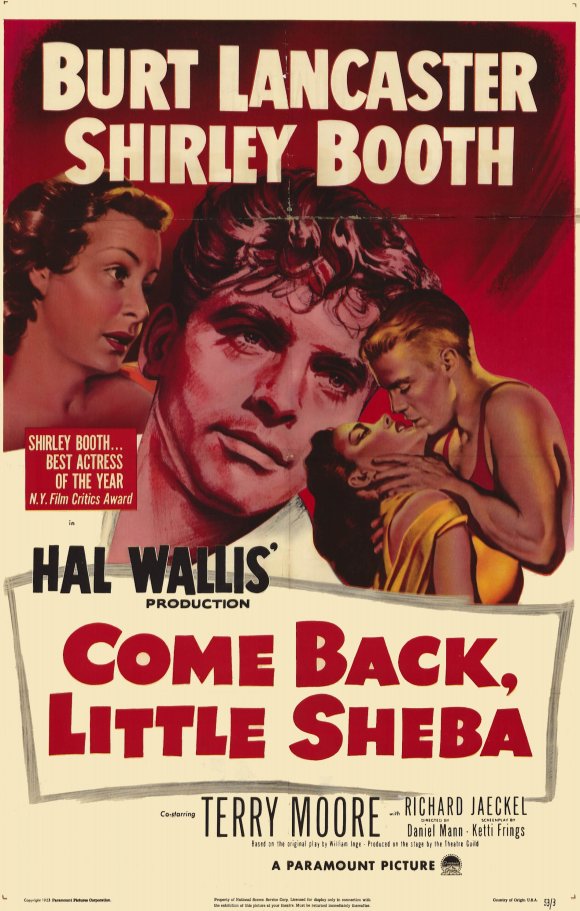
Using the paradigm of the outsider, the film starts when a young female student, Marie (Terry Moore), takes lodging with a childless couple, showing how her presence precipitates identity and marital crises.
Doc (Burt Lancaster, probably miscast) and Lola (Shirley Booth) Delaney are a lonely middle-aged couple living a monotonous and wistful life in a commonplace middle-class home.
A once-attractive woman (some say even a vamp), Lola has turned into a lazy and frumpy housewife, whose highlight of the day is a brief conversation with the postman.
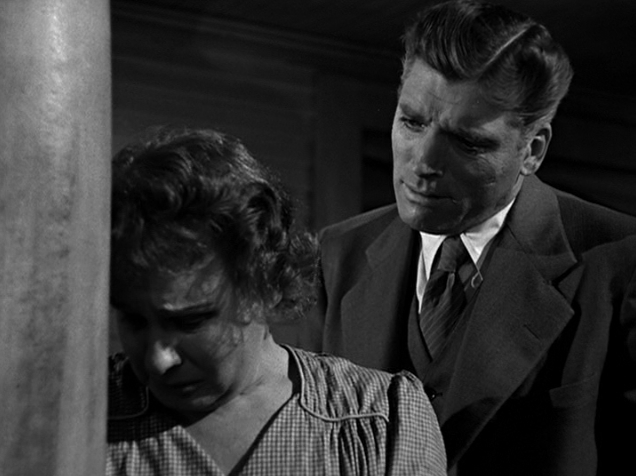
The self-pitying Lola still laments Sheba, her lost dog, which signifies her youth, beauty, and practically everything positive in her life.
For his part, abusing his wife, Doc resents the fact that she had trapped him into marriage (under a false alarm of pregnancy), which forced him to forsake his medical studies.
Trapped in a sexless marriage, Doc has become a weakling and alcoholic. His eager interest in their young, sexy lodger is a reminder of his long-held repressed sexuality and frustrated emotions.
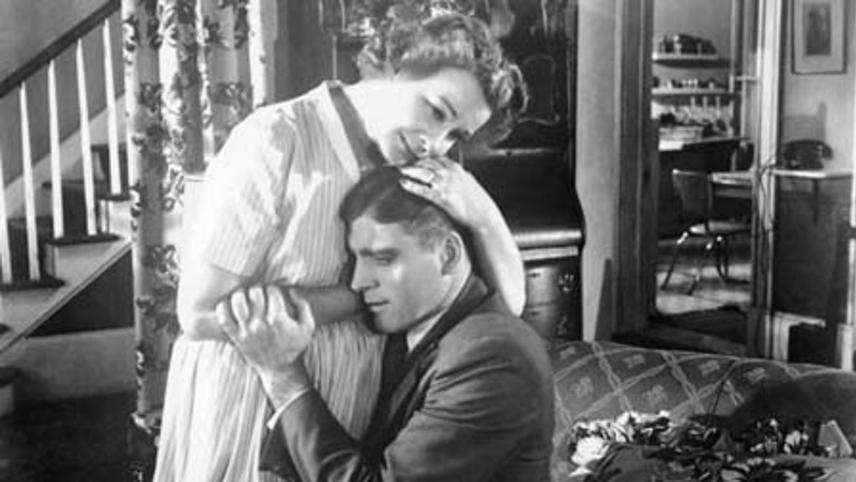
A violent climax, with Doc threatening Lola with a knife, leads to a (contrived) resolution, and the end suggests, unconvincingly, that the Delaneys may regain their self-respect and achieve a new, more balanced marriage.
Come Back, Little Sheba, overly sentimental, contains themes–the primacy of passion and the price of repressed sexuality–that recur in most of William Inge’s works, such as Picnic and Splendor in the Grass, both of which were made into successful movies (the former by Joshua Logan in 1955; the latter by Kazan in 1961).

Nominated for three Oscars, the film won the lead acting award for Shirley Booth, in a performance reprising her stage role.
My Oscar Book:
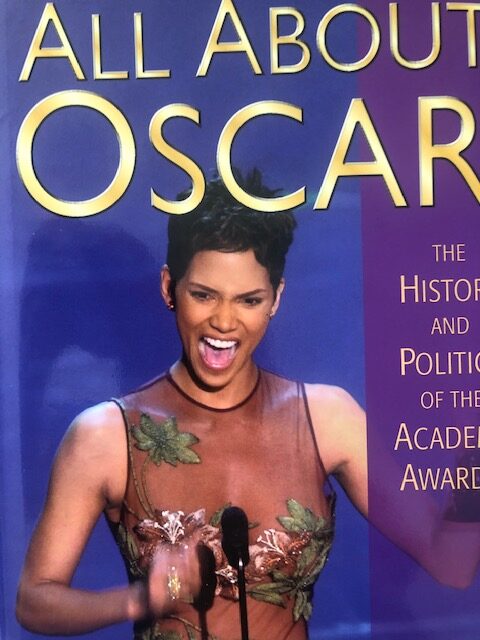
Oscar Nominations: 3
Actress: Shirley Booth
Supporting Actress: Terry Moore
Editing: Warren Low
Oscar Awards: 1
Actress
Cast
Doc Delaney (Burt Lancaster)
Lola Delaney (Shirley Booth)
Marie Buckholder (Terry Moore)
Turk Fisher (Richard Jaeckel)
Ed Anderson (Philip Ober)
Mrs. Goffman (Lisa Golm)
Bruce (Walter Kelley)
Credits
Produced by Hal B. Wallis
Directed by Daniel Mann
Screenplay: Ketti Frings, based on the play by William Inge
Camera (b/w): James Wong Howe
Editor: Warren Low
Music: Franz Waxman
Distributed by Paramount Pictures
Release dates: Dec 23, 1952 (NYC, premiere); Dec 25, 1952 (LA)
Running time: 99 minutes
Box office: $3.5 million (US)