August 25, 2024: Research in Progress–18, 761
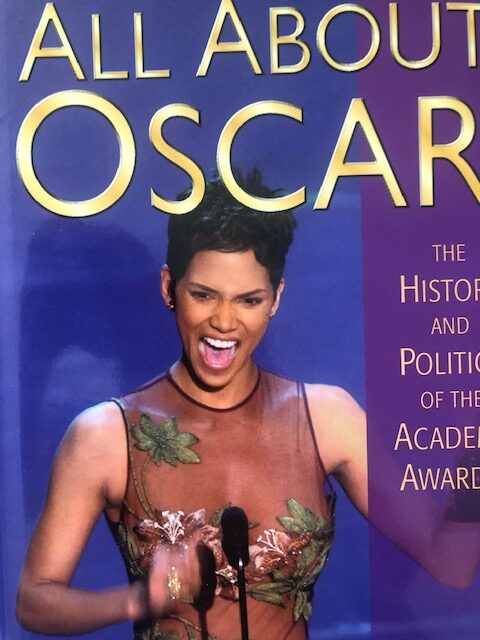
My Oscar Book:
D: 21 (includes Colman Domingo)
E: 2
F: 18
Total: 41
—-
F (18)
Farnsworth, Richard: No
Farrell, Colin: No
Fassbender, Michael:
Ferrer, Jose
Fiennes, Ralph:
Finch, Peter
Finney, Albert:
Firth, Colin
Fishburne, Laurence
Fitzgerald, Barry (winner of Supp. Actor)
Fonda, Henry
Fonda, Peter
Ford, Harrison
Foxx, Jamie (lead winner; nominee, supp): No
Franciosa, Anthony
Fraser, Brendan
Freeman, Morgan:
It includes the nominees of 2020, 2021, 2022
Occupational Inheritance in Acting Profession
Occupational inheritance refers to the phenomenon where sons and daughters follow in the career paths of their parents. This trend has been documented in engineering, medicine, military, and education, but not in the acting profession.
Over the past 95 years of the Academy Awards (first given in 1929), 84 men have won the Best Actor Oscar (some more than once), and 160 men have been nominated.
In 2020, the five nominees were: Riz Ahmed, Chadwick Boseman (black, posthumous), Anthony Hopkins (winner, second Oscar), Gary Oldman (previous winner) Steven Yeun (Asian).
In 2021, the nominees were: Xavier Bardem, Cumberbatch, Andrew Garfield, Will Smith, Denzel Washington
In 2022, the nominees were all first-timers: Austin Butler, Colin Farrell, Brendan Fraser, Paul Mescal, Bill Nighy
Winners: 84 (males); 96 (roles)
Nominees: 160
Total: 244
Black: 14 out of 244
Winners: 5 out of 84
Nominees: 9 out of 160
Boseman, Chadwick: No
Cheadle, Don (Black): No
Dexter, Gordon
Ejiofor, Chiwetel
Fishburne, Laurence
Foxx, Jamie
Freeman, Morgan
Howard, Terrence
Kaluuya, Daniel
Poitier, Sidney
Smith, Will
Washington, Denzel
Whitaker, Forest
Winfield, Paul
JEWISH: 16 out of 244
Allen, Woody
Arkin, Alan
Chalamet (half)
Curtis, Tony
Douglas, Kirk
Douglas, Melvin father)
Douglas, Michael
Dreyfuss, Richard
Garfield, Andrew
Garfield, John
Lukas, Paul
Muni, Paul
Newman, Paul
Sellers, Peter
Steiger, Rod
Topol, Israel
OCCUPATIONAL INHERITANCE
A (7) No: 7
Abrahams, F. Murray, 1984: No
Affleck, Cassey, 2016: No
Ahmed, Riz: No
Allen, Woody: No
Arkin, Alan (winner of Supp. Actor): No
Arliss, George, 1930, N0
Ayres, Lew: N0
B (24)
Bale, Christian: child Actor
Bancroft, George: N0
Banderas, Antonio (Spanish): No
Bardem, Javier (winner of supp. actor): Yes
Barrymore, Lionel: Yes
Barthelmess, Richard: Yes
Bates, Alan: Yes
Baxter, Warner: No
Beatty, Warren: Yes
10. Beery, Wallace: No
Benigni, Roberto (Italian): No
Bichir, Demian (Mexico) No
Bogart, Humphrey: No
Borgnine, Ernest: No
Boseman, Chadwick: No
Boyer, Charles: No
Branagh, Kenneth: No
Brando, Marlon: Yes (mother)
Bridges, Jeff (nominee, supp. actor): Yes
20. Brody, Adrien (US): No
Brynner, Yul ( ):
Burton, Richard (Wales, Brit): No
Busey, Gary: No Data
24. Butler, Austin: No
B=24
—
C (26): 7 out of 26 occup inherit
Cage, Nicolas US: No
Cagney, James: No
Caine, Michael (UK) No
Calhern, Lewis: No
Carney, Art, US: No
Carell, Steve, US No
Chalamet, Timothee: Child actor:
Chaplin, Charlie (UK): Yes; child actor
Cheadle, Don (Black): No
Chevalier, Maurice (French): No
Clift, Montgomery (US): No; but child actor
Clooney, George: Yes? father journalist; aunt Rosemary Clooney
Colman, Ronald (UK): No
Conti, Tom (Scottish): No
Cooper, Bradley US:: No
Cooper, Gary (US): No
Cooper, Jackie (US): Yes
Costner, Kevin (US): No
Courtenay, Tom (UK): No
Cranston, Bryan (US): Yes (father, wannabe)
Crawford, Broderick (US): Yes; child actor
Crosby, Bing (US): No
Crowe, Russell (New Zealand/Aussie): No
Cruise, Tom (US): No
Cumberbatch, Benedict (UK): Yes (both parents)
Curtis, Tony (US, Jewish): No
D (21) (includes Colman Domingo)
Dafoe, Willem (US): No
Dailey, Dan (US): No
Damon, Matt (US): No
Day-Lewis, Daniel (UK): Yes
Dean, James (US); No
De Niro, Robert (US): No?
Depardieu, Gerard (French): No
Depp, Johnny (US): No
Dern, Bruce (US): No
DiCaprio, Leonard (US): No
Dix, Richard (US): No
Domingo, Colman US: No, black,
Donat, Robert (UK): No
Douglas, Kirk (US): No
Douglas, Melvyn (winner of 2 Supp. Actor)
Douglas, Michael (US): Yes
Downey, Robert Jr. (US)
Dreyfuss, Richard (US)
Driver, Adam (US)
DuJardin, Jean (French)
21. Duvall, Robert (US)
Dafoe, Willem (nominee, supp): No
US
Appleton, Wisconsin
Upper Middle Class
Father: Surgeon
Mother: nurse
He has 5 sisters and 2 brothers
Appleton East High School, then drama University of Wisconsin, Milwaukee, but left after 18 months
Moved to NY in 1976; age 21
William James Dafoe was born on July 22, 1955, in Appleton, Wisconsin, the son of Muriel Isabel (née Sprissler; 1922–2012) and Dr. William Alfred Dafoe (1917–2014).
He has five sisters and two brothers and is of English, French, German, Irish, and Scottish descent.
He recalled in 2009, “My 5 sisters raised me because my father was a surgeon, my mother was a nurse and they worked together, so I didn’t see either of them much.”
His brother, Donald, is surgeon and research scientist.
His surname, Dafoe, is English version of the Swiss surname Thévou. Half of his family puts the emphasis on the first syllable of the surname while the other half emphasizes the second syllable.
In high school, he acquired the nickname Willem, the Dutch version of the name William. He later took new interpretation as part of his stage name because he had become more used to it than his birth name.
After attending Appleton East High School, Dafoe studied drama at the University of Wisconsin–Milwaukee, but left after 18 months to join the experimental theater company Theatre X in Milwaukee, before moving to New York in 1976.
He then apprenticed under Richard Schechner, director of avant-garde theater troupe The Performance Group, where he met and became romantically involved with director Elizabeth LeCompte. Following tensions between Schechner and other members after they started staging their productions outside of the group, Schechner left and remaining members (including LeCompte and her ex-boyfriend Spalding Gray) renamed themselves The Wooster Group.
Dafo joined the company and is credited as one of its co-founders. He continued his work with the group into the 2000s, after establishing himself as Hollywood star.
Dafoe made his film debut in a supporting role in Michael Cimino’s 1980 epic Western film Heaven’s Gate.
Dafoe was only present for the first three months of an eight-month shoot. His role, that of a cockfighter who works for Jeff Bridges’ character, was removed during editing but was visible during a cockfight scene. Dafoe did not receive a credit for his work.
In 1982, Dafoe starred as leader of an outlaw motorcycle club in the drama The Loveless, his first role as a leading man. The film was co-directed by Kathryn Bigelow and Monty Montgomery and paid homage to 1953 film The Wild One, starring Marlon Brando in a similar role.
Following a “blink-and-you-miss-it” cameo in The Hunger (1983), Dafoe again played the leader of a biker gang in Walter Hill’s 1984 actioner Streets of Fire. His character served as main antagonist, who captures the ex-girlfriend of a mercenary, played by Diane Lane and Michael Paré, respectively.
Dafoe starred alongside Judge Reinhold in Roadhouse 66 (1985) as a pair of yuppies who become stranded in a town on U.S. Route 66.
In 1985, Dafoe starred with William Petersen and John Pankow in Friedkin’s thriller To Live and Die in L.A., in which he portrays counterfeiter named Rick Masters, tracked by 2 Secret Service agents.
Dailey, Dan: ?
NYC
Parents: No Info
Sister actress
golf caddy and shoe seller before first big break, South American cruise line in 1934
Broadway debut in 1937; aged 22
golf caddy and shoe seller before first big break, South American cruise line in 1934.
Daniel James Dailey Jr. (December 14, 1915 – October 16, 1978) was an American actor and dancer. He is best remembered for series of popular musicals at 20th Century Fox, Mother Wore Tights (1947).
Dailey was born on December 14, 1915, in New York City, to Daniel James Dailey Sr. and Helen Theresa (née Ryan) Dailey. His younger sister was actress Irene Dailey.
He appeared in a minstrel show in 1921 and later appeared in vaudeville. He worked as a golf caddy and shoe seller before his first big break, working for a South American cruise line in 1934.
He made his Broadway debut in 1937 in Babes in Arms. He followed it with Stars in Your Eyes and I Married an Angel.
In 1940, he was signed by MGM to make films and, though his past career had been in musicals, he was initially cast in the drama Susan and God (1940), directed by Cukor. He also played Nazi in The Mortal Storm (1940).
Dailey was the juvenile lead in The Captain Is a Lady (1940) and Dulcy (1940). He appeared in a musical comedy in Hullabaloo (1940), then had a small role in the drama Keeping Company (1941) and was the juvenile in The Wild Man of Borneo (1941). He could be seen in Washington Melodrama (1941) and Ziegfeld Girl (1941), and played a gangster in The Get-Away (1941).[5]
Dailey was third billed in a “B”, Down in San Diego (1941) and had a small part in an “A” musical, Lady Be Good (1941).
Dailey was loaned out to 20th Century Fox for Moon Over Her Shoulder (1941), then opposite Donna Reed in Mokey (1942). He was third-billed in Sunday Punch (1942).
Universal borrowed him to support Leo Carrillo in Timber (1942). He stayed at that studio for Give Out, Sisters (1942), a musical with The Andrews Sisters and Donald O’Connor.
WWII Impact
Dailey’s last film for MGM was Panama Hattie (1942). It was a hit and Dailey’s career looked like it was going to the next level when cast in For Me and My Gal. However Dailey was drafted and Gene Kelly ended up taking the role.
Damon, Matt (nominee, supp): No
Cambridge, Massachusetts
Father: stockbroker
Mother: childhood education professor, Lesley University
Parents divorced when he was 2
Harvard University
Damon was born in Cambridge, Massachusetts on October 8, 1970, the second son of Kent Telfer Damon (1942–2017), stockbroker, and Nancy Carlsson-Paige (b. 1946), an early childhood education professor at Lesley University.
His father had English and Scottish ancestry, while his mother is of Finnish and Swedish descent; her family surname had been changed from Pajari to Paige.
Damon and his family moved to Newton for two years. His parents divorced when he was two years old, and he and his brother returned with their mother to Cambridge, where they lived in a six-family communal house.
His brother, Kyle, is a sculptor and artist. As a lonely teenager, Damon said that he felt he did not belong. Due to his mother’s “by the book” approach to child-rearing, he had a hard time defining his own identity.
Damon attended Cambridge Alternative School and Cambridge Rindge and Latin School, where he was a good student. He performed as actor in several high school theater productions.
Inspired by: He credited his drama teacher Gerry Speca as an important artistic influence, though his close friend and schoolmate Ben Affleck got the “biggest roles and longest speeches”.
He attended Harvard University, where he was resident of Lowell House and member of the class of 1992, but left before receiving degree to take a lead in Geronimo: An American Legend.
While at Harvard, Damon wrote an early treatment of screenplay Good Will Hunting as an exercise for an English class, for which he later received an Academy Award. He was a member of The Delphic Club, one of Harvard’s select Final Clubs. He was awarded the Harvard Arts Medal in 2013.
Damon entered Harvard in 1988, where he appeared in student theater plays, such as Burn This and A… My Name is Alice. Later, he made his film debut at the age of 18, with a single line of dialogue in the romantic comedy Mystic Pizza.
As a student at Harvard, he acted in small roles such as in the TNT original film Rising Son and the ensemble prep-school drama School Ties.[28] He left the school in 1992, a semester (12 credits) shy of completing his Bachelor of Arts in English to feature in Geronimo: An American Legend in Los Angeles, erroneously expecting the movie to become a big success.
Damon next appeared as opiate-addicted soldier in 1996’s Courage Under Fire, for which he lost 40 pounds (18 kg) in 100 days on self-prescribed diet and fitness regimen. Courage Under Fire gained him critical notice.
Daniel Day-Lewis (UK): Yes
Kensington, London
second child
Father: poet Cecil Day-Lewis; born in Ireland; poet Laureate in 1968
Mother: actress (Jewish)
bullied for being both Jewish and “posh”
Boarding school for being too wild
woodworking, acting, and fishing
Wished to be cabinet-maker
Bristol Old Vic Theatre School
1982: Turning Point–Another Country on stage; Gandhi film
Daniel Michael Blake Day-Lewis was born on April 29, 1957 in Kensington, London, the second child of poet Cecil Day-Lewis (1904–1972) and his second wife, actress Jill Balcon (1925–2009).
His older sister, Tamasin Day-Lewis (born 1953), is TV chef and food critic.
His father, who was born in the Irish town of Ballintubbert, County Laois, was of Protestant Anglo-Irish descent, lived in England from age 2, and was appointed Poet Laureate in 1968.
Day-Lewis’s mother was Jewish; her Jewish ancestors were immigrants to England in the late 19th century, from Latvia and Poland.
Day-Lewis’s maternal grandfather, Sir Michael Balcon, head of Ealing Studios, helping develop the new British film industry.
The BAFTA for Outstanding Contribution to British Cinema is presented every year in honor of Balcon’s memory.
Two years after Day-Lewis’s birth, he moved with his family to Crooms Hill in Greenwich via Port Clarence, County Durham. He and his older sister did not see much of their older two half-brothers, who had been teenagers when Day-Lewis’s father divorced their mother.
Living in Greenwich (he attended Invicta and Sherington Primary Schools), Day-Lewis had to deal with tough South London children. At this school, he was bullied for being both Jewish and “posh.” He mastered the local accent and mannerisms–his first convincing performance.
Later in life, he spoke of himself as a disorderly character in his younger years, in n trouble for shoplifting and other petty crimes.
In 1968, Day-Lewis’s parents, finding his behavior too wild, sent him as a boarder to the independent Sevenoaks School in Kent. At the school, he was introduced to his most prominent interests: woodworking, acting, and fishing. His disdain for school grew, and after 2 yrs at Sevenoaks, transferred to another independent school, Bedales in Petersfield, Hampshire.
His sister was already a student there, and it had a more relaxed and creative ethos.
Debut: 1971, Sunday Bloody Sunday, age 14
He made his film debut at age 14 in Sunday Bloody Sunday, in which he played vandal in an uncredited role. The experience as “heaven” for getting paid £2 to vandalize expensive cars parked outside local church.
In 1972, the Day-Lewis family lived at Lemmons, the north London home of Kingsley Amis and Elizabeth Jane Howard. Day-Lewis’s father had pancreatic cancer, and Howard invited the family to Lemmons as a place they could use to rest and recuperate. His father died there in May that year.
By the time he left Bedales in 1975, Day-Lewis’s unruly attitude diminished and he needed career choice. Although he had excelled on stage at the National Youth Theatre in London, he applied for a five-year apprenticeship as a cabinet-maker, but was turned down due to a lack of experience.
He was accepted at the Bristol Old Vic Theatre School, which he attended for 3 yrs along with Miranda Richardson, performing at the Bristol Old Vic itself.
At one point he played understudy to Pete Postlethwaite, with whom he would later co-star in In the Name of the Father (1994).
John Hartoch, Day-Lewis’s acting teacher at Bristol Old Vic, recalled: There was something about him even then. He was quiet and polite, but he was clearly focused on his acting—he had a burning quality. He seemed to have something burning beneath the surface. There was a lot going on beneath that quiet appearance. There was one performance in particular, when the students put on a play called Class Enemy, when he really seemed to shine—and it became obvious to us, the staff, that we had someone rather special on our hands.
During the early 1980s, Day-Lewis worked in theatre and TV, including Frost in May (where he played an impotent man-child) and How Many Miles to Babylon? (as World War I officer torn between allegiances to Britain and Ireland) for the BBC.
Eleven years after his film debut, Day-Lewis had small part in the film Gandhi (1982) as Colin, a South African street thug who racially bullies the title character.
In late 1982, he had his big theatre break, as lead in Another Country, which had premiered in late 1981. Next, he took on a supporting role as the conflicted, but ultimately loyal, first mate in The Bounty (1984).
He next joined the Royal Shakespeare Company, as Romeo in Romeo and Juliet and Flute in A Midsummer Night’s Dream.
Dean, Dean, US: No
Marion, Indiana
Only child
Father: farmer turned dental technician
Class: lower-middle
Mother:
Brentwood Public School, then McKinley Elementary School
Mother died of cancer when Dean was 9; raised by aunt Fairmount, Indiana
Sexually abused
Santa Monica College and majored in pre-law; University of California, Los Angeles, major drama, estrangement from his father
James Byron Dean was born on February 8, 1931, at the Seven Gables apartment on the corner of 4th Street and McClure Street in Marion, Indiana,
The only child of Mildred Marie Wilson and Winton Dean. He claimed that his mother was partly Native American, and that his father belonged to a “line of original settlers that could be traced back to the Mayflower”
Six years after his father had left farming for dental technician, Dean moved with his family to Santa Monica, California. He was enrolled at Brentwood Public School in the Brentwood neighborhood of Los Angeles, but transferred afterward to the McKinley Elementary School.
The family spent several years there, and by all accounts, Dean was very close to his mother.
According to Michael DeAngelis, she was “the only person capable of understanding him”. In 1938, Dean’s mother was suddenly struck with acute stomach pain and quickly began to lose weight. She died of uterine cancer when Dean was nine years old. Unable to care for his son, Dean’s father sent him to his aunt and uncle, Ortense and Marcus Winslow, on their farm in Fairmount, Indiana, where he was raised in their Quaker household, Dean’s father served in World War II and later remarried.
In his adolescence, Dean sought the counsel and friendship of local Methodist pastor, the Rev. James DeWeerd, who seems to have had a formative influence upon Dean, especially upon his future interests in bullfighting, car racing, and theater.
Billy J. Harbin, Dean had “an intimate relationship with his pastor, which began in his senior year of high school and endured for many years”.
An alleged sexual relationship was suggested in Paul Alexander’s 1994 book Boulevard of Broken Dreams: The Life, Times, and Legend of James Dean.
Dean once confided in Elizabeth Taylor that he was sexually abused by a minister approximately two years after his mother’s death.
He was sexually abused by DeWeerd as child or as late teenager.[
Dean’s overall performance in school was exceptional and he was a popular student. He played on the baseball and basketball teams, studied drama, and competed in public speaking through the Indiana High School Forensic Association.
After graduating from Fairmount High School in May 1949, he moved back to California with his dog, Max, to live with his father and stepmother.
Dean enrolled in Santa Monica College and majored in pre-law. He transferred to University of California, Los Angeles (UCLA) for one semester and changed his major to drama, which resulted in estrangement from his father.
He pledged the Sigma Nu fraternity but was never initiated.[20] While at UCLA, Dean was picked from a group of 350 actors to portray Malcolm in Macbeth.[21] At that time, he also began acting in James Whitmore’s workshop. In January 1951, he dropped out of UCLA to pursue a full-time career as an actor.
Dean’s debut television appearance was in a Pepsi commercial. He quit college to act full-time and was cast in his first speaking part, as John the Apostle in Hill Number One, an Easter television special dramatizing the Resurrection of Jesus.[27] Dean worked at the widely filmed Iverson Movie Ranch in the Chatsworth area of Los Angeles during production of the program, for which a replica of the tomb of Jesus was built on location at the ranch. Dean subsequently obtained three walk-on roles in movies: as a soldier in Fixed Bayonets! (1951), a boxing cornerman in Sailor Beware (1952), and a youth in Has Anybody Seen My Gal? (1952)
While struggling to gain roles in Hollywood, Dean also worked as a parking lot attendant at CBS Studios, during which time he met Rogers Brackett, a radio director for an advertising agency, who offered him professional help and guidance in his chosen career, as well as a place to stay. Brackett opened doors for Dean and helped him land his first starring role on Broadway in See the Jaguar.
In July 1951, Dean appeared on Alias Jane Doe, which was produced by Brackett.
In October 1951, following the encouragement of actor James Whitmore and the advice of his mentor Rogers Brackett, Dean moved to New York City. There, he worked as a stunt tester for the game show Beat the Clock, but was subsequently fired for allegedly performing the tasks too quickly. He also appeared in episodes of several CBS television series, The Web, Studio One, and Lux Video Theatre, before gaining admission to the Actors Studio to study method acting under Lee Strasberg.
In 1952, he had nonspeaking bit part as pressman in the movie Deadline – U.S.A., starring Humphrey Bogart.
Robert De Niro: No
Manhattan, NY
Only child
Father: painter; gay
parents divorced at 2
PS 41, public elementary school; changed schools
dropped out of high school at 16 to pursue acting.
HB Studio and Lee Strasberg’s Actors Studio; also studied with Stella Adler
Debut: minor roles in Encounter, Three Rooms in Manhattan (in 1965) and Les Jeunes Loups (1968)
Robert Anthony De Niro was born in Manhattan borough of New York City on August 17, 1943, the only child of painters Virginia Admiral and Robert De Niro Sr. His father was of Irish and Italian descent, while his mother had Dutch, English, French, and German ancestry. His parents, who had met at the painting classes of Hans Hofmann in Provincetown, MA separated when he was 2 after his father announced that he was gay.
He was raised by his mother in the Greenwich Village and Little Italy neighborhoods. His father lived nearby, and remained close with De Niro during his childhood. Nicknamed “Bobby Milk” because of pale complexion, De Niro befriended many street kids in Little Italy, much to disapproval of his father. Some, however, have remained his lifelong friends.
His mother was raised Presbyterian but became atheist as adult, while his father had been a lapsed Catholic since the age of 12. Against his parents’ wishes, his grandparents had De Niro secretly baptized into the Catholic Church while staying with them during parents’ divorce.
De Niro attended PS 41, public elementary school in Manhattan, through the 6th grade.
He began acting classes at Dramatic Workshop and made his stage debut in school at age 10, playing the Cowardly Lion in The Wizard of Oz.
He later went to Elisabeth Irwin High School, the upper school of the Little Red School House, for the seventh and eighth grades.
He was then accepted into the High School of Music & Art for the ninth grade, but attended for only short time before transferring to a public junior high school: IS 71, Charles Evans Hughes Junior High School. De Niro attended high school at McBurney School and later, Rhodes Preparatory School.
He found performing as way to relieve his shyness, and became fascinated by cinema, so he dropped out of high school at 16 to pursue acting.
He said, “When I was around 18, I was looking at TV show and I said, ‘If these actors are making a living at it, and they’re not really that good, I can’t do any worse than them.'”[19] He studied acting at HB Studio and Lee Strasberg’s Actors Studio. De Niro also studied with Stella Adler, of the Stella Adler Conservatory, where he was exposed to the techniques of the Stanislavski system.
Inspired by: As young actor, De Niro was inspired by Brando, Clift, James Dean, Garbo, Geraldine Page, Kim Stanley.
De Niro had minor film roles in Encounter, Three Rooms in Manhattan (both in 1965) and Les Jeunes Loups (1968).
Shortly afterwards, De Niro landed major role in Greetings (1968), a satirical film about men avoiding the Vietnam War draft. The film marked the first of a series of collaborations between De Niro and Brian De Palma.
A year later, De Niro appeared in the drama Sam’s Song in which he portrays a NYC filmmaker. Also in 1969, he appeared in De Palma’s comedy The Wedding Party; although it was filmed in 1963, it was kept unreleased for 6 years. De Niro, still unknown at the time, gained favorable review.
He appeared in Roger Corman’s low-budget crime drama Bloody Mama (1970), a loose adaptation of Ma Barker’s life, the mother of 4 American criminals, of which De Niro portrayed one: Lloyd Barker.
De Niro starred in De Palma’s comedy Hi, Mom! (1970), a sequel to Greetings.
He also had a small role in Jennifer on My Mind (1971) and in Ivan Passer’s Born to Win (1971). His last film in 1971 was in The Gang That Couldn’t Shoot Straight, crime-comedy based on 1969 novel by Jimmy Breslin.
In 1972, De Niro starred in two at The American Place Theatre, directed by Charles Maryan.
He then returned to the big screen with Bang the Drum Slowly (1973), in which he played the lead as Bruce Pearson, a Major League Baseball player with Hodgkin disease. His co-stars were Michael Moriarty and Vincent Gardenia. Adapted from the 1956 novel of the same name by Mark Harris, the film received critical acclaim and helped De Niro gain further recognition.
Depardieu, French: No
Châteauroux, Indre, France
working class; hoodlum
One of 5 children
Father: metal worker and volunteer fireman
Poverty, left school at 13, illiterate and stammering
Thief, probation
At age 16, h left Châteauroux for Paris.
He began acting in new comedy theatre Café de la Gare
Depardieu was born on December 27, 1948 in Châteauroux, Indre, France. He is one of five children of Anne Jeanne Josèphe (née Marillier) known as “La Lilette”, stay-at-home mother, and René Maxime Lionel Depardieu (known in neighborhood as “Dédé” because he could only write two letters), metal worker and volunteer fireman His father and mother were both born in 1923 and both died in 1988.
Depardieu grew up in poverty in a two-room apartment at 39 rue du Maréchal-Joffre, Châteauroux, in proletarian family with five brothers and sisters.
Gérard helped his mother in the deliveries of younger brothers and sisters. He spent more time on the streets than in school, leaving at age of 13. Practically illiterate and half stammering, he learned to read only later.
He worked at printworks, participating in boxing matches. He became involved in selling stolen goods, put on probation.
During a difficult adolescence, he “got by” through committing theft and smuggling goods (cigarettes, alcohol), among others with the GIs of the large American air base of Châteauroux-Déols.
He also acted as bodyguard for prostitutes who came down from Paris on weekends, the GIs’ payday. His family nicknamed him “Pétard” or “Pétarou”, because of the habit of farting incessantly, in all places.
In 1968, his best friend oJacky Merveille, also kingpin from Châteauroux, died in car accident, and Depardieu decided to take his destiny in hand.
At age 16, Depardieu left Châteauroux for Paris. He began acting in the new comedy theatre Café de la Gare, along with Patrick Dewaere, Romain Bouteille, Sotha, Coluche, and Miou-Miou.
He studied theater under Jean-Laurent Cochet. Regardless of lack of culture, he heavily studied the classics and followed therapy to correct his disastrous diction and memory.
Breakthrough: Through his first wife, Élisabeth Guignot, he discovered Parisian bourgeoisie. He met Agnès Varda and husband Jacques Demy. His first film gain attention was playing Jean-Claude in Bertrand Blier’s comedy Les Valseuses (Going Places, 1974).
Other prominent films include Barbet Schroeder’s controversial Maîtresse (1975), starring role in Bertolucci’s historical epic 1900 (1976), with De Niro, and François Truffaut’s The Last Metro (1980), with Catherine Deneuve for which he won his first César Award.
Depardieu’s international profile rose as doomed, hunchbacked farmer in the film Jean de Florette (1986) and received notice for starring role in Cyrano de Bergerac (1990), for which he won second César Award, the Cannes Fest Best Actor, and Oscar nomination.
Johnny Depp: No
Owensboro, Kentucky
youngest of 4
Father: civil engineer
Mother: waitress
moved to Florida
parents divorced when he was 14
Rock band
Inspired by: Nicolas Cage
TV series
He dropped out of Miramar High School at 16 in 1979 to become rock musician.
John Christopher Depp II was born on June 9, 1963, in Owensboro, Kentucky, the youngest of four children of waitress Betty Sue Depp (née Wells; later Palmer) and civil engineer John Christopher Depp.
Depp’s family moved frequently during his childhood, eventually settling in Miramar, Florida, in 1970.
His parents divorced in 1978 when he was 15, and his mother later married Robert Palmer, whom Depp has called “an inspiration”.
Depp’s mother gave him a guitar when he was 12, and he began playing in various bands. He dropped out of Miramar High School at 16 in 1979 to become a rock musician. He attempted to go back to school two weeks later, but the principal told him to follow his dream of being a musician.
In 1980, Depp began playing in a band called The Kids. After modest local success in Florida, the band moved to Los Angeles in pursuit of a record deal, changing its name to Six Gun Method. In addition to the band, Depp worked a variety of odd jobs, such as in telemarketing.
In December 1983, Depp married makeup artist Lori Anne Allison, the sister of his band’s bassist and singer. The Kids split up before signing a record deal in 1984, and Depp began collaborating with the band Rock City Angels. He co-wrote their song “Mary”, which appeared on their debut Geffen Records album Young Man’s Blues. Depp and Allison divorced in 1985.
Depp is of primarily English descent, with some French, German, and Irish ancestry. His surname comes from French Huguenot immigrant, Pierre Dieppe, who settled in Virginia around 1700. He is descendant of Elizabeth Key Grinstead, one of the first women of African American ancestry in the North American colonies to sue for her freedom and win. In interviews in 2002 and 2011, Depp claimed to have Native American ancestry, saying: “I guess I have some Native American somewhere down the line. My great-grandmother was quite a bit of Native American. She grew up Cherokee or maybe Creek Indian. Makes sense in terms of coming from Kentucky, which is rife with Cherokee and Creek Indian”.
Depp’s claims came under scrutiny when Indian Country Today wrote that Depp had never inquired about his heritage or been recognized as a member of the Cherokee Nation. This led to criticism of Depp by the Native American community, as Depp has no documented Native ancestry, and Native community leaders consider him “a non-Indian” and a pretendian.
Depp’s choice to portray Tonto, a Native American character, in The Lone Ranger was criticized, along with his choice to name his rock band “Tonto’s Giant Nuts”.
During the promotion for The Lone Ranger, Depp was formally adopted as an honorary son by LaDonna Harris, a member of the Comanche Nation, making him an honorary member of her family but not a member of any tribe.
Depp’s Comanche name given at the adoption was “Mah Woo May”, which means shape shifter. Critical response to his claims from the Native community increased after this, including satirical portrayals of Depp by Native comedians. Ad featuring Depp and Native American imagery, by Dior for the fragrance “Sauvage”, was pulled in 2019 after being accused of cultural appropriation and racism.
Inspired by: Nicolas Cage
Depp moved to Los Angeles with his band when he was 20. After the band split up, Depp’s then-wife Lori Ann Allison introduced him to actor Nicolas Cage. After they became drinking buddies, Cage advised him to pursue acting. Depp had been interested in acting since reading a biography of James Dean and watching Rebel Without a Cause. Cage helped Depp get an audition with Wes Craven for A Nightmare on Elm Street; Depp, who had no acting experience, said he “ended up acting by accident”.
Thanks in part to his catching the eye of Craven’s daughter, Depp landed the role of the main character’s boyfriend, one of Freddy Krueger’s victims.
Though Depp “didn’t have any desire to be an actor”, he continued to be cast in films, making enough to cover some bills that his musical career left unpaid.
After a starring role in the 1985 comedy Private Resort, Depp was cast in the lead role of the 1986 skating drama Thrashin’ by the film’s director, but its producer overrode the decision.
Instead, Depp appeared in a minor supporting role as a Vietnamese-speaking private in Oliver Stone’s 1986 Vietnam War drama Platoon. He became a teen idol during the late 1980s, when he starred as an undercover police officer in high school operation in the Fox tv series 21 Jump Street, which premiered in 1987.
He accepted this role to work with actor Frederic Forrest, who inspired him. Despite his success, Depp felt that the series “forced him into the role of product.”
Dern, Bruce: No
Chicago
Father: utility chief and attorney
Education: New Trier High School; University of Pennsylvania.
Training: The Actors Studio
Stage: Sweet Bord of Youth
Bruce Dern was born in Chicago, the son of Jean (née MacLeish; 1908–1972) and John Dern (1903–1958), a utility chief and attorney. He grew up in Kenilworth, Illinois.
His paternal grandfather, George Dern, was a Utah governor and Secretary of War (he was serving in the latter position during the time of Bruce’s birth). Dern’s maternal grandfather was a Vice President of the Carson, Pirie and Scott stores, which were established by his own father, Scottish-born businessman Andrew MacLeish. Dern’s maternal granduncle was poet Archibald MacLeish. His godfather was governor and two-time presidential nominee Adlai Stevenson II.
Dern attended New Trier High School and the University of Pennsylvania.
A lifelong avid runner, he was track star in high school and sought to qualify for the Olympic Trials in 1956.
Dern studied at The Actors Studio, alongside Kazan and Lee Strasberg.
He starred with Lyle Kessler in the Philadelphia premiere of Samuel Beckett’s Waiting for Godot.
Dern starred with Paul Newman and Geraldine Page in the original Broadway run of Williams’ Sweet Bird of Youth.
Dern began working on films and television series in the 1960s. After his film debut Wild River, he played the sailor in a few flashbacks in Marnie and a murdered lover in Hush…Hush, Sweet Charlotte. He played a murderous rustler in Hang ‘Em High, a gunfighter in Support Your Local Sheriff!, and impoverished farmer in the film adaptation of Horace McCoy’s novel They Shoot Horses, Don’t They?
DiCaprio, Leonardo Wilhelm: No
Los Angeles, CA
only child
Parents divorced when he was 1
Commercials and ads
DiCaprio was born on November 11, 1974, in Los Angeles, California. He is the only child of Irmelin Indenbirken, legal secretary, and George DiCaprio, an underground comix artist and distributor; they met while attending college and moved to Los Angeles after graduating.
His mother is German and his father is of Italian and German descent. His maternal grandfather, Wilhelm Indenbirken, was German,[5] and his maternal grandmother, Helene Indenbirken, was a Russian immigrant living in Germany.
DiCaprio’s parents named him Leonardo because his pregnant mother first felt him kick while she was looking at Leonardo da Vinci painting in the Uffizi museum in Florence, Italy.
When DiCaprio was 1, his parents divorced after his father fell in love with another woman, prompting him to move out.
To raise him together, his parents moved into twin cottages with shared garden in Echo Park, Los Angeles. DiCaprio’s father lived with his girlfriend and her son, Adam Farrar, with whom DiCaprio developed close bond.
DiCaprio and his mother later moved to other neighborhoods, such as Los Feliz. He has described his parents as “bohemian in every sense of the word” and as “the people I trust the most in the world”. DiCaprio has stated that he grew up poor in a neighborhood plagued with prostitution, crime and violence.
Attending the Los Angeles Center for Enriched Studies for four years and later the Seeds Elementary School, he later enrolled at the John Marshall High School. DiCaprio disliked public school and wanted to audition for acting jobs instead. He dropped out of high school later, eventually earning a general equivalency diploma.
As child, DiCaprio wanted to be marine biologist or actor.
He eventually favored the latter; he liked impersonating characters and imitating people, and enjoyed seeing their reactions to his acting.
His interest in performing began at the age of 2 when he went onto the stage at a performance festival and danced spontaneously to a positive response from the crowd. He was also motivated to learn acting when Farrar’s appearance in a television commercial earned him $50,000. DiCaprio has said in interviews that his first television appearance was in the children’s series Romper Room, and that he was dismissed from the show for being disruptive. The show’s host has denied that any children were removed from the show in this way.
At 14, he began appearing in commercials for Matchbox cars, which he calls his first role. DiCaprio later appeared in commercials for Kraft Singles, Bubble Yum and Apple Jacks.
In 1989, he played the role of Glen in 2 episodes of the television show The New Lassie.
At the beginning, DiCaprio had difficulty finding an agent. When he found one, the agent suggested DiCaprio change his name to Lenny Williams to appeal to American audiences, which he declined to do.[ DiCaprio remained jobless for a year and a half, even after 100 auditions.
Following this lack of success, DiCaprio was going to give up acting but his father persuaded him to persevere with it. Motivated by his father and by prospect of financial security, he continued to audition. After a talent agent, who knew his mother’s friend, recommended him to casting directors, DiCaprio secured roles in about 20 commercials.
By the early 1990s, DiCaprio began acting regularly on TV, starting with a role in the pilot of The Outsiders (1990) and one episode of the soap opera Santa Barbara (1990), in which he played a teenage alcoholic.
DiCaprio’s career prospects improved when he was cast in Parenthood, a series based on the 1989 comedy film of the same name. To prepare for the role of Garry Buckman, a troubled teenager, he analyzed Joaquin Phoenix’s performance in the original film.[30] His work that year earned him two nominations at the 12th Youth in Film Awards—Best Young Actor in a Daytime Series for Santa Barbara and Best Young Actor Starring in a New Television Series for Parenthood.[31] Around this time, he was a contestant on the children’s game show Fun House, on which he performed several stunts, including catching the fish inside a small pool using only his teeth.
DiCaprio made his film debut later that year as the stepson of an unscrupulous landlord in the low-budget horror sequel Critters 3 – a part he later described as “your average, no-depth, standard kid with blond hair”.[34] DiCaprio has stated that he prefers not to remember Critters 3, viewing it as “possibly one of the worst films of all time” and the kind of role he wanted to avoid in the future.[35] Later in 1991, he became a recurring cast member on the sitcom Growing Pains, playing Luke Brower, a homeless boy who is taken in by the show’s central family.
Co-star Joanna Kerns recalls DiCaprio being “especially intelligent and disarming for his age” but she noted that he was also mischievous and jocular on set, and often made fun of his co-stars. DiCaprio was cast by the producers to appeal to young female audience, but his arrival did not improve the show’s ratings and he left before the end of its run.
He was nominated for a Young Artist Award for Best Young Actor Co-starring in a Television Series.
DiCaprio also had an uncredited role in 1991 in one episode of Roseanne.
Lasse Hallström directed DiCaprio in What’s Eating Gilbert Grape (1993), for which he earned his first Oscar nomination.
In 1992, DiCaprio had brief role in the first installment of the Poison Ivy film series, and was handpicked by Robert De Niro from a shortlist of 400 young actors to co-star with him in This Boy’s Life. Adapted from the memoir by Tobias Wolff, the film focuses on the relationship between a rebellious teenager, Toby (DiCaprio), and his mother (Ellen Barkin) and abusive stepfather (De Niro).
Director Michael Caton-Jones said that DiCaprio did not know how to behave on set; accordingly, Caton-Jones used a strict mentoring style, after which DiCaprio’s behavior began to improve.[37] Bilge Ebiri of Rolling Stone found that the powerful bond between Barkin and DiCaprio elevated the film, praising DiCaprio’s portrayal of his character’s complex growth from a rebellious teen to an independent young man.
This Boy’s Life was the first film to gain him recognition.
Richard Dix, US: No
Saint Paul, Minnesota
Family: Nop data
Intended to become a surgeon to please his father
Excelled in sports
University of Minnesota, 1 year
Dix was born on Ernst Carlton Brimmer July 18, 1893, in Saint Paul, Minnesota.
He received his schooling there, intending to become a surgeon to please his father.
Moved to NY (stage) and then Hollywood (Paramount)
Standing 6 feet and weighing 180 pounds, Dix excelled in sports, especially football and baseball.
His obvious acting talent in his school dramatic club also led him to leading roles in most of the school plays.
After a year at the University of Minnesota, he took position at a bank, and trained for the stage in the evening.
His professional start was with a local stock company, and this led to similar work in New York City. He went to LA and became leading man at Morosco Stock Company. His success there earned him contract with Paramount Pictures.
Upon arrival at Paramount, Brimmer changed his name to Richard Dix.
He began his Hollywood film career in dramas and romantic comedies. His first Western was in 1923, To the Last Man, his seventeenth picture, immediately followed by his best-remembered early role in Cecil B. Demille’s silent version of The Ten Commandments.
Able to successfully bridge the transition from silent to talkies and remain leading man, he was nominated for the Best Actor Oscar in 1931 for his performance as Yancey Cravat in RKO’s Cimarron.
Based on the popular novel by Edna Ferber, it took the Best Picture award.
Another memorable starring role for Dix was in a followup RKO blockbuster, the adventure The Lost Squadron.
Redskin in 1929 was Dix’s last silent film
Dix was deep into B films by 1943; the budget for The Ghost Ship was $150,000.
Plagued by alcoholism, Dix was unable to maintain his A-list leading man status, and spiraled into B pictures.
He starred in the 1935 British futuristic film The Tunnel, and The Great Jasper and Blind Alibi in the late 1930s. Dix also starred as the homicidal Captain Stone in the Val Lewton production of The Ghost Ship.
Colman Domingo: No
Philadelphia
Father: Sanded floors
Mother
Class: Work9img
Domingo was born Nov 28, 1969 and raised as the third of four children in Philadelphia, Pennsylvania.
Domingo was raised by his mother Edith Bowles and her husband in a working-class household. His mother was a homemaker and worked in a bank;mhis stepfather Clarence sanded floors for a living. Edith passed away in 2006, the day after Domingo’s audition for the theater musical Passing Strange. His stepfather had died a few months earlier.
Domingo’s biological father was from Belize with relatives from Guatemala.
He left the family when Domingo was 9.
Domingo had speech impediment, lisp, as a child and was sent to speech therapy classes by his mother.
Domingo is a 1987 Overbrook High School graduate and later attended Temple University, where he majored in journalism.
Soon thereafter he moved to San Francisco, California, where he started acting, mainly in theatre productions.
Domingo has taught at the O’Neill National Theater Institute, University of Texas at Austin, and University of Wisconsin-Madison.
Domingo starred as Mr. Franklin Jones, Joop, and Mr. Venus in the critically acclaimed rock musical Passing Strange, which, after a successful 2007 run at The Public Theater, opened on Broadway on February 28, 2008.
He received an
Award in spring 2008 as part of the ensemble of Passing Strange Off-Broadway and reprised his roles in the film version of Passing Strange, directed by Spike Lee, which made its premiere at the Sundance Film Festival in January 2009.
In 2010, Domingo’s self-penned, one-man autobiographical play A Boy and His Soul premiered Off-Broadway at the Vineyard Theatre, for which he won a Lucille Lortel Award for Outstanding Solo Show.
He was also nominated for a Drama Desk Award and a Drama League Award.
Domingo starred as a replacement role as Billy Flynn in Chicago, the longest running revival on Broadway
Donat, Robert: No
Friedrich Robert Donat (March 18, 1905 – June 9, 1958) was an English actor.
Father: Civil engineer
stammer
first stage appearance in 1921, at 16
He is best remembered for his roles in Hitchcock’s The 39 Steps (1935) and Goodbye, Mr. Chips (1939), winning for the latter the Academy Award for Best Actor.
In his book, The Age of the Dream Palace, Jeffrey Richards wrote that Donat was “British cinema’s one undisputed romantic leading man in the 1930s”.[2] “The image he projected was that of the romantic idealist, often with a dash of the gentleman adventurer.”
Donat suffered from chronic asthma, which affected his career and limited him to appearing in only 19 films.
Donat was born and baptized in Withington, Manchester, the fourth and youngest son of Ernst Emil Donat, a civil engineer of German origin from Prussia, and his wife, Rose Alice Green.
He was of English, Polish, German and French descent and was educated at Manchester Central Grammar School for Boys. His older brother was Philip Donat, father of actors Richard and Peter Donat.
To cope with a bad stammer, he took elocution lessons with James Bernard, a leading teacher of “dramatic interpretation”. He left school at 15, working as Bernard’s secretary to fund his continued lessons.
Donat made his first stage appearance in 1921, at the age of 16, with Henry Baynton’s company at the Prince of Wales Theatre, Birmingham, playing Lucius in Julius Caesar.
His break came in 1924 when he joined the company of Shakespearean actor Sir Frank Benson, where he stayed for four years.
He also worked in provincial repertory theatre.
Kirk Douglas: No
Amsterdam NY
Son of immigrants; Yiddish
fourth child of seven children and only son
Poverty, Father alcoholic ad abusive
Amsterdam High School (plays)
St. Lawrence University, 1939; wrestled
Training: AADA
Douglas was born Issur Danielovitch in Amsterdam, New York, on December 9, 1916, the son of Bryna “Bertha” (née Sanglel) and Herschel “Harry” Danielovitch.
Parents were immigrants from Chavusy, Mogilev Governorate, in the Russian Empire (present-day Belarus), and the family spoke Yiddish at home.
Douglas was the fourth child of seven children and the only son born to his parents.
His sisters were: Pesha “Bessie”, Kaleh “Katherine”, Tamara “Mary”, Siffra “Frieda”, Haska “Ida”, and Rachel “Ruth”.
Douglas embraced his Jewish heritage in his later years, after near-fatal helicopter crash at the age of 74.
His father’s brother, who had immigrated earlier, used the surname Demsky, which Douglas’s family adopted in the US. Douglas grew up as Izzy Demsky and legally changed his name to Kirk Douglas before entering the US Navy during WW II.
In his 1988 autobiography, The Ragman’s Son, Douglas notes the hardships that he and his parents and six sisters endured during their early years in Amsterdam:
My father, who had been a horse trader in Russia, got himself a horse and a small wagon, and became a ragman, buying old rags, pieces of metal, and junk for pennies, nickels, and dimes … Even on Eagle Street, in the poorest section of town, where all the families were struggling, the ragman was on the lowest rung on the ladder. And I was the ragman’s son.
Douglas had unhappy childhood, living with an alcoholic, physically abusive father. While his father drank up what little money they had, Douglas and his mother and sisters endured “crippling poverty”.
Douglas first wanted to be an actor after he recited poem “The Red Robin of Spring” while in kindergarten and received applause. Growing up, he sold snacks to mill workers to earn enough to buy milk and bread to help his family.
He later delivered newspapers, and he had more than forty jobs during his youth before becoming an actor. He found living in family with six sisters to be stifling: “I was dying to get out. In a sense, it lit a fire under me.” After plays at Amsterdam High School, from which he graduated in 1934, he knew he wanted to become a professional actor.
Unable to afford the tuition, Douglas talked his way into the dean’s office at St. Lawrence University and showed him high school honors. He graduated with a bachelor’s degree in 1939. He received loan which he paid back by working part-time as gardener and a janitor. He was a standout on the school’s wrestling team and wrestled one summer in a carnival to make money. He later became good friends with world-champion wrestler Lou Thesz.
Douglas’s acting talents were noticed at the American Academy of Dramatic Arts in New York City, which gave him special scholarship.
One of his classmates was Betty Joan Perske (later known as Lauren Bacall), who would play an important role in launching his film career. Bacall wrote that she “had a wild crush on Kirk”, and they dated casually. Another classmate, and friend of Bacall’s, was aspiring actress Diana Dill, who would become Douglas’s first wife.
During their time together, Bacall learned Douglas had no money and that he once spent the night in jail since he had no place to sleep. She once gave him her uncle’s old coat to keep warm: “I thought he must be frozen in the winter … He was thrilled and grateful.”
Sometimes, just to see him, she would drag a friend or her mother to the restaurant where he worked as a busboy and waiter. He told her his dream was to someday bring his family to New York to see him on stage. During that period she fantasized about someday sharing her personal and stage lives with Douglas, but would later be disappointed: “Kirk did not really pursue me. He was friendly and sweet—enjoyed my company—but I was clearly too young for him,” the eight-years-younger Bacall later wrote.
Douglas joined the US Navy in 1941, shortly after the US entered World War II, where he served as communications officer in anti-submarine warfare aboard USS PC-1139.
He was medically discharged in 1944 for injuries from premature explosion of depth charge.
After the war, Douglas returned to New York and found work in radio, theater, and commercials.
In his radio work, he acted in network soap operas, experiences as being especially valuable, as skill in using one’s voice is important for aspiring actors; he regretted that the same avenues were no longer available.
His stage break occurred in role played by Richard Widmark in Kiss and Tell (1943), which then led to other offers.
Helped by:
Douglas planned to remain stage actor until his friend Lauren Bacall helped get his first film role by recommending him to producer Hal B. Wallis, who was looking for new male talent.
Wallis’s film The Strange Love of Martha Ivers (1946) with Stanwyck became Douglas’ debut screen. He played young, insecure man stung by jealousy, whose life was dominated by his ruthless wife, and he hid his feelings with alcohol. It would be the last time that Douglas portrayed weakling in a film role.
Reviewers of the film noted that Douglas already projected qualities of a “natural film actor.”
Douglas, Melvyn: No?
Macon, Georgia
Father: Jewish, prominent concert pianist, taught music colleges in U.S. and Canada; Melvin unaware
Douglas never graduated from high school
stock companies in Sioux City, Iowa, Evansville, Indiana, Madison, Wisconsin and Detroit, Michigan.
Douglas was born in Macon, Georgia, the son of Lena Priscilla (née Shackelford) and Edouard Gregory Hesselberg, a concert pianist and composer. His father was a Jewish emigrant from Riga, Latvia, then part of Russia. His mother, a native of Tennessee, was Protestant and a Mayflower descendant.
Douglas, in his autobiography, See You at the Movies (1987) was unaware of his Jewish background until later in his youth: “I did not learn about the non-Christian part of my heritage until my early teens,” as his parents preferred to hide his Jewish heritage. It was his aunts, on his father’s side, who told him “the truth” when he was 14. He writes that he “admired them unstintingly”; and they in turn treated him like a son.
Though his father, a prominent concert pianist, taught music at colleges in the U.S. and Canada, Douglas never graduated from high school. He took the surname of his maternal grandmother and became known as Melvyn Douglas.
Douglas developed his acting skills in Shakespearean repertory while in teens and with stock companies in Sioux City, Iowa, Evansville, Indiana, Madison, Wisconsin and Detroit, Michigan. He served in the United States Army in World War I. He established an outdoor theatre in Chicago.
He had long theatre, film and television career as lead player, stretching from his 1930 Broadway role in Tonight or Never (opposite his future wife, Helen Gahagan) until just before his death. Douglas shared top billing with Boris Karloff and Charles Laughton in James Whale’s sardonic horror classic The Old Dark House in 1932.
He was the hero in the 1932 horror The Vampire Bat and the sophisticated leading man in 1935’s She Married Her Boss. He played opposite Joan Crawford in several films, most notably A Woman’s Face (1941), and appeared opposite Greta Garbo in three films: As You Desire Me (1932), Ninotchka (1939) and Garbo’s final film Two-Faced Woman (1941). One of his most sympathetic roles was as the belatedly attentive father in Captains Courageous (1937).
During World War II, Douglas served first as director of the Arts Council in the Office of Civilian Defense, and he then again served in the US Army rising to the rank of major in the Special Services Entertainment Production Unit.
According to granddaughter Illeana Douglas, it was in Burma when he first met his future Being There co-star Peter Sellers, who was in the Royal Air Force during the war.
Douglas, Michael: Yes
Father: Actor, Kirk
Mother: Actress
Downey, Robert, Jr.: Yes
Manhattan, NYC
Younger of 2
Father: Jewish; mother no
Child actor
Father: actor
Mother: actress
Parents divorced in 1978
Santa Monica High School
Robert John Downey Jr. was born on April 4, 1965, in Manhattan, New York City, the younger of two children. His father, Robert Downey Sr., was an actor and filmmaker, while his mother, Elsie Ann (née Ford), was actress who appeared in Downey Sr.’s films.
Downey’s father was of half Lithuanian Jewish, one-quarter Hungarian Jewish, and one-quarter Irish descent, while Downey’s mother had Scottish, German, and Swiss ancestry.
He and his older sister Allyson grew up in Greenwich Village.
As child, Downey was “surrounded by drugs.” His father, drug addict, allowed Downey to use marijuana at age 6, incident which his father later said he regretted.
Downey later stated that drug use became an emotional bond between him and his father: “When my dad and I would do drugs together, it was like him trying to express his love for me in the only way he knew how.” Downey began spending every night abusing alcohol and “making a thousand phone calls in pursuit of drugs”.
During childhood, Downey had minor roles in his father’s films.
He made his acting debut at the age of 5, playing a sick puppy in the absurdist comedy Pound (1970), and at 7 appeared in the surrealist Western Greaser’s Palace
At the age of 10, he was living in England and studied classical ballet as part of larger curriculum.
He attended the Stagedoor Manor Performing Arts Training Center in upstate New York as a teenager.
When his parents divorced in 1978, Downey moved to California with his father, but in 1982, he dropped out of Santa Monica High School, and moved back to New York to pursue acting career full-time.
Downey and Kiefer Sutherland, who shared the screen in the 1988 drama 1969, were roommates for 3 yrs when he first moved to Hollywood to pursue career in acting.
Downey began building upon theater roles, including in the short-lived off-Broadway musical American Passion at the Joyce Theater in 1983, produced by Norman Lear.
In 1985, he was part of the new, younger cast hired for Saturday Night Live, but following a year of poor ratings and criticism of the new cast’s comedic talents, he and most of the new crew were dropped and replaced.
Rolling Stone magazine named Downey the worst SNL cast member in its entire run, stating that the “Downey Fail sums up everything that makes SNL great.”
Downey had dramatic acting breakthrough when he played James Spader’s character’s sidekick in Tuff Turf and then bully in John Hughes’s Weird Science. He was considered for the role of Duckie in John Hughes’s film Pretty in Pink (1986), but his first lead role was with Molly Ringwald in The Pick-up Artist (1987).
Because of these and other coming-of-age films Downey during the 1980s, he is sometimes named as a member of the Brat Pack.
In 1987, Downey played Julian Wells, drug-addicted rich boy whose life rapidly spirals out of his control, in the film version of the Bret Easton Ellis novel Less than Zero. For him “the role was like the ghost of Christmas Future” since his drug habit resulted in his becoming an “exaggeration of the character” in real life.
Zero drove Downey into films with bigger budgets and names, such as Chances Are (1989) with Cybill Shepherd and Ryan O’Neal, Air America (1990) with Mel Gibson, and Soapdish (1991) with Sally Field, Kevin Kline, Cathy Moriarty, and Whoopi Goldberg.
In 1992, he starred as Chaplin in Chaplin, a role for which he prepared extensively, learning how to play the violin as well as tennis left-handed. He had a personal coach to help him imitate Chaplin’s posture, and a way of carrying himself. The role garnered Downey nomination for Best Actor, losing to Al Pacino in Scent of a Woman.
Dreyfuss, Richard: No
Bklyn, NYC
Father: attorney restaurateur and plastics company owner
Mother: peace activist
Class: Middle
Second of 3 children
Raised in the Bayside, Queens; moved to Europe then at 9 to CA
Beverly Hills High School
San Fernando Valley State College, now California State University, Northridge
Dreyfuss was born on October 29, 1947, in Brooklyn, New York, the second and younger son of Norman Dreyfuss (1920–2013), an attorney, restaurateur and plastics company owner originally from a “violent gang culture in Brooklyn”, and Geraldine (née Robbins; 1921–2000), peace activist.
He is the second child of three children. He had older brother, Lorin Dreyfuss (1944-2021), who was actor, film producer and screenplay writer, and a younger sister, Cathy.
His father Norman suffered from the debilitating physical effects of a mortar explosion at the Battle of the Bulge in World War II, requiring the use of crutches, canes, and special footwear provided by the Army for the rest of his life. He left the family when his son was 21, and remarried more than once; he and his son were not on speaking terms at the time of his death.
Dreyfuss was raised in the Bayside area of Queens, New York. His family is Jewish, descended from immigrants from Russia and Poland; the Dreyfuss family was from Rzeszow.
He has commented that he “grew up thinking that Alfred Dreyfus and [he] are from the same family” and that his great-grand aunt was Hesya Helfman, one of the assassins of Tsar Alexander II of Russia and the only one to escape execution for the deed. His father disliked New York, and moved the family first to Europe, and later to Los Angeles, California, when Dreyfuss was 9.
Dreyfuss attended Beverly Hills High School.
Dreyfuss began acting in his youth, at Temple Emanuel of Beverly Hills Arts Center and the Westside Jewish Community Center, under drama teacher Bill Miller. He debuted in the TV production In Mama’s House, when he was 15.
He attended San Fernando Valley State College, now California State University, Northridge, for a year, and was conscientious objector during the Vietnam War, working in alternate service for two years, as a clerk in a Los Angeles hospital. During this time, he acted in a few small TV roles on shows such as Peyton Place, Gidget, That Girl, Gunsmoke, Bewitched, The Ghost & Mrs. Muir, and The Big Valley. He played a larger role in an episode in the second season of Judd, For the Defense.
During the 1960s and early 1970s, he performed on stage Broadway, Off-Broadway, repertory, improvisational theater.
Dreyfuss appeared in the play The Time of Your Life, revived on March 17, 1972, at the Huntington Hartford Theater in Los Angeles, and directed by Edwin Sherin.
Dreyfuss’s first film role was small, uncredited in The Graduate. He had one line, “Shall I get the cops? I’ll get the cops.” He was briefly seen as a stagehand in Valley of the Dolls (1967), in which he had a few lines. In 1973 he starred in the CBS pilot Catch-22.
He appeared in Dillinger, and landed role in the 1973 hit American Graffiti, acting with future stars such as Harrison Ford and Ron Howard.
Dreyfuss played his first lead role in the Canadian film The Apprenticeship of Duddy Kravitz (1974).
Duvall, Robert: No
San Diego, California
Mother: amateur actress
Father: Navy admiral
Duvall was born January 5, 1931, in San Diego, California, to Mildred Virginia Duvall (née Hart), an amateur actress, and Admiral William Howard Duvall, Virginia-born US Navy rear admiral.[6][7] The second of three sons, he has an elder brother, William Jr. and a younger brother, John (1934–2000), who was an entertainment lawyer.[8] His mother was a relative of American Civil War General Robert E. Lee, and a member of the Lee Family of Virginia, while his father was a descendant of settler Mareen Duvall.[9] Duvall was raised in the Christian Science religion and has stated that, while it is his belief, he does not attend church.
He grew up primarily in Annapolis, Maryland, site of the US Naval Academy. He recalled: “I was a Navy brat. My father started at the Academy when he was 16, made captain at 39 and retired as a rear admiral.” He attended Severn School in Severna Park, Maryland, and The Principia in St. Louis, Missouri. He graduated with a Bachelor of Arts degree in drama from Principia College in Elsah, Illinois, in 1953.
His father expected him to attend the Naval Academy, but Duvall said: “I was terrible at everything but acting—I could barely get through school”. He again defied his father by serving in the United States Army after the Korean War (from August 19, 1953, to August 20, 1954) leaving the Army as private first class. “That’s led to some confusion in the press,” he explained in 1984, “Some stories have me shooting it out with the Commies from a foxhole over in Frozen Chosin. Pork Chop Hill stuff. Hell, I barely qualified with the M-1 rifle in basic training”.[4] While stationed at Camp Gordon (later renamed Fort Gordon) in Georgia, Duvall acted in an amateur production of the comedy Room Service in nearby Augusta, Georgia.
In the winter of 1955, Duvall attended Neighborhood Playhouse School of the Theatre in New York City, under Sanford Meisner, on the G.I. Bill. During his two years there, Dustin Hoffman, Gene Hackman and James Caan were among his classmates.
While studying acting, he worked as a Manhattan post office clerk. Duvall remains friends today with fellow California-born actors Hoffman and Hackman, whom he knew during their years as struggling actors.
In 1955, Duvall roomed with Hoffman in a New York City apartment while they were studying together at the Playhouse. Around this time, he also roomed with Hackman, while working odd jobs such as clerking at Macy’s, sorting mail at the post office, and driving a truck.
Duvall began his professional acting career with the Gateway Playhouse, an Equity summer theater based in Bellport, Long Island, New York. Arguably his stage debut was in its 1952 season when he played the Pilot in Laughter In The Stars, an adaptation of The Little Prince, at what was then the Gateway Theatre.
After a year’s absence when he was with the U.S. Army (1953–1954), he returned to Gateway in its 1955 summer season, playing: Eddie Davis in Ronald Alexander’s Time Out For Ginger (July 1955), Hal Carter in William Inge’s Picnic (July 1955), Charles Wilder in John Willard’s The Cat And The Canary (August 1955), Parris in Arthur Miller’s The Crucible (August 1955), and John the Witchboy in William Berney and Howard Richardson’s Dark of the Moon (September 1955). The playbill of Dark of the Moon indicated that he had portrayed the Witchboy before and that he will “repeat his famous portrayal” of this character for the 1955 season’s revival of this play. For Gateway’s 1956 season (his third season with the Gateway Players), he played the role of Max Halliday in Frederick Knott’s Dial M for Murder (July 1956), Virgil Blessing in Inge’s Bus Stop (August 1956), and Clive Mortimer in John van Druten’s I Am a Camera (August 1956). The playbills for the 1956 season described him as “an audience favorite” in the last season and as having “appeared at the Neighborhood Playhouse in New York and studied acting with Sandy Meisner this past winter”.
Jean Dujardin, French: no
was born on 19 June 1972 in the commune of Rueil-Malmaison, Hauts-de-Seine department, Île-de-France region, in the western suburbs of Paris. He grew up in neighbouring Plaisir, Yvelines. After attending high school, he went to work for the construction company of his father, Jacques Dujardin, as a locksmith.
Dujardin began contemplating a career in acting while serving his mandatory military service a few years later.
Jean Dujardin began his acting career performing a self-written one-man show in various bars and cabarets in Paris.[3] He first gained attention when he appeared on the French talent show Graines de star in 1996 as part of the comedy group Nous Ç Nous, which was formed by members of the Carré blanc theater.
E (2)
Eastwood, Clint
Ejiofor, Chiwetel
Eastwood, Clint, US: No
San Francisco, California
Middle class
Family moved several times
Father: manufacturing exec at Georgia-Pacific
Piedmont Middle School; Oakland Technical High School;
US Army, Korean War; discharged in February 1953.
Rawhide: enterprising assistant spotted Eastwood, invited him to meet director
Eastwood was born on May 31, 1930 at Saint Francis Memorial Hospital in San Francisco, California, to Ruth (née Runner; 1909–2006) and Clinton Eastwood (1906–1970).
During her son’s fame, Ruth was known by surname of second husband, John Belden Wood (1913–2004), whom she married after the death of Clinton Sr.
Eastwood was nicknamed “Samson” by hospital nurses because he weighed 11 pounds 6 ounces (5.2 kg) at birth. He has younger sister, Jeanne Bernhardt (b. 1934). He is of English, Irish, Scottish, and Dutch ancestry. He is descended from Mayflower passenger William Bradford, and through this line is the 12th generation born in North America.
His family relocated three times during the 1930s as his father changed occupations.
Settling in Piedmont, California, the Eastwoods lived in an affluent area, had a swimming pool, belonged to a country club, and each parent drove their own car.
Eastwood’s father was manufacturing exec at Georgia-Pacific for most of his working life.
As Clint and Jeanne grew older, Ruth took a clerical job at IBM.
Eastwood attended Piedmont Middle School, where he was held back due to poor academic scores, and records indicated he also had to attend summer school.
From January 1945 until at least January 1946, he attended Piedmont High School, but was asked to leave for writing obscene suggestion to a school official on the athletic field scoreboard and burning effigy on the school lawn, on top of other school infractions.
He transferred to Oakland Technical High School and was scheduled to graduate mid-year in January 1949, though it is not clear if he did.
“Clint graduated from the airplane shop. I think that was his major,” joked classmate Don Kincade.
Another high school friend, Don Loomis, echoed “I don’t think he was spending that much time at school because he was having a pretty good time elsewhere.” Fritz Manes, a boyhood friend two years younger than Eastwood, said “I think what happened is he just went off and started having ood time. I just don’t think he finished high school.” Biographer McGilligan high school graduation records are a matter of strict legal confidentiality.
Eastwood held jobs, lifeguard, paper carrier, grocery clerk, forest firefighter, and golf caddy.
He tried to enroll at Seattle University in 1951, but instead was drafted into the US Army during the Korean War. “He always dropped the Korean War reference, hoping everyone would conclude that he was in combat and might be some sort of hero. Actually, he’d been a lifeguard at Fort Ord in northern California for his entire stint in the military,” said Eastwood’s former longtime companion Sondra Locke.
Don Loomis recalled hearing that Eastwood was romancing one of the daughters of a Fort Ord officer, who might have been entreated to watch out for him when names came up for postings.
While returning from a prearranged tryst in Seattle, he was passenger on a Douglas AD bomber that ran out of fuel and crashed into the ocean near Point Reyes. Using a life raft, he and the pilot swam 2 miles (3.2 km) to safety. Eastwood was discharged in February 1953.
Rawhide, Universal-International’s camera crew was shooting in Fort Ord when an enterprising assistant spotted Eastwood and invited him to meet the director,[35] although this is disputed by Eastwood’s unauthorized biographer, Patrick McGilligan.[36] According to Eastwood’s official biography, the key figure was a man named Chuck Hill, who was stationed in Fort Ord and had contacts in Hollywood.[35] While in Los Angeles, Hill became reacquainted with Eastwood and managed to sneak him into a Universal studio, where he introduced him to cameraman Irving Glassberg.[35] Glassberg arranged for an audition under Arthur Lubin, who, although very impressed with Eastwood’s appearance and stature, then 6’4″ (193 cm), disapproved of his acting, remarking, “He was quite amateurish. He didn’t know which way to turn or which way to go or do anything”.[37] Lubin suggested that he attend drama classes and arranged for Eastwood’s initial contract in April 1954, at $100 per week.[37] After signing, Eastwood was initially criticized for his stiff manner and delivering his lines through his teeth, a lifelong trademark.[38]
In May 1954, Eastwood made his first real audition for Six Bridges to Cross but was rejected by Joseph Pevney.[39] After many unsuccessful auditions, he was eventually given a minor role by director Jack Arnold in Revenge of the Creature (1955), a sequel to the recently released Creature from the Black Lagoon.[40] In September 1954, Eastwood worked for three weeks on Arthur Lubin’s Lady Godiva of Coventry, won a role in February 1955, playing “Jonesy”, a sailor in Francis in the Navy and appeared uncredited in another Jack Arnold film, Tarantula, where he played a squadron pilot.[41][42] In May 1955, Eastwood put four hours’ work into the film Never Say Goodbye and had a minor uncredited role as a ranch hand (his first western film) in August 1955 with Law Man, also known as Star in the Dust.[43] Universal presented him with his first television role on July 2, 1955, on NBC’s Allen in Movieland, which starred comedian Steve Allen, actor Tony Curtis, and swing musician Benny Goodman.[44] Although he continued to develop as an actor, Universal terminated his contract on October 23, 1955.
Eastwood joined the Marsh Agency, and although Lubin landed him his biggest role to date in The First Traveling Saleslady (1956) and later hired him for Escapade in Japan (1957), without a formal contract, Eastwood was struggling.[46] On his financial advisor Irving Leonard’s advice, he switched to the Kumin-Olenick Agency in 1956 and Mitchell Gertz in 1957. He landed several small roles in 1956 as a temperamental army officer for a segment of ABC’s Reader’s Digest series, and as a motorcycle gang member on a Highway Patrol episode.[46] In 1957, Eastwood played a cadet in West Point series and a suicidal gold prospector on Death Valley Days.
Ejiofor, Chiwetel, Black (Nigerian): No
Forest Gate, East London
Upper-Middle Class
Parents: middle-class Nigerian
Father: Doctor
Mother: pharmacist
Father killed in car accident when he was 11
began acting in school plays at junior school
London Academy of Music and Dramatic Art, but left after his first year
Amstad, 1997; aged 20
Ejiofor was born on 10 July 1977 in Forest Gate, east London, to middle-class Nigerian parents of Igbo descent.
His father, Arinze, was a doctor, and his mother, Obiajulu, was a pharmacist. His younger sister, Zain, is a CNN correspondent. His other sister Kandi is a GP doctor.
In 1988, when Ejiofor was 11, during family trip to Nigeria for wedding, he and his father were driving to Lagos after the celebrations when their car was involved in crash with a lorry. His father was killed, and Ejiofor was badly injured, receiving scars that are still visible on his forehead.
Ejiofor began acting in school plays at junior school, Dulwich Prep London (known as ‘Dulwich College Preparatory School’), where he played the gravedigger in William Shakespeare’s Hamlet. He continued acting at his senior school, Dulwich College and joined the National Youth Theatre.
He got into the London Academy of Music and Dramatic Art but left after his first year, after being cast in Spielberg’s Amistad (1997).
He played the title role in Othello at the Bloomsbury Theatre in September 1995, and again at the Theatre Royal, Glasgow, in 1996, when he starred opposite Rachael Stirling as Desdemona.
Ejiofor made his film debut in the TV film Deadly Voyage (1996).
He went on to become a stage actor in London.
In Spielberg’s Amistad, he gave support to Djimon Hounsou’s Cinque as interpreter Ensign James Covey.
In 1999, he appeared in the British film G:MT – Greenwich Mean Time. In 2000, he starred in Blue/Orange at the Royal National Theatre (Cottesloe stage), and later at the Duchess Theatre.
His performance as Romeo in William Shakespeare’s Romeo and Juliet was nominated for the Ian Charleson Award. Ejiofor was awarded the Jack Tinker Award for Most Promising Newcomer at the Critics’ Circle Theatre Awards in 2000.
For his performance in Blue/Orange, he received London Evening Standard Theatre Award for Outstanding Newcomer in 2000 and nomination for the Laurence Olivier Award for Best Supporting Actor in 2001.
Ejiofor had his first lead film role as Nicky Burkett in Jeremy Cameron’s It Was an Accident (2000).
In 2002, he starred in Dirty Pretty Things, for which he won British Independent Film Award for best actor.
He was part of the ensemble cast of Love Actually, starred in a BBC adaptation of Chaucer’s The Knight’s Tale and also starred on the BBC series Trust.
Also in 2003, he starred in the lead role of Augustus in the radio production of Rita Dove’s poetic drama “The Darker Face of the Earth”, which premiered BBC World Service on August 23, the International Day for Remembrance of the Slave Trade and its Abolition.
He starred with Hilary Swank in Red Dust (2004), portraying fictional politician Alex Mpondo of post-apartheid South Africa.
He played the role of Prince Alamayou in Peter Spafford’s radio play I Was a Stranger, broadcast on BBC Radio 4 May 17, 2004, and he played the god Dionysus, alongside Paul Scofield’s Cadmus and Diana Rigg’s Agave, in Andrew Rissik’s play, Dionysus, based upon Euripides’ Bacchae, also broadcast by the BBC.
He received acclaim for his performance as complex antagonist The Operative in the film Serenity (2005).
Ejiofor played revolutionary in the film Children of Men (2006).
His singing and acting performance in Kinky Boots received a Golden Globe Award and British Independent Film Award nomination.
He was also nominated for the BAFTA Orange Rising Star Award in 2006, which recognises emerging British film talent.
Ejiofor’s performance in Tsunami: The Aftermath received a Golden Globe Award nomination for Best Actor.
F (18)
Farnsworth, Richard, US: No
Farrell, Colin: No
Fassbender, Michael, German:
Ferrer, Jose (nominee, supp)
Fiennes, Ralph (nominee, supp)
Finch, Peter
Finney, Albert (nominee, supp)
Firth, Colin
Fishburne, Laurence
Fitzgerald, Barry (winner of Supp. Actor)
Fonda, Henry
Fonda, Peter, US: Yes
Ford, Harrison
Foxx, Jamie (lead winner; nominee, supp): No
Franciosa, Anthony
Fraser, Brendan
Freeman, Morgan, Black: No
Farnsworth, Richard, US: No
Late Bloomer
Los Angeles, CA
Father: Engineer
Mother: Homemaker
Breakthrough: The Grey Fox, 1982
(September 1, 1920 – October 6, 2000) was an American actor and stuntman. He was twice Oscar nominated: in 1978 for Best Supporting Actor for Comes a Horseman, and in 2000 for Best Actor in The Straight Story, making him the oldest nominee for the award at the time.
Farnsworth was also known for his performances in The Grey Fox (1982), for which he received a Golden Globe nomination, as well as Anne of Green Gables (1985); Sylvester (1985), and Misery (1990).
Farnsworth was born on September 1, 1920, in Los Angeles, California. His mother was a homemaker and his father was an engineer.
Farnsworth gradually moved into acting in Western movies. He made uncredited appearances in numerous films, including Gone with the Wind (1939), Red River (1948), The Wild One (1953), and The Ten Commandments (1956). In 1960, credited as Dick Farnsworth, he appeared as a Gault ranch hand in the “Street of Hate” episode of the TV Western Laramie.
He received his first acting credit in 1963 and went on to act in Western films and TV shows. He had role in Roots (1977) and co-starred with Wilford Brimley in The Boys of Twilight (1992).
His breakthrough came when he played stagecoach robber Bill Miner in the 1982 The Grey Fox.
He appeared as a baseball coach in The Natural (1984).
In 1985, he was the brother to Marilla and father figure to Anne in Anne of Green Gables and starred as a soft-spoken, sage cowboy with horse training wisdom for Melissa Gilbert in Sylvester.
His other prominent roles included wealthy and ruthless oil man in The Two Jakes (1990) and the suspicious sheriff in Stephen King’s Misery (1990).
Farnsworth had long marriage and had two children. After becoming widower, he lived on a ranch in Lincoln, New Mexico.
On October 6, 2000, suffering from terminal cancer that left him partially paralyzed and in great pain, Farnsworth died from self-inflicted gunshot wound at his ranch in Lincoln, New Mexico.
Farrell, Colin, Irish: No
Suburb of Dublin
His father played football, and ran a health food shop
Brigid’s National School, followed by exclusive all-boys private school Castleknock College, and Gormanston College in County Meath.
Films, 1998, 1999
Debut: Tim Roth’s War Zone ; then Tigerland, 2000
Colin James Farrell was born in the Castleknock suburb of Dublin on May 31, 1976, to Rita (née Monaghan) and Eamon Farrell.
His father played football for Shamrock Rovers FC and ran a health food shop. Colin played for Castleknock Celtic FC, the team was managed by his father. His uncle, Tommy Farrell, also played for Shamrock Rovers. He has an older brother named Eamon Jr. and two sisters named Claudine (who now works as his personal assistant) and Catherine.
He was educated at St. Brigid’s National School, followed by the exclusive all-boys private school Castleknock College, and then Gormanston College in County Meath. He unsuccessfully auditioned for the boy band Boyzone around this time.
He was inspired to try acting when Henry Thomas’ performance in E.T. the Extra-Terrestrial (1982) moved him to tears. With his brother’s encouragement, he attended the Gaiety School of Acting, but dropped out when he was cast as Danny Byrne in the BBC drama Ballykissangel.
While traveling in Sydney at 18, Farrell became a suspect in an attempted murder case. The police sketch looked remarkably like him and he had even described blacking out during the night in question; his only alibi was a journal kept by his friend, which explained that two had been taking MDMA on the other side of town that night.
Farrell had roles in TV shows and films, Ballykissangel and Falling for a Dancer in 1998 and 1999.
He made his feature debut in Tim Roth’s directorial debut, The War Zone, a drama about child sexual abuse, starring Ray Winstone and Tilda Swinton as parents of a girl Farrell’s character (Nick) dates.
Farrell also appeared in Ordinary Decent Criminal with Kevin Spacey and Linda Fiorentino, loosely based on the life of Martin Cahill.
In 2000, Farrell was cast in the lead role of Private Roland Bozz in Tigerland, directed by Joel Schumacher. He reportedly got the part on the basis of his charm.
Emanuel Levy of Variety said that Farrell “shines as the subversive yet basically decent lad whose cynicism may be the only sane reaction to a situation”.
Tigerland earned $139,500.
Farrell’s next American films, American Outlaws (2001) and Hart’s War (2002), were not commercially successful.[19][20] His 2002–2003 films, including Phone Booth, The Recruit and S.W.A.T. (all thrillers, with the former two his first starring roles), were well received by critics and successful at the box office.
Fassbender, Michael: No
West German
Father: German. chef
Mother: Irish
He decided to be an actor at age 17
he worked as bartender, postman, manual laborer, market researcher
At 19, he left home to study at the Drama Centre London; dropped out
Debut: Band of Brothers, 2001, age 24
Radio series, 2004
Fassbender was born in Heidelberg, West Germany, on April 2, 1977, the son of an Irish mother Adele (from Larne) and German father Josef Fassbender. He has an older sister named Catherine, who is a neuropsychologist at the MIND Institute in Sacramento, California.
According to lore on his mother’s side of family, his mother is the great-grandniece of Michael Collins, an Irish leader during the War of Independence.
When Fassbender was two years old, his parents moved with him to Killarney in Ireland to operate the West End House, a restaurant where his father also worked as a chef. His parents chose Killarney because they wanted their children to grow up in the countryside, in contrast to the industrial backdrop of their previous German residence.
Fassbender was raised Catholic and served as an altar boy at the church his family attended. He and his sister spent summer holidays in Germany.
He attended Fossa National School near Killarney and St. Brendan’s College in Killarney itself. He decided that he wanted to be an actor at age 17 when he was cast in a play.
At 19, he left home to study at the Drama Centre London. In 1999, he dropped out of the Drama Centre and toured with the Oxford Stage Company to perform the play Three Sisters.
Before finding steady work as an actor, he worked as bartender, postman, manual laborer, market researcher for Royal Mail, and Dell employee.
Fassbender’s first screen role was that of Pat Christenson in Tom Hanks and Spielberg’s award-winning television miniseries Band of Brothers (2001). He played the character of Azazeal in both series of Hex on Sky One and starred as the main character in the music video for the song “Blind Pilots” by the British band The Cooper Temple Clause. In the video, he plays the part of a man out with friends on a stag night who slowly transforms into a goat due to wearing a cowbell necklace.
Fassbender played Jonathan Harker in 10-part radio serialization of Dracula produced by BBC Northern Ireland and broadcast in the Book at Bedtime series between November 24 and December 5 2003.
He was also seen in 2004 in Guinness television commercial, The Quarrel, playing a man who swims across the ocean from Ireland to apologize personally to his brother in New York; this commercial won a gold medal at the 2005 FAB Awards.
During the 2006 Edinburgh Fest Fringe, Fassbender played Michael Collins, his great-great-granduncle, in Allegiance, a play by Mary Kenny based on meeting between Collins and Churchill.
Fassbender produced, directed, and starred in a stage version of Tarantino’s Reservoir Dogs, along with his production company.
Ferrer, Jose: No
San Juan, Puerto Rico
Father: local attorney and writer
Family moved to NYC in 1914
Swiss boarding school Institut Le Rosey; Columbia University 1934–35.
Broadway debut in 1935; aged
Joshua Logan, whom Ferrer had known at Princeton.
Ruth Gordon and Helen Hayes recommended him to Jed Harris.
Ferrer was born in San Juan, Puerto Rico, the son of Rafael Ferrer, a local attorney and writer, and María Providencia Cintrón, of Yabucoa. He was the grandson of Gabriel Ferrer Hernández, a doctor and advocate of Puerto Rican independence from Spain. He had two younger sisters, Elvira and Leticia.
The family moved to New York in 1914, when Ferrer was 2.
He studied at the Swiss boarding school Institut Le Rosey. He was adept in several languages, including Spanish, English, French, and Italian.
In 1933, Ferrer completed his bachelor’s degree in architecture at Princeton University, where he wrote his senior thesis on “French Naturalism and Pardo Bazán”. Ferrer was also a member of the Princeton Triangle Club and played piano in a band, “José Ferrer and His Pied Pipers”. Ferrer then studied Romance languages at Columbia University for 1934–35.
Ferrer’s first professional appearance as actor was at a “showboat” theater on Long Island in the summer of 1934.
In 1935, Ferrer was the stage manager at the Suffern Country Playhouse, operated by Joshua Logan, whom Ferrer had known at Princeton. Ruth Gordon and Helen Hayes recommended him to Jed Harris.
Ferrer made his Broadway debut in 1935 in A Slight Case of Murder which ran 69 performances.
He could also be seen in Stick-in-the-Mud (1935) and Spring Dance (1936). Ferrer’s first big success was in Brother Rat (1936–38) which ran for 577 performances. In Clover only ran for three performances. How to Get Tough About It (1938) also had a short run, as did Missouri Legend (1938).
Mamba’s Daughters (1939) ran for 163 performances. Ferrer followed it with Key Largo (1939–40) with Paul Muni and directed by Guthrie McClintic, which went for 105 shows and was later turned into a film.
Ferrer had personal success in the title role of Charley’s Aunt (1940–41), partly in drag, under the direction of Joshua Logan. It went for 233 performances.
Ferrer then replaced Danny Kaye in the musical Let’s Face It! (1943).
Ferrer made his debut on Broadway as director with Vickie (1942) in which he also starred. It only had a short run.
He played Iago in Margaret Webster’s Broadway production of Othello (1943–44), which starred Paul Robeson in the title role, Webster as Emilia, and Ferrer’s wife, Uta Hagen, as Desdemona. That production still holds the record for longest-running repeat performance of a Shakespearean play presented in the US, going for 296 performances (it would be revived in 1945).
Ferrer produced and directed, but did not appear in, Strange Fruit (1945–46), starring Mel Ferrer (no relation). Among other radio roles, Ferrer starred as detective Philo Vance in a 1945 series of the same name.
Fiennes, Ralph: No
Ipswich, England
Father: farmer, photographer
Mother: writer
He’s eldest of six children.
Education: St Kieran’s College for 1 year, then Newtown School
Training: RADA
Debut
Royal Shakespeare Company (RSC).
Fiennes first on screen in 1990, TV film, about Lawrence of Arabia
Breakthrough year: 1993; Schindler List
Fiennes was born in Ipswich, England, on December 22, 1962.
Fiennes is the eldest child of Mark Fiennes (1933–2004), a farmer and photographer, and Jennifer Lash (1938–1993), a writer.
He is the grandson of Maurice Fiennes, great-grandson of Alberic Arthur Twisleton-Wykeham-Fiennes, and great-great-grandson of Frederick Benjamin Twisleton-Wykeham-Fiennes, 16th Baron Saye and Sele. He has English, Irish and Scottish ancestry. His surname is of Norman origin.
He is the eldest of six children. His siblings are actor Joseph Fiennes; Martha Fiennes, a director (in her film Onegin, he played the title role); Magnus Fiennes, a composer; Sophie Fiennes, a filmmaker; and Jacob Fiennes, a conservationist.
His foster brother, Michael Emery, is an archaeologist. His nephew, Hero Fiennes Tiffin, played Tom Riddle, young Lord Voldemort, in Harry Potter and the Half-Blood Prince.
The Fiennes family moved to Ireland in 1973, living in County Cork and County Kilkenny for some years.
Fiennes was educated at St Kieran’s College for one year, followed by Newtown School, a Quaker independent school in County Waterford. They moved to Salisbury in England, where Fiennes finished his schooling at Bishop Wordsworth’s School. He went on to pursue painting at Chelsea College of Arts before deciding that acting was his true passion.
Fiennes trained at the Royal Academy of Dramatic Art between 1983 and 1985.
He began his career at the Open Air Theatre, Regent’s Park, and also at the National Theatre before achieving prominence at the Royal Shakespeare Company (RSC).
Fiennes first worked on screen in 1990 when he starred as T. E. Lawrence in the British TV film, A Dangerous Man: Lawrence After Arabia, before he made his film debut in 1992 as Heathcliff in Emily Brontë’s Wuthering Heights opposite Juliette Binoche.
Breakout
1993 was his “breakout year”. He had a major role in Peter Greenaway’s film The Baby of Mâcon with Julia Ormond, which provoked controversy and was poorly received.
Later that year, he became known internationally for portraying the brutal Nazi concentration camp commandant Amon Göth in Steven Spielberg’s Schindler’s List. For his performance in the film, he was nominated for the Academy Award for Best Supporting Actor and won the BAFTA Award for Best Supporting Actor. His portrayal of Göth also saw him listed at number 15 on the AFI’s list of the top 50 film villains. Fiennes gained weight to represent Göth, but shed it afterwards.
Fiennes later stated that playing the role had profoundly disturbing effect on him: “Evil is cumulative. It happens. People believe that they’ve got to do a job, they’ve got to take on an ideology, that they’ve got a life to lead; they’ve got to survive, a job to do, it’s everyday inch by inch, little compromises, little ways of telling yourself this is how you should lead your life and suddenly then these things can happen. I mean, I could make a judgment myself privately, this is a terrible, evil, horrific man. But the job was to portray the man, the human being. There’s a sort of banality, that everydayness, that I think was important. And it was in the screenplay. In fact, one of the first scenes with Oskar Schindler, with Liam Neeson, was a scene where I’m saying, “You don’t understand how hard it is, I have to order so many-so many meters of barbed wire and so many fencing posts and I have to get so many people from A to B.” And, you know, he’s sort of letting off steam about the difficulties of the job.
Finch, Peter
New South Wales, Australia
Father: research chemist
Parents divorced
Sent to Australia
copyboy for Sydney Sun; more interested in acting
At age 19 Finch toured Australia
Finch was born as Frederick George Peter Ingle Finch[6][7] in London to Alicia Gladys Fisher. At the time, Alicia was married to George Finch.
George Finch was born in New South Wales, Australia, but was educated in Paris and Zürich. He was a research chemist when he moved to Britain in 1912 and later served during the First World War with the Royal Army Ordnance Depot and the Royal Field Artillery. In 1915, at Portsmouth, Hampshire, George married Alicia Fisher, daughter of a Kent barrister. However, Peter only learned in his mid-40s that Wentworth Edward Dallas “Jock” Campbell, an Indian Army officer, not George Finch, was his biological father.
George Finch divorced his wife in 1920 on the grounds of her adultery with Campbell. Alicia Finch married Jock Campbell in 1922.
George gained custody of Peter, taken from his biological mother and brought up by his adoptive paternal grandmother, Laura Finch (formerly Black), in Vaucresson, France.
In 1925 Laura took Peter with her to Adyar, a theosophical community near Madras, India, for a number of months, and the young boy lived for a time in a Buddhist monastery.
As a result of his childhood contact with Buddhism, Finch always claimed to be a Buddhist. He is reported to have said: “I think a man dying on a cross is a ghastly symbol for a religion. And I think a man sitting under a bo tree and becoming enlightened is a beautiful one.”
In 1926 he was sent to Australia to live with his great-uncle Edward Herbert Finch at Greenwich Point in Sydney. For 3 years he attended the local school, then North Sydney Intermediate High School, until 1929. RAF pilot and author Paul Brickhill was a school friend.
After graduating, Finch went to work as a copy boy for the Sydney Sun and began writing. However, he was more interested in acting, and in late 1933 appeared in a play, Caprice, at the Repertory Theatre.
In 1934–35 he appeared in a number of productions for Doris Fitton at the Savoy Theatre, some with young Sumner Locke Elliott. He also worked as a sideshow spruiker at the Sydney Royal Easter Show, in vaudeville with Joe Cody and as foil to American comedian Bert le Blanc.
At age 19 Finch toured Australia with George Sorlie’s travelling troupe.
Finney, Albert: No
Train: RADA
Debut, 1960. Entertainer, 1960
Fishburne, Larry: No
Augusta, Georgia
Father: juvenile corrections officer
Mother: junior high school mathematics and science teacher
Parents divorced during childhood
Mother moved to Bklyn
Lincoln Square Academy, NY, closed in the 1980s
In 1972, at the age of 11, Fishburne ABC TV
Fishburne was born in Augusta, Georgia, the son of Hattie Bell (née Crawford), a junior high school mathematics and science teacher, and Laurence John Fishburne, Jr., a juvenile corrections officer.
After his parents divorced during his childhood, he moved with his mother to Brooklyn, New York, where he was raised. His father saw him once a month.
Fishburne is a graduate of Lincoln Square Academy in New York, which closed in the 1980s.
For most of his early career, he was credited as Larry Fishburne.
In 1972, at the age of 11, first acting role in ABC Theater teleplay If You Give a Dance You Gotta Pay the Band.
Fishburne portrayed Joshua Hall on the ABC soap opera One Life to Live.
His most memorable childhood role was in Cornbread, Earl and Me,[12] in which he played a young boy who witnessed the police shooting of a popular high school basketball star.
Supporting role in Apocalypse Now, 1979; age 18
He played Tyrone Miller, a cocky 17-year-old Gunner’s Mate 3rd Class from the Bronx, nicknamed Mr. Clean. When production began in March 1976, he was just 14 years old, having lied about his age to get the part. Filming took so long that he actually was 17 years old upon its completion.
Fishburne spent much of the 1980s in and out of TV and periodically on stage.
In the early 1980s, he worked as a bouncer at punk rock clubs, Cathay de Grande.
He appeared in the early 1980s movies Band of the Hand, Death Wish 2 and The Cotton Club, and had a minor role in the critically acclaimed Steven Spielberg film The Color Purple.[15] Fishburne had a recurring role as Cowboy Curtis on Paul Reubens’ CBS children’s television series Pee-wee’s Playhouse.[11] He also appeared in the M*A*S*H episode, “The Tooth Shall Set You Free”. In Spenser: For Hire, he was a guest star for the second-season episode “Personal Demons”. He also appeared alongside Kevin Bacon in Quicksilver.[16] His stage work during the 1980s included Short Eyes (1984), and Loose Ends (1987), both produced at Second Stage Theatre in New York City. Also in 1987 he played a part in the third A Nightmare on Elm Street film as a hospital orderly.[11] Fishburne featured in Red Heat (1988) beside Arnold Schwarzenegger and James Belushi.[17] Fishburne also starred as “Dap” in Spike Lee’s School Daze (1988).
Fishburne’s character was a depiction of an African American, culturally inclined college student at a historically black college.
Fitzgerald, Barry
Walworth Road, Portobello, Dublin
He is the older brother actor
Skerry’s College in Dublin before work in civil service
Fitzgerald left civil service job to join the production and at age 41, became full-time actor.
William Joseph Shields (March 10, 1888 – January 14, 1961), known professionally as Barry Fitzgerald, was an Irish stage, film and television actor.
In a career spanning almost forty years, he appeared in notable films as Bringing Up Baby (1938), The Long Voyage Home (1940), How Green Was My Valley (1941), The Sea Wolf (1941), Going My Way (1944), None but the Lonely Heart (1944) and The Quiet Man (1952).
For Going My Way (1944), he won the Best Supporting Actor Oscar and was simultaneously nominated for the Academy Award for Best Actor.
He was the older brother of Irish actor Arthur Shields.
In 2020, he was listed at number 11 on The Irish Times list of Ireland’s greatest film actors.
Fitzgerald’s birthplace on Walworth Road, Portobello, Dublin
Fitzgerald was born William Joseph Shields in Walworth Road, Portobello, Dublin, Ireland, the son of Fanny Sophia (née Ungerland) and Adolphus Shields. His father was Irish and his mother was German.
He was the older brother of Irish actor Arthur Shields.
He attended Skerry’s College in Dublin before going on to work in the civil service, starting as a junior clerk at the Dublin Board of Trade in 1911. He later went to work for the unemployment office. “It was an easy job, full of leisure,” he later said.
Interested in acting, he appeared in amateur dramatic societies such as the Kincora Players. He joined his brother Arthur Shields in the Abbey in 1915. He chose the stage name Barry Fitzgerald so as not to get in trouble with his superiors in the civil service.
Fitzgerald’s early appearances at the Abbey included bit parts in The Casting Out of Martin Whelan and a four-word part in The Critic.
His breakthrough performance at the Abbey came in 1919, when he was in The Dragon by Lady Gregory. However he continued to act part-time until 1929, keeping his job at the civil service during the day.
He was in The Bribe, An Imaginary Conversation, John Bull’s Other Island and others.
In 1924, Fitzgerald’s salary at the Abbey was £2’10 a week. That year he appeared in the world premiere of Juno and the Paycock by famed playwright Seán O’Casey. Fitzgerald played Captain Jack Boyle.
He received much acclaim for his performance in Paul Twyning during 1925. The following year he was in the premiere of O’Casey’s The Plough and the Stars, playing Fluther Good. The play was controversial, causing riots and protests. One night in February 1926, three gunmen turned up to Fitzgerald’s mother’s house intending to kidnap him and prevent the play from being performed, but they were unable to find him.
In 1926, Fitzgerald was in The Would-Be Gentleman. Other appearances at the Abbey included The Far Off Hills, Shadow of a Gunman and The Playboy.[16]
O’Casey wrote a part especially for Fitzgerald in the play The Silver Tassie, but it was rejected by the Abbey. The play was picked up for production in London in 1929. Fitzgerald decided to leave his civil service job to join the production and at age 41, he became a full-time actor.
Fitzergald made his film debut in Hitchcock’s version of Juno and the Paycock (1930), shot in London.
In 1931, Fitzgerald toured England in a production of Paul Twyning. He returned to Ireland in June of that year to perform the play at the Abbey.
Between 1931 and 1936, he appeared in three plays by Irish playwright Teresa Deevy—A Disciple, In Search of Valour and Katie Roche, which were also Abbey Theatre productions.
Fonda, Henry: No
Born in Grand Island, Nebraska on May 16, 1905, Henry Jaynes Fonda was the son of printer William Brace Fonda, and his wife, Herberta (Jaynes). The family moved to Omaha, Nebraska in 1906.
Fonda’s patriline originates with an ancestor from Genoa, Italy, who migrated to the Netherlands in the 15th century. In 1642, a branch of the Fonda family immigrated to the Dutch colony of New Netherland on the East Coast of North America. They were among the first Dutch population to settle in what is now upstate New York, establishing the town of Fonda, New York. By 1888, many of their descendants had relocated to Nebraska.
Fonda was brought up as a Christian Scientist, though he was baptized an Episcopalian at St. Stephen’s Episcopal Church[citation needed] in Grand Island. He said, “My whole damn family was nice.” They were a close family and highly supportive, especially in health matters, as they avoided doctors due to their religion. Despite having religious background, he later became an agnostic.
Fonda was a bashful, short boy who tended to avoid girls, except his sisters, and was a good skater, swimmer, and runner. He worked part-time in his father’s print plant and imagined a possible career as a journalist. Later, he worked after school for the phone company. He also enjoyed drawing. Fonda was active in the Boy Scouts of America; Teichmann reports that he reached the rank of Eagle Scout. However, this is denied elsewhere. When he was about 14, his father took him to observe the brutal lynching of Will Brown during the Omaha race riot of 1919. This enraged the young Fonda and he kept a keen awareness of prejudice for the rest of his life.
By his senior year in high school, Fonda had grown to more than six feet (1.8m) tall, but remained shy. He attended the University of Minnesota, where he majored in journalism, but did not graduate. While at Minnesota he was a member of Chi Delta Xi fraternity, which later became Chi Phi’s Gamma Delta chapter on that campus. He took a job with the Retail Credit Company.
At age 20, Fonda started his acting career at the Omaha Community Playhouse when his mother’s friend Dodie Brando (mother of Marlon Brando) recommended that he try out for a juvenile part in You and I, in which he was cast as Ricky. He was fascinated by the stage, learning everything from set construction to stage production, and embarrassed by his acting ability.
When he received the lead in Merton of the Movies, he realized the beauty of acting as a profession, as it allowed him to deflect attention from his own tongue-tied personality and create stage characters relying on someone else’s scripted words. Fonda decided to quit his job and go east in 1928 to seek his fortune.
He arrived on Cape Cod and played minor role at the Cape Playhouse in Dennis, Massachusetts. A friend took him to Falmouth, MA where he joined and quickly became a valued member of the University Players, an intercollegiate summer stock company. He worked with Margaret Sullavan, his future wife. James Stewart joined the Players a few months after Fonda left, though they were soon to become lifelong friends.
Fonda left the Players at the end of their 1931–1932 season after appearing in his first professional role in The Jest, by Sem Benelli. Joshua Logan, a young sophomore at Princeton who had been double-cast in the show, gave Fonda the part of Tornaquinci, “an elderly Italian man with long white beard and even longer hair.” In the cast of The Jest with Fonda and Logan were Bretaigne Windust, Kent Smith, and Eleanor Phelps.
Foxx, Jamie
Terrell, Texas
Father (biological): stockbroker
Adopted and raised by domestic worker and nursery operator, and father, yard worker
He played the piano at 5
Born in Terrell, Texas, Foxx is the son of Darrell Bishop (renamed Shahid Abdula after conversion to Islam), who sometimes worked as stockbroker, and Louise Annette Talley Dixon.
Shortly after his birth, Foxx was adopted and raised by his mother’s adoptive parents, Estelle Marie (Nelson), a domestic worker and nursery operator, and Mark Talley, a yard worker.
He has had little contact with his birth parents–not part of his upbringing. He was raised in the black quarter of Terrell, which at the time was a racially segregated community. He has often acknowledged his grandmother’s influence as one of the greatest reasons for his success.
Foxx began playing the piano when he was five years old. He had a strict Baptist upbringing and as a teenager was a part-time pianist and choir leader in Terrell’s New Hope Baptist Church.[9] His natural talent for telling jokes was already in evidence as a third grader, when his teacher used him as a reward: if the class behaved well, Foxx would tell them jokes. He attended Terrell High School, where he received top grades and played basketball and football (as quarterback). His ambition was to play for the Dallas Cowboys, and he was the first player in the school’s history to pass for more than 1,000 yards.[9][13] He also sang in a band called Leather and Lace.[9] After high school, Foxx received a scholarship to United States International University, where he studied musical and performing arts composition.
Franciosa, Anthony
Freeman, Morgan
Memphis, Tennessee
Father: barber; died
Mother: teacher
three older siblings
He began acting in school plays; acting debut at age 9,
He studied theater arts
After military service, acting classes at the Pasadena Playhouse
He studied theater arts at Los Angeles City College
Morgan Freeman (born June 1, 1937) is an American actor, producer, and narrator. He is known for his distinctive deep voice and various roles in various film genres. Throughout his career spanning over five decades, he has received numerous accolades, including an Academy Award, a Screen Actors Guild Award, and a Golden Globe Award. He is the recipient of the Kennedy Center Honor in 2008, the AFI Life Achievement Award in 2011, the Cecil B. DeMille Award in 2012, and the Screen Actors Guild Life Achievement Award in 2018.
Born in Memphis, Tennessee, Freeman was raised in Mississippi where he began acting in school plays. He studied theater arts in Los Angeles and appeared in stage productions in his early career. He rose to fame in the 1970s for his role in the children’s television series The Electric Company. Freeman then appeared in the Shakespearean plays Coriolanus and Julius Caesar, the former of which earned him an Obie Award. In 1978, he received a nomination for the Tony Award for Best Featured Actor in a Play for his role as Zeke in the Richard Wesley play The Mighty Gents.
Freeman went on to receive the Best Supporting Actor Oscar for his performance in Clint Eastwood’s sports drama Million Dollar Baby (2004). His other Oscar-nominated roles were in Street Smart (1987), Driving Miss Daisy (1989), The Shawshank Redemption (1994), and Invictus (2009). Notable roles include in Glory (1989), Lean on Me (1989), Robin Hood: Prince of Thieves (1991), Unforgiven (1992), Se7en (1995), Amistad (1997), Gone Baby Gone (2007), and The Bucket List (2007). He also portrayed Lucius Fox in Christopher Nolan’s The Dark Knight Trilogy (2005–2012). He also starred in the action films Wanted (2008), Red (2010), Oblivion (2013), Now You See Me (2013), and Lucy (2014).
Known for his distinctive voice, he has narrated numerous documentary projects including The Long Way Home (1997), March of the Penguins (2005), Through the Wormhole (2010–2017), The Story of God with Morgan Freeman (2016–2019), and Our Universe (2022). He has directed the drama Bopha! (1993). He also founded film production company Revelations Entertainment with business partner Lori McCreary in 1996.
Morgan Freeman was born on June 1, 1937, in Memphis, Tennessee.
He is the son of Mamie Edna (née Revere; 1912–2000), a teacher,[4] and Morgan Porterfield Freeman (July 6, 1915 – April 27, 1961), a barber, who died of cirrhosis in 1961.
He has three older siblings.
Some of his ancestors were from the Songhai and Tuareg people of Niger. Some of Freeman’s great-great-grandparents were enslaved people who migrated from North Carolina to Mississippi. Freeman later discovered that his white maternal great-great-grandfather had lived with, and was buried beside Freeman’s African-American great-great-grandmother in the segregated South, as the two could not legally marry at the time.
Among all of his African ancestors, a little over one-quarter came from the area that stretches from present-day Senegal to Liberia and three-quarters came from the Congo-Angola region.
As an infant, Freeman was sent to his paternal grandmother in Charleston, Mississippi.
He moved frequently during his childhood, living in Greenwood, Mississippi; Gary, Indiana; and finally Chicago, Illinois.
He made his acting debut at age 9, playing the lead role in a school play.
He then attended Broad Street High School, a building which serves today as Threadgill Elementary School, in Greenwood, Mississippi.
At age 12, he won a statewide drama competition, and while settling into school, discovered music and theater.
When Freeman was 16 years old, he contracted pneumonia.
Freeman graduated high school in 1955, but turned down partial drama scholarship from Jackson State University, opting instead to enlist in the US Air Force.
He served as an Automatic Tracking Radar repairman, rising to the rank of airman first class. After serving from 1955 to 1959, he moved to Los Angeles, California, and took acting classes at the Pasadena Playhouse. He also studied theater arts at Los Angeles City College, where a teacher encouraged him to embark on a dance career.
Freeman worked as a dancer at the 1964 World’s Fair and was a member of the Opera Ring musical theater group in San Francisco.
He acted in touring company version of The Royal Hunt of the Sun, and also appeared as an extra in Sidney Lumet’s 1965 drama film The Pawnbroker starring Rod Steiger.
Freeman realized that acting was where his heart lay. “After [The Royal Hunt of the Sun], my acting career just took off,” he later recalled.
Freeman made his Off-Broadway debut in 1967, opposite Viveca Lindfors in The Nigger Lovers, a show about the Freedom Riders during the American Civil Rights Movement, before debuting on Broadway in 1968’s all-black version of Hello, Dolly! that also starred Pearl Bailey and Cab Calloway. In 1969, Freeman also performed on stage in The Dozens.