Irish History Not Taught in School
The film from Cara Holmes, world premiering at Sheffield DocFest, tells stories of women who needed an ear and phone volunteers who paved the way: “These are women to be worshipped.”

In 1979, small community of Irish lesbians established network of underground telephone helplines to provide lifeline for people experiencing isolation, abuse and profound loneliness.
Homosexuality faced social and legal hostility in conservative Ireland.
My Book:
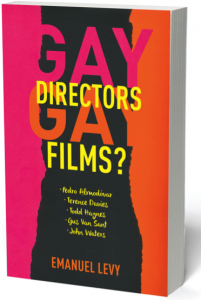
Gay Directors, Gay Films? By Emanuel Levy (Columbia University Press).
Lesbian Lines, directed by Cara Holmes (Notes From Sheepland) premieres in the competition of Sheffield DocFest on June 11, bringing out intimate portrait of these help- and life-lines.
With cinematography by Aidan Gault and editing by Colin Campbell and Holmes, Lesbian Lines tells a story of community, connection and the power of listening.
Holmes actually started off in editing: “When I’m not directing, I do edit feature docus. I feel my role is very fluid as a filmmaker, so I like to not keep things too defined. I like the openness of being able to do a few different things.
Lesbian Lines comes from executive producers Katie Holly and Yvonne Donohoe of Keeper Film, and others. The producer is Evan Horan, who is also handling sales.
Why did you want to tell the story?
Sometimes there’s so much history and there is so much behind it. This absolutely was a helpline, and many of the women told me that you can’t underestimate the power of making a simple phone call and, on the other side, having someone answering the phone. It’s about that really simple act of having someone listen to you, support you, invite you into a community, feeling this belonging. When you live in a society that was just piling lots of shame and wanting to push you out, those things are particularly important.
For me, the personal motivation was that this history isn’t in our school books. Why are we learning one type of history but not this whole other side of queer history. I call these women my heroes because they paved the way for younger generations, including myself, to live in freer society. These are women to be worshipped.
When did you start work on it?
I frame it around COVID, because that’s when I was doing research, and there were so many history talks online.
A lot of the volunteers kept the phones, because they knew how important this work was in their lives. It was this idea of the landline and one connecting cable. We did a bit of sourcing, but I had a couple of phones, because I’m old enough. It is a really iconic piece of machinery now.
You look at the past to enable the present and the future
A challenge for us was: How do you make a film about this kind of queer history when conventional archives fail you, when there are no real archives? So a big part of it for us was to bring in younger generations to demonstrate what the women were talking about. By bringing in these younger queer actors, they were learning on the job as well as reading the stories and meeting the older women.
I very much see myself in that middle generation. I’m some kind of weird transmitter. It was absolute privilege to listen to these women’s stories. Many younger people don’t want to talk on the phone anymore, but I spent my entire COVID phoning up these older women, so I could personally learn and bring that stuff into the film.
It’s kind of like a lesbian transmission, flowing down the generations.
I have no doubt that by knowing these women and their stories, listening to them, I have more confidence in myself going out into the world with this knowledge.
Things have improved for lesbians in Ireland and beyond?
In the U.K., at the moment, it seems much more problematic than in Ireland for trans people when it comes to being able to live their lives the way they want. Just like women were treated as lesbian women back in the ’80s, it’s exactly the same arguments that trans people are hearing now. It is a case of history repeating itself and fear mongering and all of those things coming back.
Pain and challenges in Lesbian Lines, but also the positive and joy
I wanted to always bring it back to that human level from this abstract political thing. Even using the word “lesbian,” is giving people that confidence to use those words as well and claim those identities in positive way.
It’s massive to be able to just live in your own identity confidently. I felt the phone line specifically was a way to get into that history, but always bring it back to the idea of a phone call and how that can just transform people’s lives.
While things were bad, the women were super clear that they didn’t want to be in a film that didn’t have queer joy in it. Because while it was hard and they had to go through a lot of stuff, they had awful lot of fun, too, and they want younger people to see that as well. They had lives, they were partying, but it was underground and grassroots. It was important to strike that balance between the hardships and the queer joy.