Khan Immersed Himself in Adolescent Psychiatric Ward for His Venice Film ‘A Place to Heal’
‘A Place to Heal,’ Kahn’s 12th feature as a director, is represented internationally by Charades

Despite tackling eating disorders, suicide attempts, bullying and other forms of psychological distress, the film contains moments of humor and joy, and never looks with pity at its young characters.
“I didn’t want psychiatry or mental illness to be associated with something too deathly,” Kahn said ahead of the film’s world premiere on the Lido. “I wanted the film to be very visceral.”
The film begins with Lucia, 17, being brought by police to adolescent psychiatric ward she already knows well. She reunites there with Eloïse, who has been hospitalized long-term, and meets a group of teenagers facing their own struggles.
Kahn plays Etienne, who spearheads the medical team trying to care for them, until the arrival of a mysterious new patient, Enzo, who creates chaos inside the unit.
Before writing the screenplay, Kahn and co-writer Kahina Le Querrec immersed themselves in adolescent psychiatric wards.
Le Querrec spent six months inside one unit, while Kahn spent several weeks in another, observing patients, caregivers, consultations and meetings between doctors and families.
Their observations provided the raw material for the film’s 12 adolescent patients and 10 caregivers.
Kahn and Le Querrec then transformed and combined the stories so that no real patient could recognize themselves.
“They become a family. They heal each other too. It’s not only the institution that treats them. It’s the fact that they’re there collectively at a moment of enormous fragility,” he says. “There’s a morbid impulse and a vital impulse. It’s the coexistence of those two things that makes that place so particular.”
Mental health among young people has become an increasingly urgent and universal conversation, from France to the U.S. and beyond. The film’s timeliness became clear during the casting process. Kahn was struck by how much the teenagers he auditioned knew about psychiatric illness.
“They talked about it without any taboo and without any negative preconceptions,” Kahn says. “I remember that when we were teenagers, people who had psychiatric problems were a little bit freaks. It’s much more accepted today.”
Kahn modeled the character of Etienne, the chief psychiatrist running the ward, on the head of the psychiatric unit he observed. “He treated the people he was speaking to as intelligent teenagers capable of questioning themselves. Without condescension. That’s what matters,” he says.
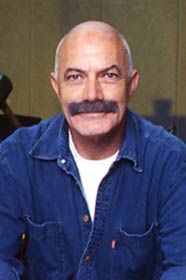
Kahn says he has never undergone psychoanalysis himself — though when he saw his performance in the editing room, he was struck by how convincing he looked as a psychiatrist. “I think it’s the face, the voice, I don’t know. I have a doctor’s face.”
There is something of Kahn the filmmaker in Etienne as well. “As a director, I’m a little like that too,” he says. “I can say to an actor: ‘What you did wasn’t good.’”
“With famous actors. It’s more fun,” Kahn jokes, acknowledging that stars are not always accustomed to such candor.
It is a particularly revealing role for Kahn, who alongside his directing career has become one of France’s most discreet yet beloved character actors. He has worked for Xavier Beauvois, Elie Wajeman and Joachim Lafosse and memorably played himself in “Call My Agent!” opposite Isabelle Huppert.
“A Place to Heal” marks only the second time he has taken a major role in one of his own films, after 2019’s Fête de famille, which starred Catherine Deneuve and Emmanuelle Bercot.
Alongside the world premiere of “A Place to Heal” in competition, he also appears in Alexandre Smia’s feature debut “Jupiter,” a real-time political thriller playing out of competition.
As a director, Kahn has long navigated between starry ensembles and the discovery of young talent. Anthony Bajon delivered breakthrough performance in his 2018 drama “The Prayer,” winning the Silver Bear for best actor at the Berlin Film Festival. His biggest success as a director to date came with “The Goldman Case,” the gripping courtroom drama that opened Cannes’ Directors’ Fortnight in 2023 and went on to win Arieh Worthalter the César for best actor. Venice has also been a recurring stop throughout Kahn’s career: his debut “Bar des rails” played the Lido’s Critics’ Week in 1992, “L’Ennui” competed in 1998 and “Making Of” screened out of competition in 2023. “A Place to Heal” marks his fourth trip to the festival and a return to competition.
With “A Place to Heal,” Kahn built ensemble composed mostly of newcomers. Teen casting director Marlène Serour and her team auditioned more than 1,000 young people. Kahn then personally saw more than 100 before selecting the 12 teenagers for the film.
Among the few with previous screen experience are Malou Khebizi, who broke out in Agathe Riedinger’s “Wild Diamond,” which competed at Cannes in 2024, and Patience Munchenbach (“The Swarm”).
For all the immediacy of the subject, however, Kahn was determined not to turn “A Place to Heal” into a movie specifically about today’s youth and deliberately stripped away many of the markers that could have tied the film too closely to the post-pandemic era.
“We didn’t over-update the film around screens, eco-anxiety, lockdowns and all that,” he says. “Cinema isn’t the same rhythm as current events,” he says. His ambition is for “A Place to Heal” to be relatable years from now. “I hope that even in 10 years, we’ll look at it as a contemporary film,” he says.
Like other Kahn’s films, this movie also has social dimensions. It looks at the pressures facing France’s public psychiatric system when demand for psychiatric care among young people continues to grow. But the film also celebrates the strength of the public system–everyone comes through the same doors.
“The public hospital welcomes everyone, regardless of origin or social class. Psychiatric illness cuts across classes. It affects absolutely every layer of the population.”
“A Place to Heal” was lensed by “The Goldman Case” cinematographer Patrick Ghiringhelli who shot with 3 cameras simultaneously, allowing different members of the group to remain on camera.
Kahn says that shift in tone in the film follows the adolescents’ overwhelming desire to escape the institution — even though some become afraid to leave when their discharge comes. “I love when I have the feeling that it’s the characters who are writing the screenplay,” he says.
That impulse brings the film back to Kahn’s original idea: whatever darkness he depicts, cinema has to leave the audience somewhere to go: “I can’t conceive of a film if there isn’t a small window, a little glimmer.”