Israel’s old movie theaters
From the 1940s through the 1970s, movie theaters were important symbol of Israeli cultural life.
Eden Movie Theater (1914)
The oldest movie theater built on a grand scale was the Eden, which had two 800-seater auditoriums, one in the open air.
It opened in 1914, five years after Tel Aviv was inaugurated as an independent municipal city.
Eden was closed during World War I, as its generator could be used to send messages to enemy submarines. It reopened during the period of the Brotosh Mandate, but was closed for good in 1974.
The 1930s were the golden age of movie theaters, largely designed in Art Deco style, not only in Israel but all over Europe.
The Moghrabi opened in Tel Aviv in 1930, with its grandeur immortalized as the scene of jubilant crowds following the UN General Assembly acceptance of the Partition Plan in 1947.
Sadly, it was destroyed by fire in 1986.
Alhambra, Jaffa (1937)
The Alhambra, with 1,000 seats, was opened in Jaffa in 1937 to serve as a cinema and also as concert hall.
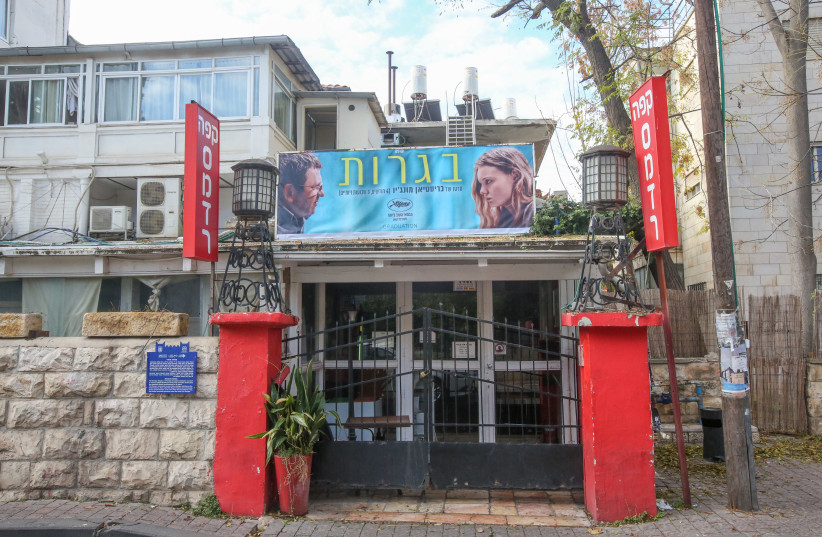
Smadar, Jerusalem
Jerusalem saw the opening of the Smadar as far back as 1928, initially serving the British army.
It is the only cinema in Jerusalem that has functioned almost continuously for 80 years.
It is a small theater that still exists as part of the Lev group, showing commercial and indie films and acting as one venue for the Jerusalem Film Festival.
Built in the German colony, Smadar was originally German-owned, but it changed its name to the Orient in 1935.
After 1948, it was purchased by four ex-soldiers, one of whom, Aryeh Chechik, bought out the others. He became famous as the guy who did everything, he sold tickets, collected them at the door, and operated the projector while his wife ran a stall outside selling refreshments.
The Rama was opened with flourish in 1938 on the corner of Jabotinsky and Bialik streets in Ramat Gan, a prominent symbol of the Art Deco style. It had 1,000 seats and served as a movie theater, a regular theater and conference center. The occasion was considered important– held in the presence of the governor of the British District, with the then Eretz Israel Symphony Orchestra, later the Israel Philharmonic. The Rama was of particularly significant because it also served people of surrounding Arab villages. From 1945 to 1947, the cinema specialized in Arab, particularly Egyptian films every Thursday evening.
The Café Rama, next to the cinema, was a favorite meeting place for artists, film fans and the general public for years. The cinema closed in 1982 and lay vacant until an enterprising construction consortium bought the building, preserved the Art Deco exterior, and built a residential tower on the plot.
There are tentative plans to decorate the foyer with posters and other memorabilia of the golden age of movie theaters.
There are now far fewer of them in the country today, though those that still exist include several, smaller screens.