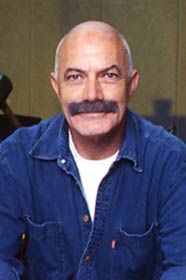
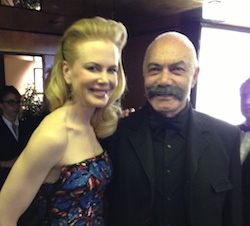
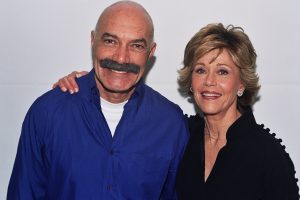
A tribute to the late David Overbea, unsung hero, who programmed Filipino and other Asian films for the Toronto Film Fest, in the late 1980s and early 1990s. Overbea died of heart attack in 1998.
Lino Brocka directed Macho Dancer, a steamy Philippine melodrama, from a story and screenplay written by Amado Lacuesta and Ricky Lee.

The movie explores the realities of a young, poor, rural gay man, who after being dumped by his American boyfriend, is forced to support himself and his family in Manila’s red-light district.
The film’s frank depiction of homosexuality, prostitution, drag queens, crooked cops, the porn industry, sexual slavery, drugs and violence led to extensive edits by Filipino government censors.
Brocka smuggled an uncensored cut out to be shown in film festivals. I saw it at the 1988 Toronto Film Fest, where the picture received standing ovation.
Macho Dancer was a box office failure in the Philippines due to its heavy censorship, but it achieved international critical success in the festival circuit.
The smuggled, uncensored 35 mm print of the film is now part of the permanent collection of the Museum of Modern Art, where the film’s 4K restoration was shown as part of Annual Edition of “To Save and Project” in January 2026
One of the most influential gay films from the Philippines, the film is atypical of its genre in several ways. For starters, its protagonist kills a corrupt police officer without being charged.
In 2021, Joel Lamangan directed the sequel, Anak ng Macho Dancer, which focuses on Inno, the son of Pol, portrayed by Sean De Guzman.
Detailed Synopsis
Pol, a poor young man from the Filipino countryside, helps his single mother support his siblings with a gay-for-pay arrangement with an American lover.
Pol is envious of his friend and neighbor, Greg, who makes money working in a sex club in Manila. After his American lover finishes his tour of duty, Pol aspires to move to Manila and Greg agrees to introduce him to Manila’s underground world of male strippers, prostitution, illegal drugs, sexual exploitation, and sexual slavery.
Greg leads Pol to Mama Charlie’s, a male strip club frequented by American, European, and Japanese foreigners, run by drag queen Mama Charlie.
The club is under the “protection” of corrupt police officer Kid, who has a hand in all illegal activity in Manila. Despite a strict “no drugs” policy, Pol is warned to stay away from fellow dancer Dennis, who works for Kid and provides drugs to clients.
Noel, one of the club’s popular and workers, takes Pol under his wing and mentors him to be a better “macho dancer” and call boy.
Pol is quickly accepted into the community of sex workers and has an immediate rapport with Bambi, a young call girl.
Noel reveals to Pol that he has a sister, Pining, who has gone missing. He left her with his aunties and came to Manila to earn money, but found himself homeless, hungry, and sleeping in the nearby park. A man approached and offered him food in exchange for sexual favors, and Noel became a sex worker.
But he worries his sister ran away or was driven out by their aunt, and fears she has been kidnapped and sexually exploited. Pol promises Noel his complete support for the search. The two begin combing the many female brothels and dance clubs when they have a spare moment from dancing in Mama Charlie’s, receiving tips on new brothels and new girls from Bambi.
Displeased by the small cut he gets from the sales, Noel shorts Dennis the amount he owes Kid for the drugs. Hoping to avoid a violent confrontation, Noel sends Pol to speak with Kid about the missing money. Instead, Pol receives a public beating. The bloody Pol is taken in and nursed by Bambi, and the two have sex at Pol’s instigation. In the morning, Pol declares that he is in love with her. Bambi is flattered, but brushes off his declaration and attributes it to his excitement at sleeping with a woman for the first time.
Noel and Pol discover Pining held as a sex slave at a brothel controlled by Kid’s minions. Pining came to Manila to earn money, but quickly found herself homeless, hungry, and sleeping in the same nearby park her brother had.
When a woman approached her, offering food, it was drugged and she woke up kidnapped and confined to a brothel, where the women are kept under surveillance and control.
After earning more money filming illegal pornography, Noel and Pol visit the brothel and make an improvised escape and Kid pursues Noel, Pining, and Pol during a heavy rainstorm. Kid fatally shoots Noel, who dies in Pol’s arms.
Pol also decides to return to the mountains and asks Bambi to marry him and come with him. She is tempted, but refuses to go as she has been doing sex work since age twelve and does not think she can do anything else.
Pol shoots Kid in the head and quietly leaves the scene with no witnesses. He and Bambi see off Pining and give her the money that Noel saved for her education.
On his last day in Manila, Christmas, he visit’s Mama Charlie’s to bid farewell. The club has been raided and reopened under the new name Hijos, but it has the same workers, decor, and the same dancer routines.
A new corrupt police officer acts as the club’s liaison with the law. Pol and Dennis repeat the “shower” choreography they used to perform with Noel.
In the last scene, Pol boards a bus that is leaving Manila.
Brocka is effective in depicting morally dubious actions that, perhaps unfortnately, make the difference between disaster and survival for boys with limited opportunities. Through unabashed melodramatic devices, he shows the inevitable recourse to violence that is motivated by abd represents an act of defiance.
Daniel Fernando as Noel
Allan Paule as Pol
Jaclyn Jose as Bambi
William Lorenzo as Dennis
Princess Punzalan as Pining
Timothy Diwa as Rolly
Angelo Miguel as Jun
Johnny Vicar as Kid
Lucita Soriano as The Mother
Joel Lamangan as Mother
Khryss Adalia as Mama San
About Lino Brocka