One of the most popular screen versions of Charles Dickens’ classic novel, Jack Conway’s “A Tale of Two Cities,” produced by David O. Selznick while at MGM, is set in the aftermath of the French Revolution.
Grade: B
| A Tale of Two Cities | |
|---|---|

1935 US Theatrical Poster
|
|
The film opens with the famous introduction to Dickens’ 1859 novel: “It was the best of times, it was the worst of times, it was the season of Light, it was the season of Darkness, we had everything before us, we had nothing before us… In short, it was a period very like the present…”
In the overly literate script by W.P. Lipscomb and S. N. Behrman, the tale juxtaposes life in the two cities: London and Paris.
The elegant British actor Ronlad Colman plays Sydney Carton, a suave London barrister, who is in love with Lucie Manette (Elizabet Allan). For her part, she relates to him as a friend, and goes on to marry Charles Darnay, a descendant of a noble Frenchman who resembles Carton.
Darnay’s uncle, the Marquis St. Evremonde (Basil Rathbone), is a tyrant who is killed at the Revolution. As the nephew of the hated Marquis, Darnay is arrested in Paris and sentenced to death. Out of love and devotion, Carton goes to Paris, frees Darnay and takes his place in prison. His last speech is memorable: “It is a far, far better thing that I do than I have ever done; it is a far, far better rest that I go to than I have ever known.”
This opulent production features many of MGM’s reliable stock company, including Blanche Yurka as the sinister Madame DeFarge, Edna May Oliver as Miss Pross, and Henry B. Wathall as Dr. Manette.
In one of many distinguished and eloquent performances, Colman, displaying his extraordinary voice and eloquent method, conveys Carton’s intellect as well as cynicism, pathos as well as nobility and class. Eager to play the part, he was willing to shave off his signature moustache.
Colman had previously been nominated for the Best Actor Oscar in “Bulldog Drummond” (made by Goldwyn) and other movies, and would win the coveted award in 1947 as the schizophrenic actor in George Cukor’s drama “A Double Life.”
Though Conway gets solo credit as director, some of the outdoor and crowd scenes were impressively staged by Jacques Tourneuer and Val Lewton, a team better known for their classic horror features, “Cat People” and “I Walked With a Zombie.”
The film was the last production of Selznick before leaving MGM to form his own company, which would be responsible for A Star Is Born, Gone With the Wind, and Rebecca, among other good, Oscar-nominated or winning films.
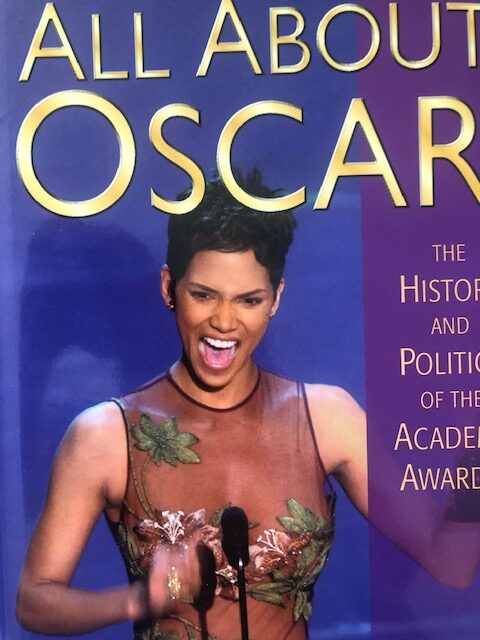
My Oscar Book:
Oscar Nominations: 2
Best Picture, produced by David O. Selznick
Film Editing: Conrad A. Nervig
Oscar Awards: None
Oscar Context:
A Tale of Two Cities competed for the Best Picture Oscar with nine other films: The Great Ziegfeld, which won, Anthony Adverse, Dodsworth, Libeled Lady, Mr. Deeds Goes to Town, Romeo and Juliet, San Francisco, The Story of Louis Pasteur, and Three Smart Girls.
The other most nominated films were William Wyler’s Dodsworth, with 7 citations, winning one, for Richard Day’s Interior Decoration, and Anthony Adverse, which won the largest number of awards (4) of it 7 nominations. Of all studios, MGM dominated the Oscar race, claiming five (half) of the Oscar-nominated films.
The winner of the Editing Oscar was Ralph Dawson for the period epic adventure, “Anthony Adverse”
Credits:
Directed by Jack Conway
Written by W. P. Lipscomb, S. N. Behrman, based on A Tale of Two Cities 1859 novel by Charles Dickens
Produced by David O. Selznick
Cinematography Oliver T. Marsh
Edited by Conrad A. Nervig
Music by Herbert Stothart
Production company: Metro-Goldwyn-Mayer
Distributed by Loew’s, Inc
Release date: Dec 27, 1935
Running time: 123 minutes
Budget $1,232,000
Box office $2.3 million (worldwide rentals)