It took Robert Redford eight years after sweeping the 1980 Oscars with Ordinary People (Best Picture, Best Director) to helm his second film, a more overtly political, but less impressive, saga.
Grade: C (1*1/2* out of *****)
The film’s large, international ensemble includes Sonia Braga, Rubén Blades, James Gammon, Daniel Stern, Freddy Fender, M. Emmet Walsh, and Melanie Griffith.
Set in a rundown Hispanic community in New Mexico, which borders rich housing development, the tale centers on a group of white men who control the local water rights and hope to expand their development without resistance from the poor residents.
But alas the impoverished farmer Joe Mondragon (Chick Vennera), during a burst of rage, accidentally opens a hidden sluice, which provides free water for his bean field. At first, the locals are against Mondragon’s “insurrection,” hoping that the new housing development will provide them jobs.
With the help of Charlie Bloom (John Heard), a 1960s activist who now runs the community newspaper, Mondragon becomes the spiritual leader of a growing “no development” movement.
The evil land developers send their minions to intimidate or coerce Mondragon, but each time he seems to be protected from harm by divine intervention.
When Mondragon is forced to shoot a trespasser on his land, it looks as though his luck has run out. Chased into the hills by private detective Kyril Montana (Christopher Walken), Mondragon is once more rescued by what appears to be a miracle. “Milagro” is the Spanish word for “miracle.”
Adapted by John Nichols and David Ward from Nichols’ own novel, The Milagro Beanfield War was a “liberal” film that wore its politics on its sleeves. The narrative was not only messy, but also contained too many characters for its own good, most of them colorful but underdeveloped.
The control that Redford showed in his impressive debut was mysteriously absent, resulting in a rambling story that never built up on its promising premise, and just moved lethargically from one sublot to another.
Met with negative critical response, the movie was a big commercial disappointment, failing to recoup its considerable budget of $22 million.
Oscar Context:
Dave Grusin won the Oscar for his vibrant musical score, which contributed more than the dialogue to the tale’s shifting mood.
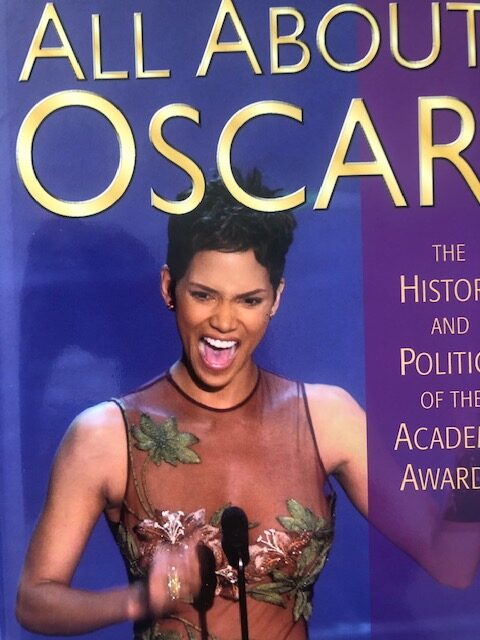
My Oscar Book:
Oscar Nominations: 1
Score: Dave Grusin
Oscar Awards: 1